This live event is now available for replay:
Description:
In 2023, a team of 4 boat-makers (Mashantucket Pequot, Mashpee Wampanoag, Togolese, and Ghanaian) collaborated at Mystic Seaport Museum to create a dugout canoe using both traditional and contemporary methods.
The ten-day collaboration explored similarities in Dawnland and African maritime histories and cultures, imagined how these maritime traditions may have continued if not interrupted, and allowed us to imagine conversations on boat construction as free and enslaved African descended people joined Dawnland Indigenous communities.
Links:
Akeia’s Article for Mystic Seaport Museum’s Mainsheet: (Life) Cycles, (Ocean) Currents, and (Ancestors’) Rhythms: Dawnland Maritime Histories through Indigenous and Black Voices
Mystic Seaport Museum Exhibit ENTWINED: Freedom, Sovereignty, and the Sea
Wikipedia’s Article on the Kongo Cosmogram
John Mbiti’s Book – Introduction to African Religion
Speaker:
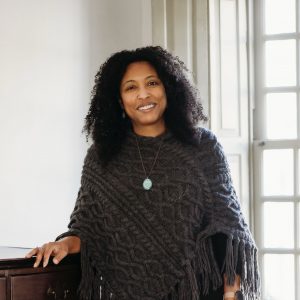
Akeia de Barros Gomes | Director, Center for Black History, Newport Historical Society
Dr. Akeia de Barros Gomes is the Director of the Center for Black History at the Newport Historical Society and is a Visiting Scholar and Adjunct Lecturer at Brown University’s Center for the Study of Slavery and Justice. Akeia leads the development and implementation of the Center for Black History at the Wanton-Lyman-Hazard House, which will open as an exhibition space, educational and community programming space and a space for scholarship in 2026. She was lead curator for the 2024 Mystic Seaport Museum exhibition, Entwined: Freedom, Sovereignty and the Sea a multi-year Mellon Foundation-funded project that recovers the history of the founding and development of the Dawnland (New England) through Dawnland Indigenous, African, and African-descended maritime narratives. Akeia taught as professor of American Studies and Professor of Psychology and Human Development at Wheelock College from 2008 to 2017. She received her BA in anthropology/archaeology at Salve Regina University and her MA and PhD in anthropology/archaeology at the University of Connecticut.
Host:
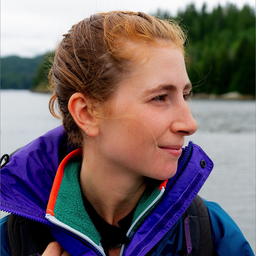
Annie Means | Multimedia Marine Journalist | Instagram | Substack
Annie Means is a Pacific Northwest-based writer, photographer, and boater. She spent 2023 and 2024 traveling the globe as part of her Thomas J. Watson Fellowship, during which she explored and reported on women’s leadership in the international blue economy and maritime sector. In 2024, she was honored as the runner-up for the prestigious Yachting Journalists’ Association’s Young Journalist of the Year Award. Annie is passionate about sharing narratives that bridge nature and culture, the sea and society. More than anything, however, she deeply enjoys connecting with and learning from the individuals and communities who inhabit these essential stories.
Leave your questions and comments below!
Another deeply moving and refreshing presentation. As a member of the chickasaw nation, I am extremely pleased to hear our voices in this circle.
Thank you for a fascinating and informative presentation. It is amazing that different cultures with an ocean between them had such similar boatbuilding traditions!
Fascinating cultural experience!
How has this project impacted you and how does influence the work you are now doing with the Newport Historical Society?
Thank you! Brilliant.
wonderful presentation . . . thank you
Dawnland is a new term to me. Could you elaborate? Thanks.
Would Dr. de Barros Gomes be willing to discuss how the act of building and using boats enriches and strengthens communities? I wonder if this sense of collective effort and shared purpose can still thrive today, especially in the face of modern trends toward individual ownership and enterprise in so many parts of the world. The following note about my experience with these vessels explains where the question is coming from. One morning in 1982, I plunged into the West African surf aboard a traditional fishing canoe. Larger and deeper than the dugout canoes used along the nearby Mono River, which separates Togo and Benin, this vessel was constructed from rough-hewn planks and could carry about eight eager souls. With no motor to rely on, we paddled furiously to get past the breaking waves. A line trailed behind, tethered to a group of villagers on shore. About a hundred yards out, we turned into the current, struggling to make headway along the beach for perhaps a quarter mile, letting a shallow net trail out behind us.
My hands were already blistered by the time we turned the bow toward the shore and began back-paddling to hold our position. Two young boys were tossed overboard, each with a rope tied to the end of the net, fastened around their waists. They swam effortlessly through the waves and onto the beach, where another group of villagers was waiting to receive them. We held our position for another half hour before easing up behind a line of powerful breakers. Suddenly, a shout rang out. Again paddling furiously, we made a break for shore and plunged down the face of the first crashing wave. The beach was steep, and the canoe became stuck in the trough. Immobilized, we watched as the next breaker loomed over us.
Everyone stood up calmly, then turned to look at me. I was still sitting down like an idiot, clueless to the danger at hand. They began shouting, “Il faut plonger! Il faut plonger!”—”You must dive! You must dive!” As the wave grew ever closer, they realized that my bad French and slow brain hadn’t caught on. Action is stronger than words so they all leapt overboard. Coming to my senses just in time, I followed suit, diving into the water just as the wave crashed hammered the canoe. Though battered, the canoe didn’t break apart but shot up onto the shore. I was caught in the undertow, swallowing more saltwater than air. For a brief moment, panic set in until someone grabbed my arm and pulled me safely onto the sand.
After about an hour of coordinated pulling, the two ends of the net finally came together. With the combined strength of the entire village, the net and its catch were hauled onto the beach. The diversity of the creatures we had caught was astonishing, and the village blessed me by sending me home to my hut with a beautiful perch. It was a day of hard work, community, and friendship—an experience I will never forget. I was building small schools in many isolated villages at the time but I observed that the seagoing communities were often the best at working together toward a common goal.