Owner’s Description
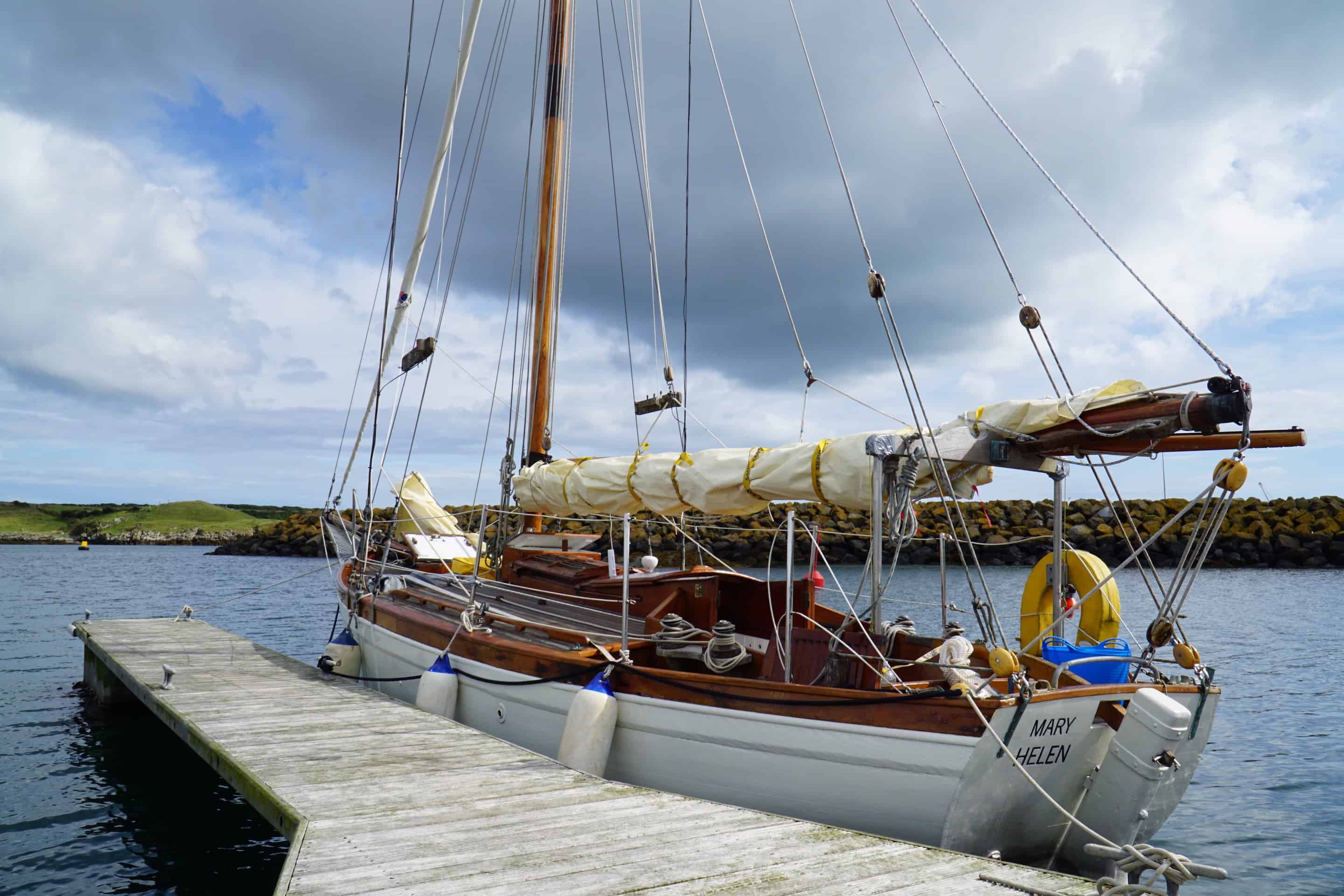
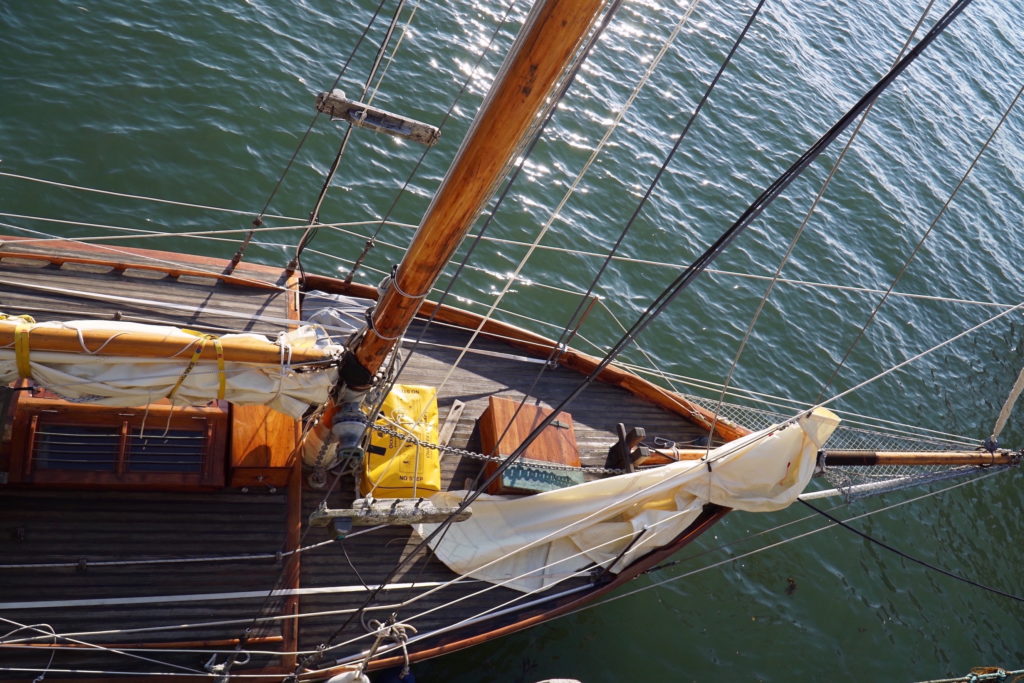
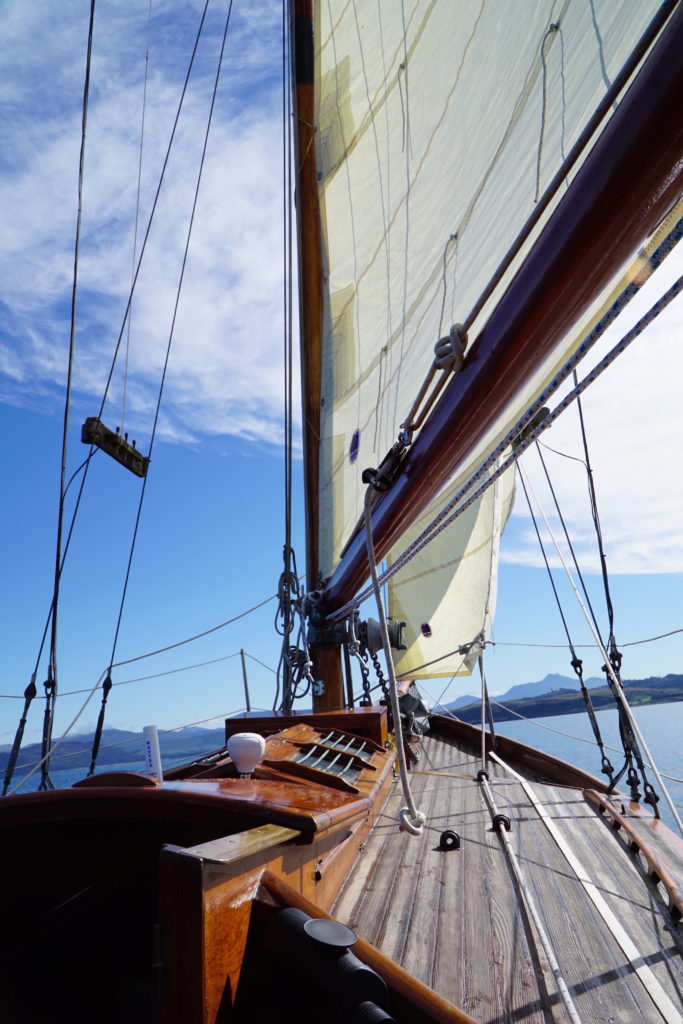
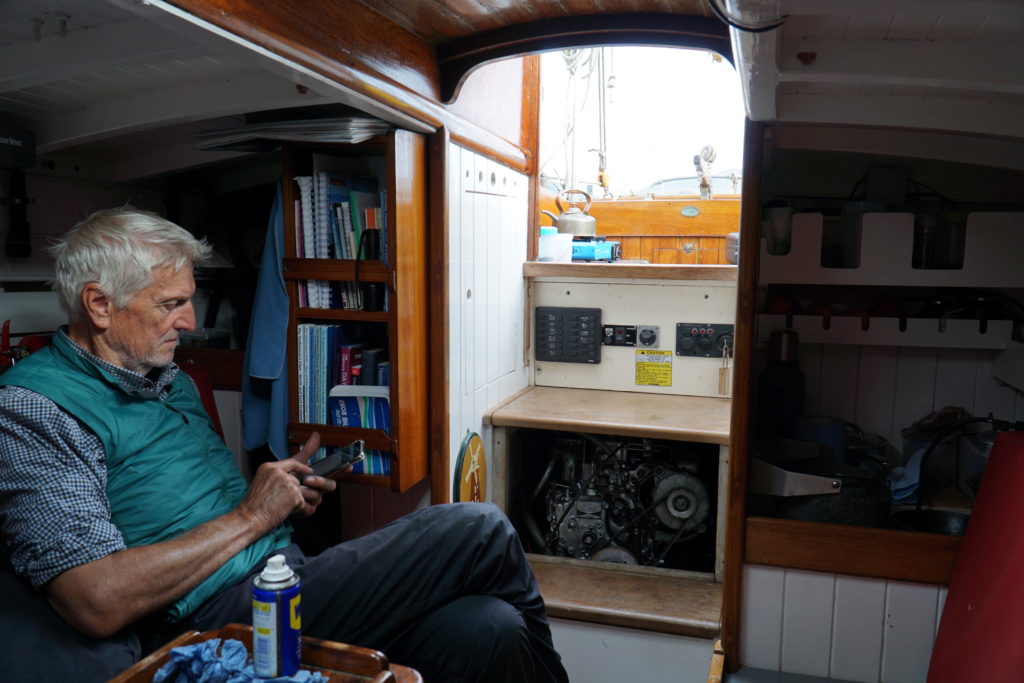
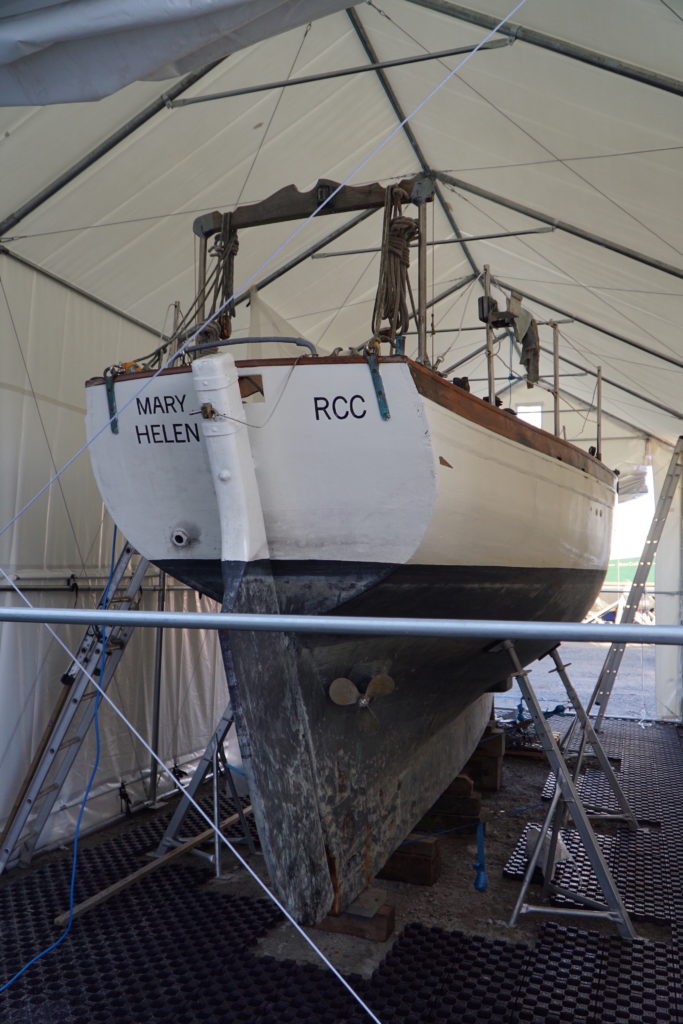
My daughter and I acquired “Mary Helen” in July 2022 and sailed her from Creran Marine near Oban in Scotland, back via the Irish Sea and coastline, to our home base in Cornwall. She’s currently out of the water and weathering the winter Atlantic winter storms that are sweeping full force across the surrounding farmland of the boatyard. Our temporary boat shelter is being battered and rocked as we begin to work on the first project of replacing her decks. At least we are dry and can make progress with the gales reminding us of the need for repairs to be strong. There will come a time when we are thinking of each fastening and plank and praying they hold. By the time she is back in the water later this year our hands will have been on everything. Each knee, butt, bolt, plank, beam and fitting will have been discussed in detail. “Do it now or can it be later?”
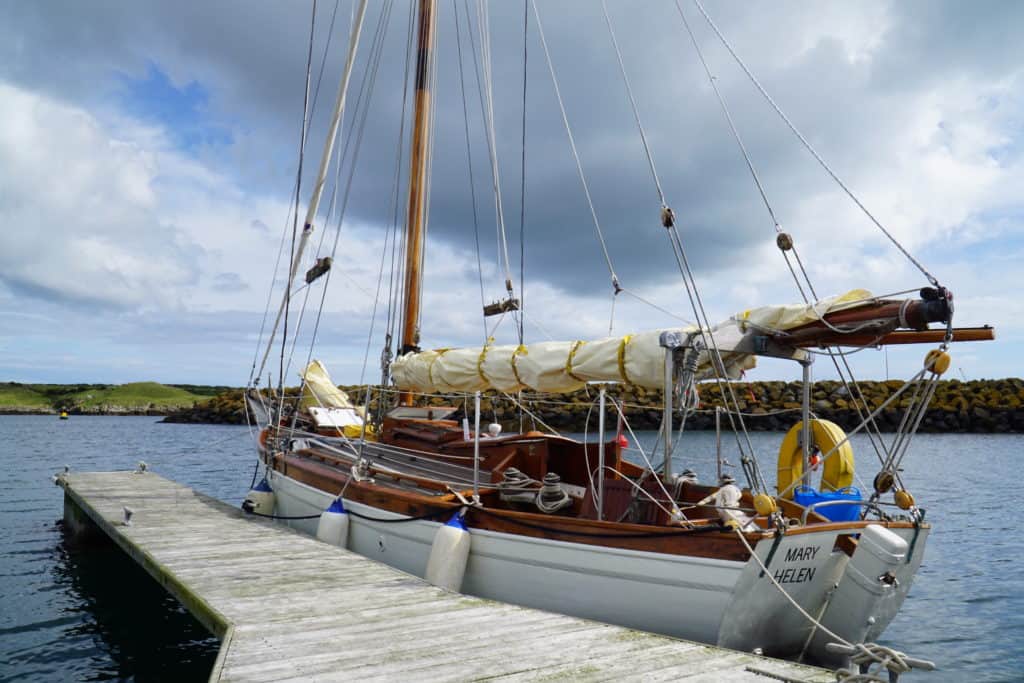
The story of the boat is that the design came to life on the back of an envelope while John and Helen Tew dined on honeymoon in Fowey, Cornwall. John was a yacht designer who worked with Jack Laurent Giles, and Helen was the daughter of Commander RD Graham who was the first man to cross the Atlantic single-handed east to west by the northern route in the 30’ cutter “Emanuel”. With their design loosely formed they then approached the local boat builder of repute, Percy Mitchell from Port Mellon (which is not far from Fowey), to ascertain potential costs. The outcome, in line with their funds, and their plans to sail to Canada to start life there, was a robust 6 ton (TM) Gaff Cutter that was 26ft 3ins on deck, 8ft 3ins beam and a draft of 5ft. She was launched in 1937 and was constructed of pitch pine on steamed timbers with grown oak and iron floors. On the day of launch she was wrecked and then had to be repaired, but that’s a story for another time.
The builder Percy Mitchell was largely self-taught, believed in character as the product of endeavor, was religious, hard working, and by accounts blessed with a practical genius and good measure of courage. He built and launched a magnificent variety of fishing boats, yachts, tugs and passenger launches. His contemporaries described him as “one of the finest traditional boat builders in the world”, although one wonders how far they might have travelled. Claude Worth described him as, “an artist in wood” and he did paint and there is indeed an unmistakable holding of the eye in his boats. He built in the commercial style of that time. Learnt his trade building fishing boats and adapted to whatever was asked for in order to put food on the table for his family. His early boats were well judged exercises in commercial pragmatism. Apart from his local fishing Toshers, one of which is now in a local museum, he was know for “Windstar” which was sailed by King George VI and after the war by Princesses Elizabeth and Margaret.
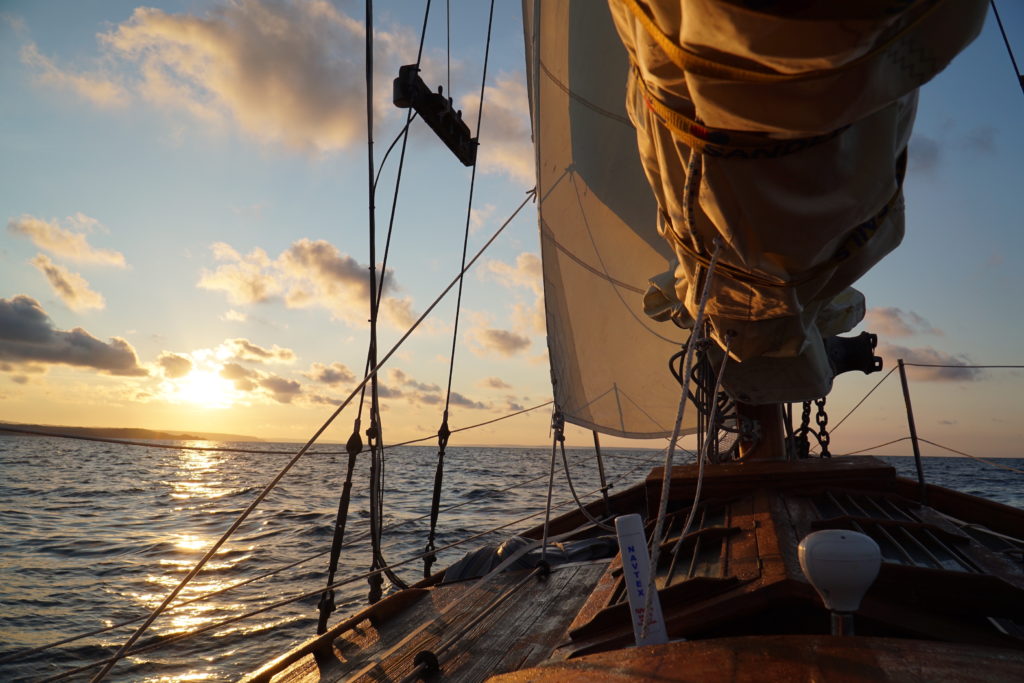
Helen Tew, later at the age of eighty-eight became one of the oldest people to sail eight thousand miles across the Atlantic and back, in the same 26’ “Mary Helen” that had been imagined by her on honeymoon. Her exploits and the story of the boat are covered in the book “Transatlantic At Last”.
Photos
Video
Map
No Records Found
Sorry, no records were found. Please adjust your search criteria and try again.
Google Map Not Loaded
Sorry, unable to load Google Maps API.
Comments
Post a Comment Cancel reply
You must be logged in to post a comment.
One thought on “26' Tew Gaff Cutter (1937) - MARY HELEN”
Owner’s Description
Photos
Video
Map
Comments
Post a Comment
You must be logged in to post a comment.
One thought on “26' Tew Gaff Cutter (1937) - MARY HELEN”

My name is David Tew , a distant American relation of Helen and John’s. It seems from your write-up that you’ve read Percy Mitchell’s book. I was sent a copy by a fellow who manages a website for Laurent Giles Vertue class sloops. I enjoyed it very much. He sent along this somewhat catty remembrance with the book:
“In 1936 Jack Laurent Giles’s staff included a draughtsman called John Tew (who, it is thought, may have produced the lines for the Vertue on Giles’s behalf) and who designed a gaff cutter, slightly larger than Wanderer II, for himself and his fiancée Helen. The boat was built by Percy Mitchell in Port Mellon and christened Mary Helen. Over sixty years later Helen Tew famously sailed her across the Atlantic with her son.
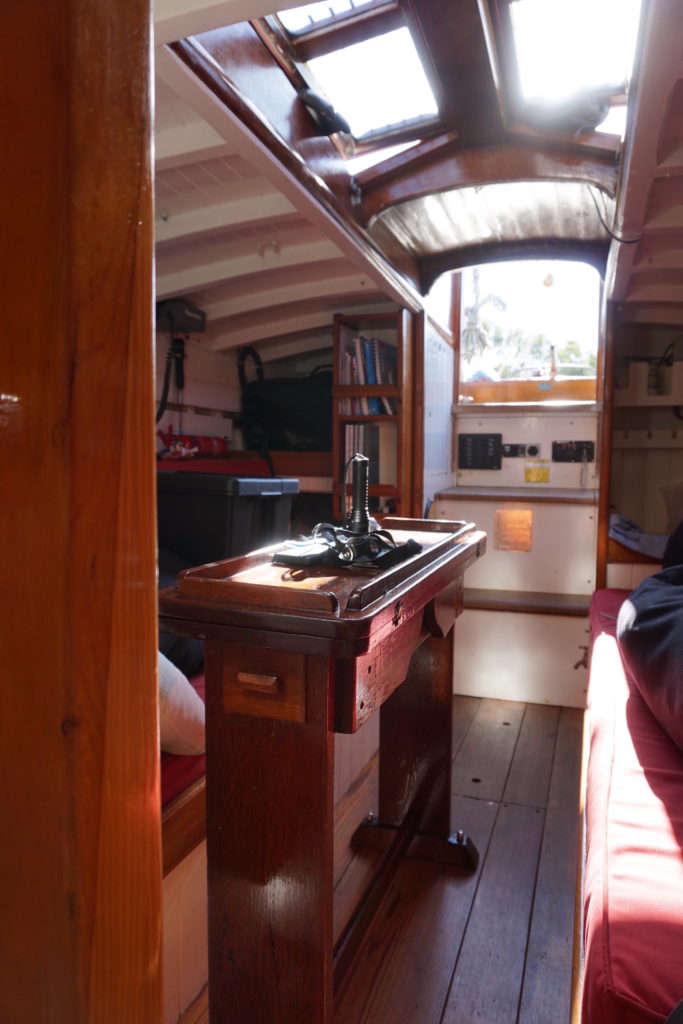
I met Helen Tew several times many years ago, when I started my research for the Hiscocks’ biography, and was delighted by her fiesty spirit. However, she also had a rebellious side, (as her father knew), and felt rather bitter that ‘her’ John worked for Jack Giles as an employee, rather than running his own show. She thought he was far too good for that, and indeed I think he did move on to become the yard manager at Napiers, the yard that built Eric Hiscock’s Wanderer II, whilst Andrillot was building at Moody’s. Anyway, she invented this myth about John drawing Andrillot’s lines but I don’t believe a word of it and have never seen the slightest proof that this was the case. She even claimed that her John came up with the ‘signature’ raised sheerstrake, but I think Giles is more likely to have absorbed this ‘pilot cutter’ characteristic from studying the working boat Dyarchy and when he lifted the lines of Jolie Brise in 1928. The boat he did draw, Mary Helen, is an interesting design, but much more of a floating cottage than the Vertues. Her midship section is quite different, much more beamy and the built-up topsides give the boat a completely different nature, in performance and looks. Like Helen’s father’s boat, I always think she looks a bit clunky but has a very spacious saloon for a boat of her length.
Percy Mitchell did built one Vertue, called Island Spell V 30. Her ‘early’ low coachroof was replaced by a much later ‘standard’ coachroof and long doghouse. It’s inevitable, I suppose, that out of over 150 wooden Vertues that some would be ‘updated’ from time to time. There is a recent trend on your side of the Atlantic to do the opposite now, as two Vertues have had their 1960’s coachroofs and doghouses replaced with ‘retro’ pre-war styled, simple, low deck structures, although some still appear to run for’d of the mast.”