
Owner’s Description
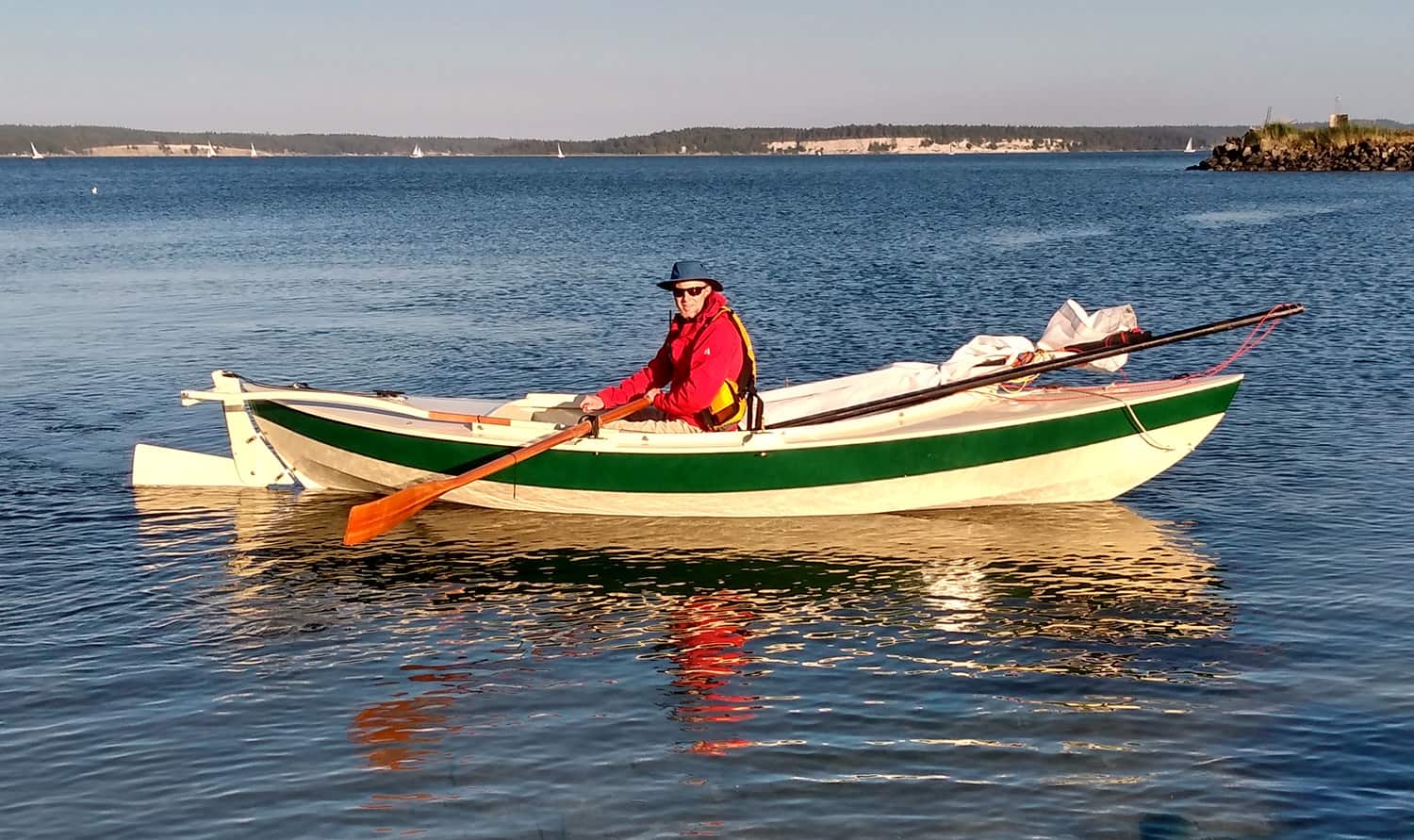
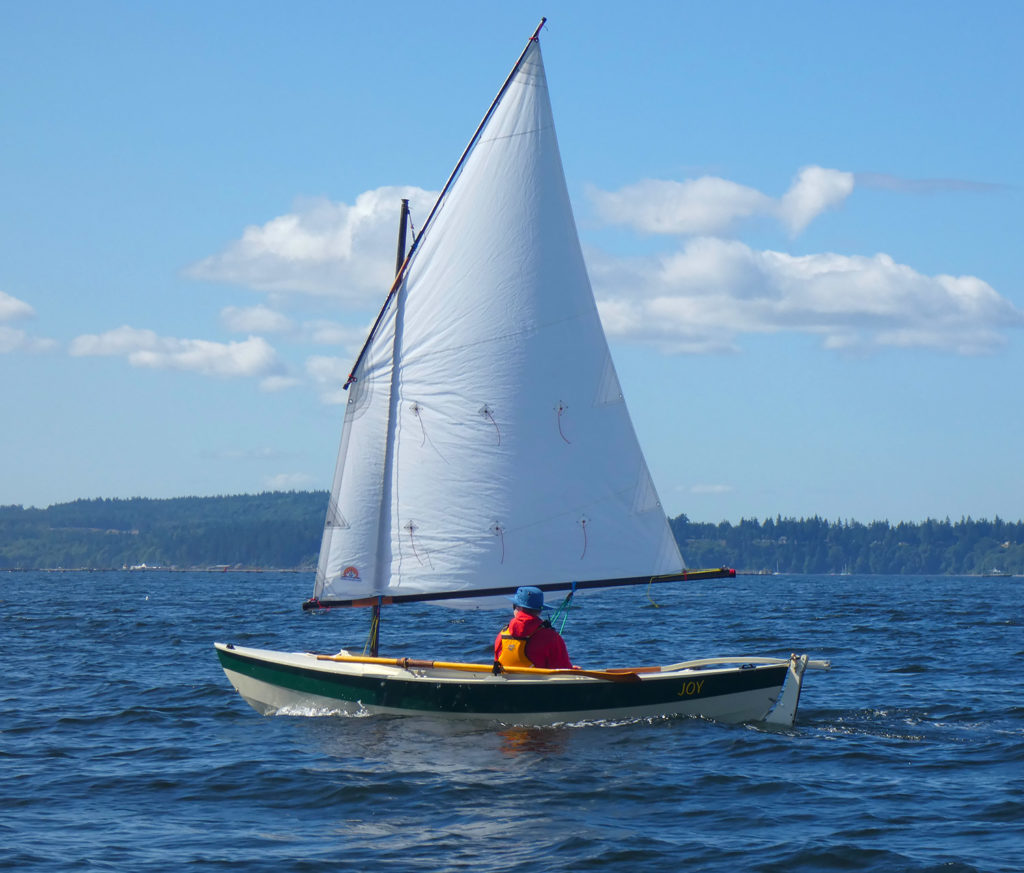
This is my highly modified Chesapeake Light Craft Skerry, enjoying its third lease on life. How it got to its current configuration is a bit of a story to unravel.
It was nicely built from a kit by a gentleman in Port Angeles, WA, with a stock rig. The next owner was a young man who used it in the first stage of the Race To Alaska events, from Port Townsend, WA to Victoria, BC. That did not go well, and he had to be picked up by the Canadian Coast Guard, which probably smarted a bit, since he was in the US Coast Guard. When I bought it I was not surprised though. It was slippery as snot inside, the oars were barely functional, and the rig was not well sorted.
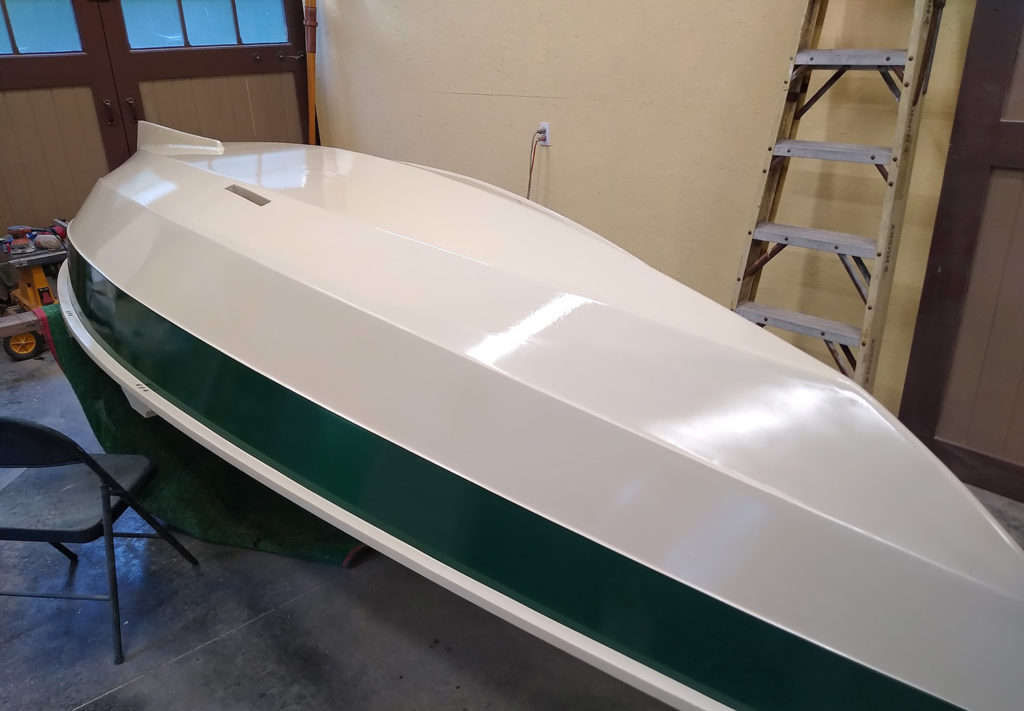
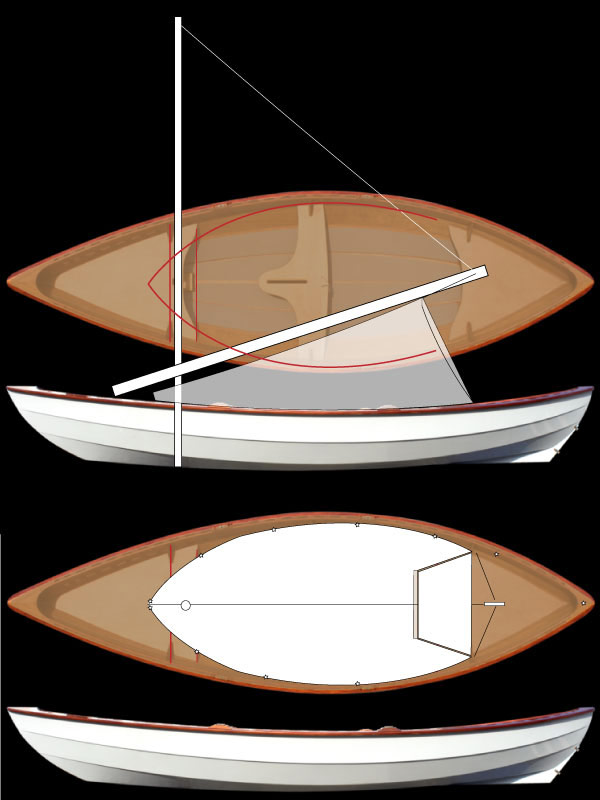
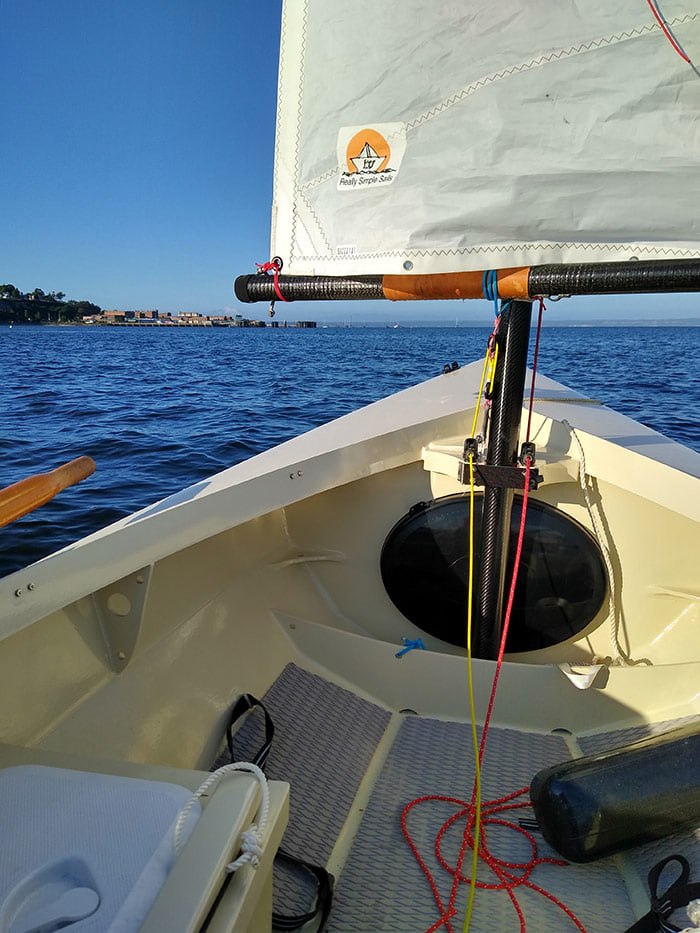
After I bought it, it got its second lease on life. I completely refurbished it, which was a big chore, but in the end she looked like new, fully painted, with some comfy non-slip padding throughout. I built a new larger balanced lug rig, with all carbon spars. Micheal Storer assisted with design and sail making. The spars were short enough they could lay flat on each side of me when rowing. It was an excellent boat in that configuration that I had many adventures in around Port Townsend.
The entire time I had it I kept pondering how to turn it into a little cruiser, sleeping at anchor, in events like the Salish 100. I did not relish the idea of sleeping across the thwarts on a board. The boat is a bit too tender for that. Eventually, my slow mind spit out some acceptable ideas. I started testing things on the water, clamping boards in place for different seating positions, and doing lots of measuring. Being satisfied with the plan I worked my tail off for two solid months on the modifications.
The goals of the modification were threefold:
1. Be able to sleep on the floor.
2. Reduce open boat volume, with sealed buoyancy, to increase capsize safety, and to make it easier to add a boom tent.
3. Increase seating comfort, for long hours in the boat.To achieve those goals, this is what I did:
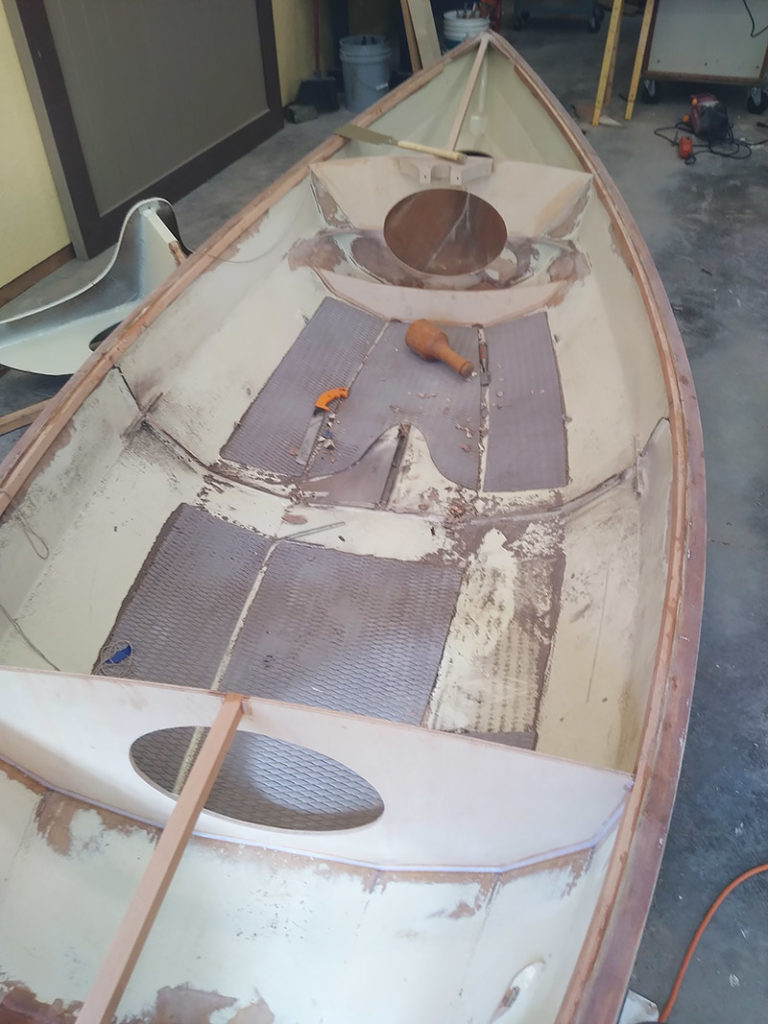
1. Gutted the boat, removing nearly everything within the hull.
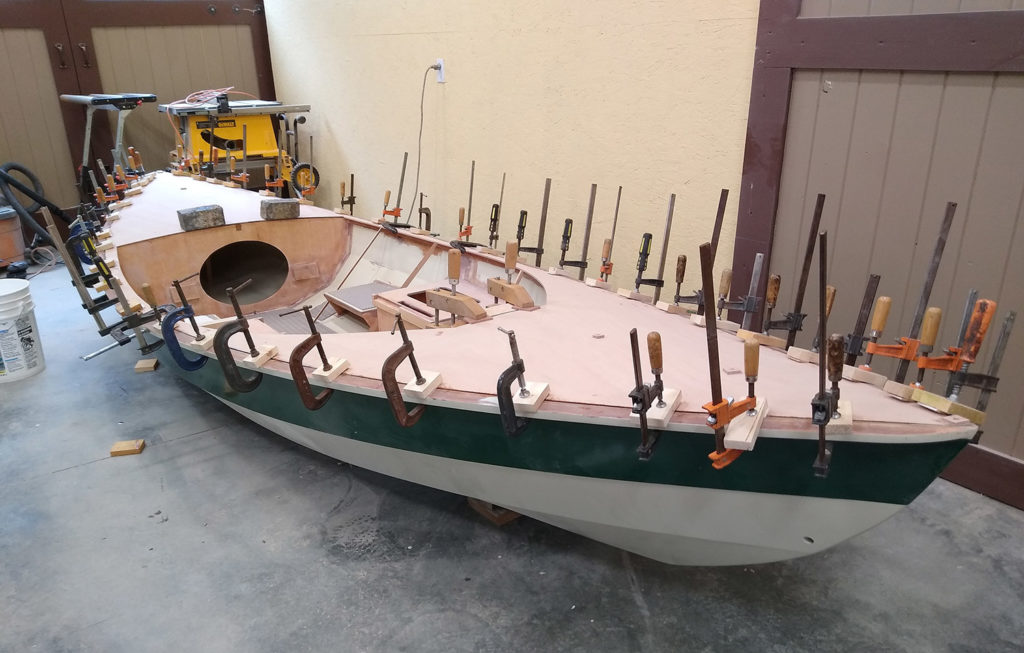
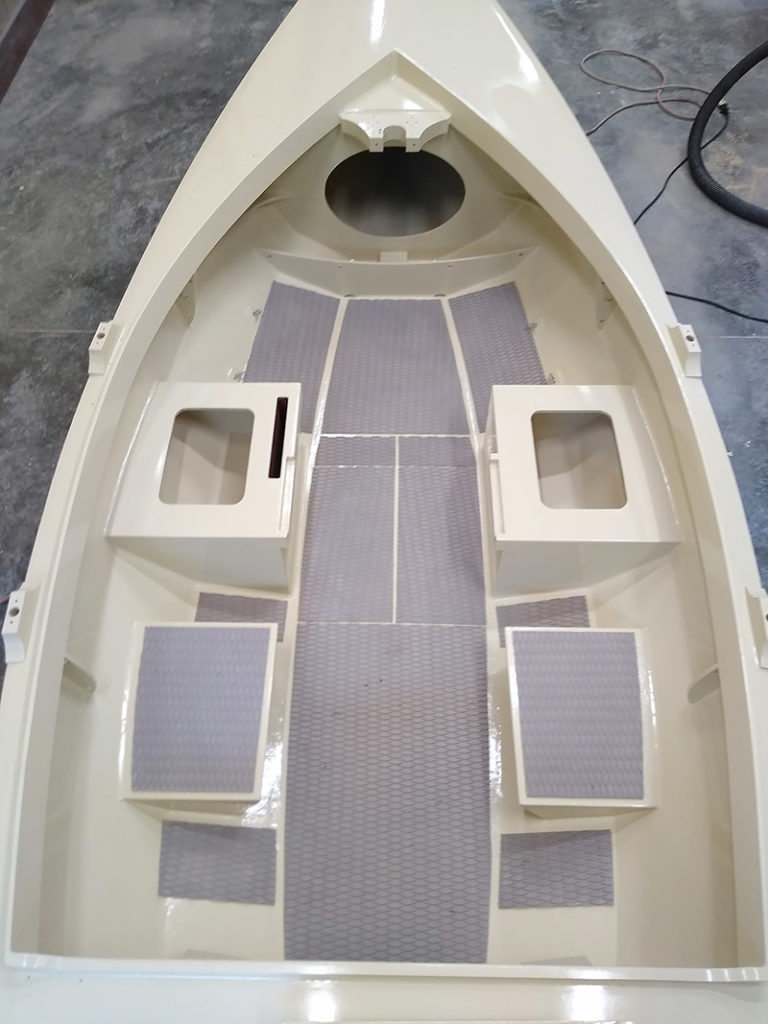
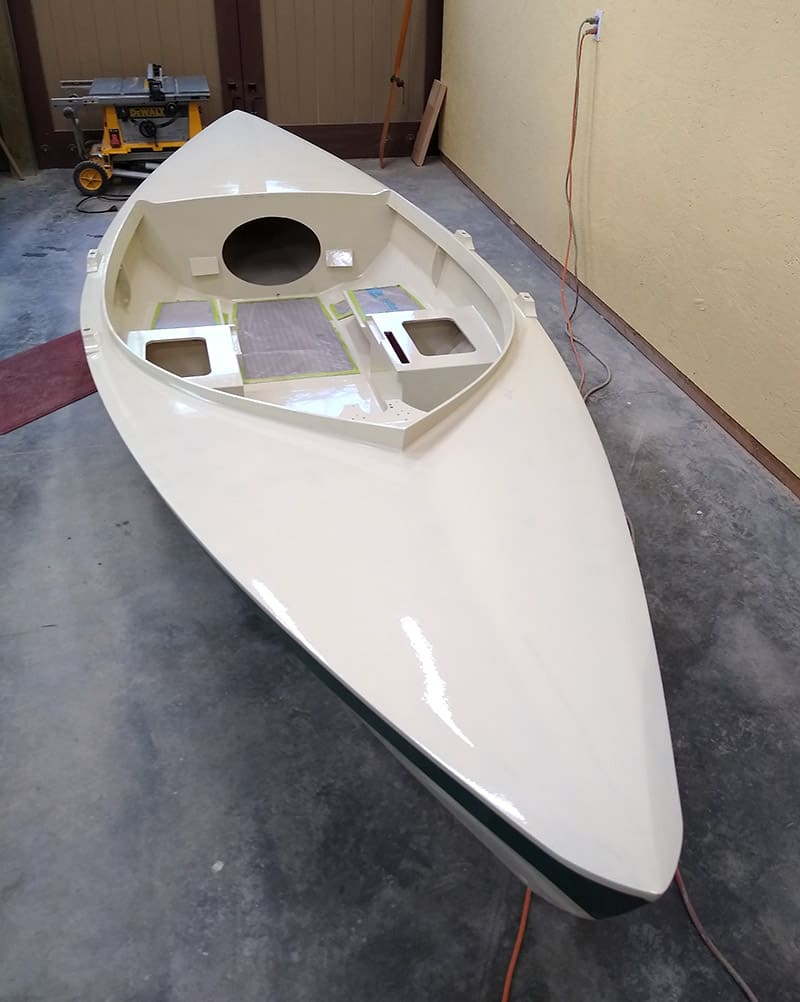
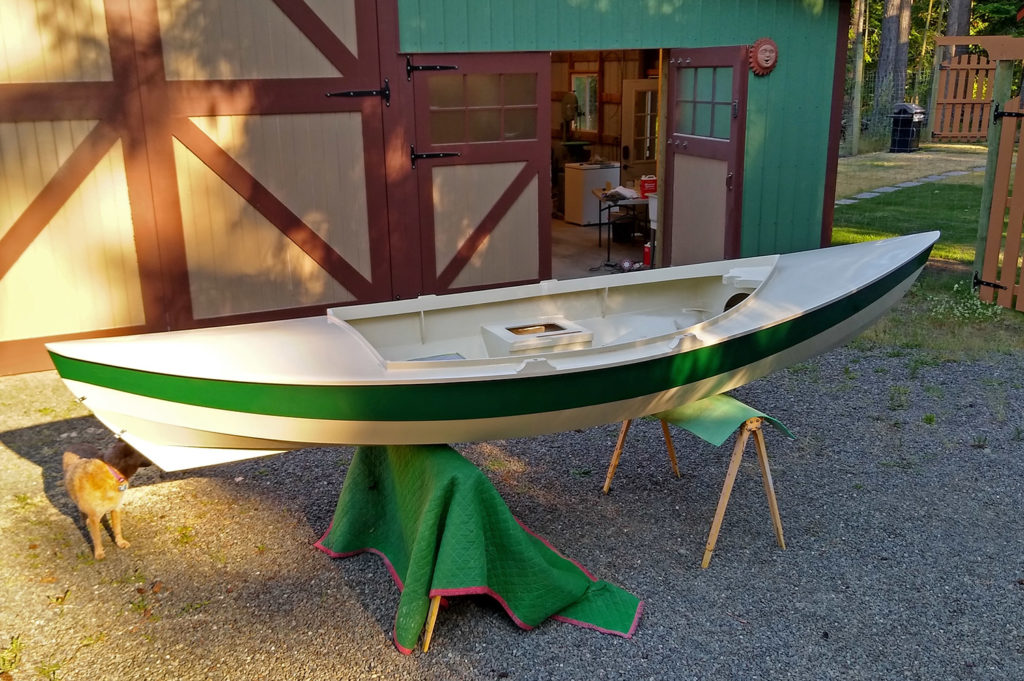
2. Added full height bulkheads and fore and aft decks, with sealed hatches.
3. Moved the dagger board off center, giving 20″ of width to sleep on the floor.
4. Built sealed boxes on each side of the boat, one of which containes the daggerboard.
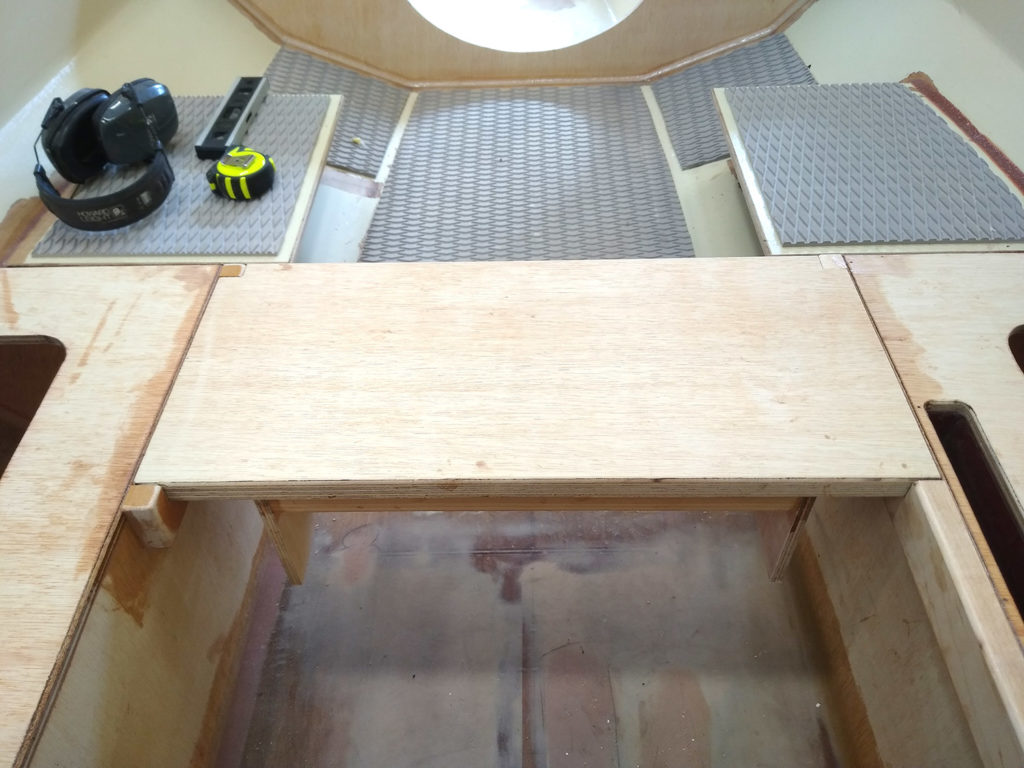
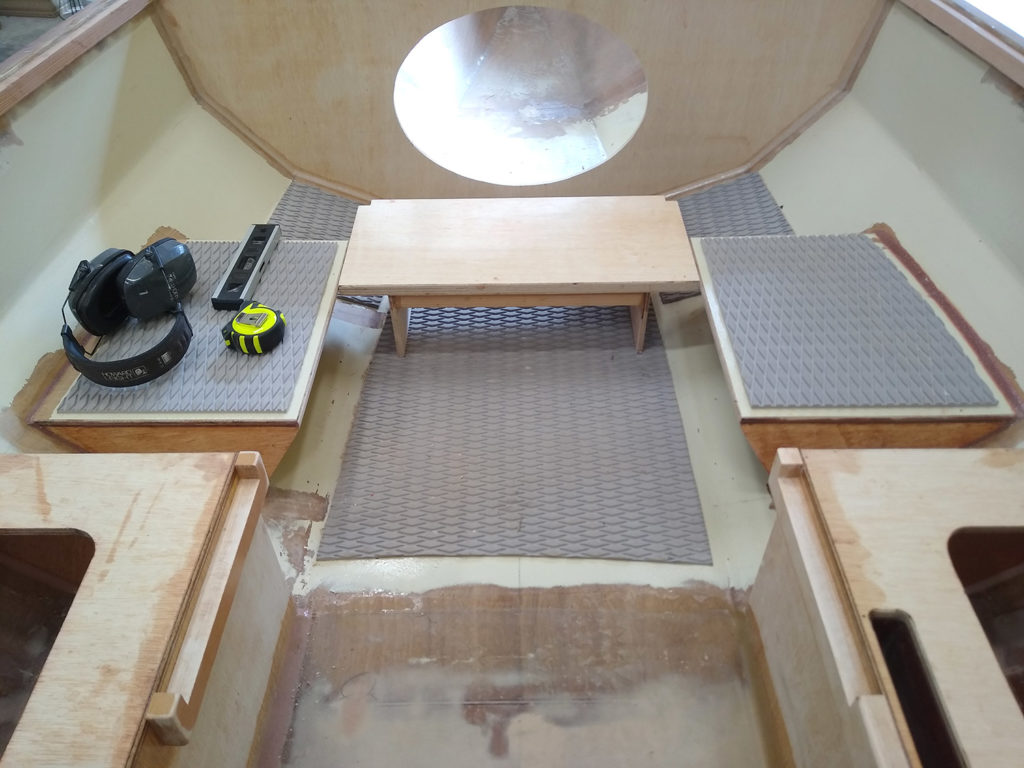
5. Added a removable rowing thwart that spans the two boxes. The thwart doubles as a stool in the stern when sailing.
6. Added low sailing seats on each side, for more comfort.
7. Built a new NACA foil daggerboard, to match my NACA foil rudder previously built.
8. Modified the fixed rudder, with standard tiller, to a kick-up rudder, with push-pull tiller.
9. Stiffened up the carbon fiber mast, greatly improving sail shape.The result is an excellent little cruiser for protected waters, if I keep cruising gear weight down. I have now done many day trips in it, and a three day cruise, sleeping aboard at night. Although, I have yet to finish my boom tent.
The open center is fantastic when sailing. The off center daggerboard is unnoticeable performance-wise. In fact the boat goes to wind better now, with the NACA foil and a stiffer mast. The seating is much more comfortable. The boat gained very little weight in the process. My wife and I can still easily lift it.
And I think the modifications look well integrated with the original hull design. While John Harris at CLC did not pre-approve these changes, he watched my progress on social media, and commented favorably on the end result.
I plan to do a solo Salish 100 like event in it this spring, from Shelton, Washington, up to Port Townsend, over 7-9 days.
You can see more build pictures and some of my adventures in the boat at my website.
Photos
Map
No Records Found
Sorry, no records were found. Please adjust your search criteria and try again.
Google Map Not Loaded
Sorry, unable to load Google Maps API.
Comments
Post a Comment Cancel reply
You must be logged in to post a comment.
3 thoughts on “15' Harris/Piehl CLC Skerry (2021) - JOY”
Owner’s Description
Photos
Map
Comments
Post a Comment
You must be logged in to post a comment.
3 thoughts on “15' Harris/Piehl CLC Skerry (2021) - JOY”
I have an unmodified Skerry and enjoy rowing it. I’ve got all the stuff for sailing except the sail, I just haven’t felt the need since I have a 43-foot sailboat for that. Love the boat. It would be fun to go rowing together sometime. If the wind comes up you can tow me!
Brandon Ford
I am very impressed with your modifications. I also have a Skerry that unfortunately fell two years ago and sprung a plank, so soon it will come back into the shop for some repairs. You have inspired me to make some changes to overcome some limitations I have here in Rhode Island. We have a lot of chop, and I have found the boat takes on too much water for my comfort. Decking the bow would help me a lot. I also love moving the daggerboard because I hate the thwart and can never find a comfortable place to sit when sailing. I much prefer sitting on the side of the boat.
I was thinking of adding a false bottom to make the hull a little more v-shaped to deal with the chop when I row it. Had you considered that? Perhaps I’ll contact CLC to see if they have a similar hull with a V-bottom I can be inspired by.
I have your website address and will study it as the spring arrives, but I think I have decided to change my plans from a plank repair to a much longer project. Thank you so much for inspiring me.
Paul
Hi Paul. Interesting ideas. For dealing with a lot of chop I would probably choose a different hull. Take a look at Ross Lillistone’s Flint design, which was designed specifically for what you are talking about. https://duckworks.com/flint/ https://smallboatsmonthly.com/article/flint/