
Owner’s Description
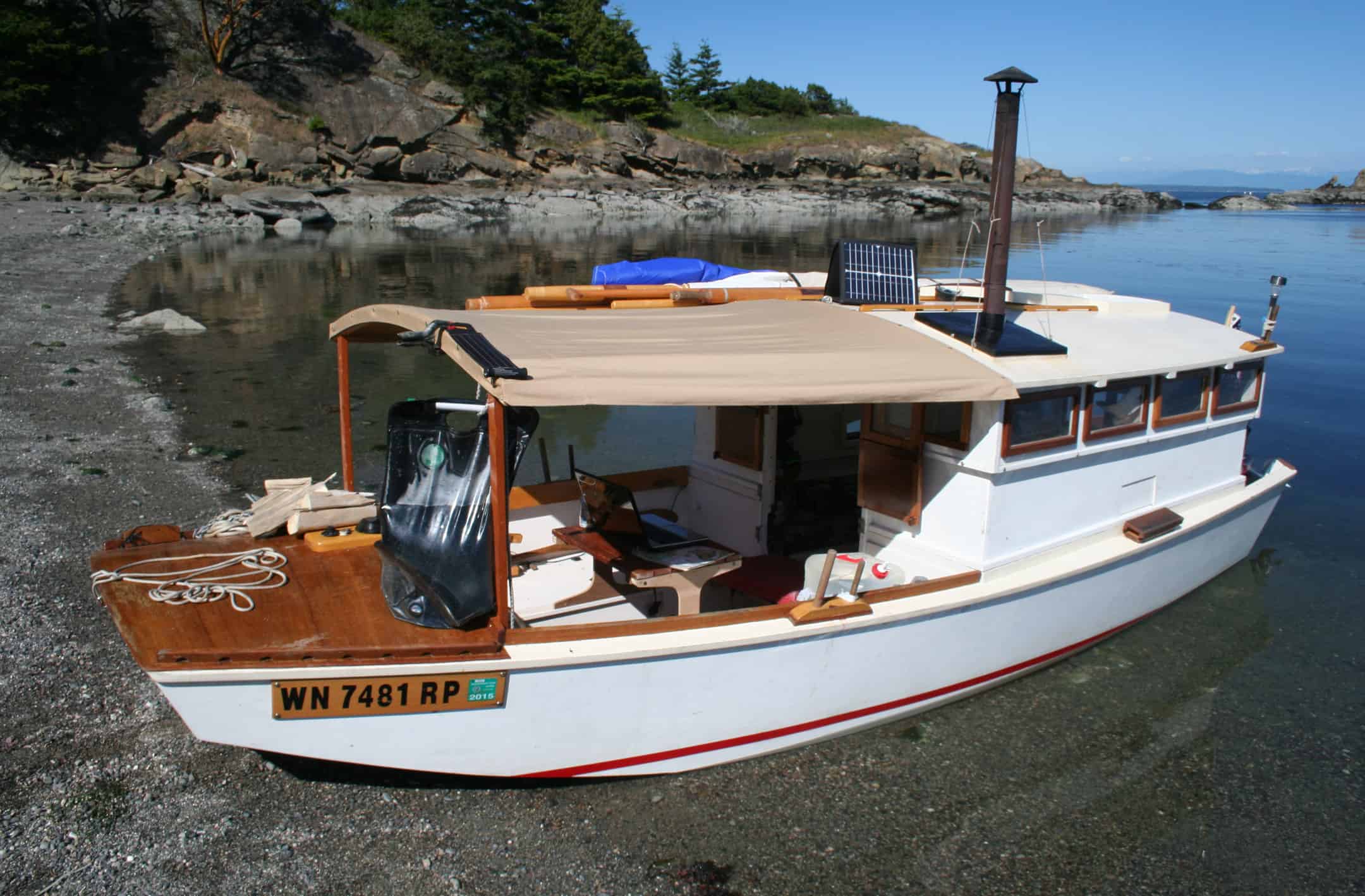
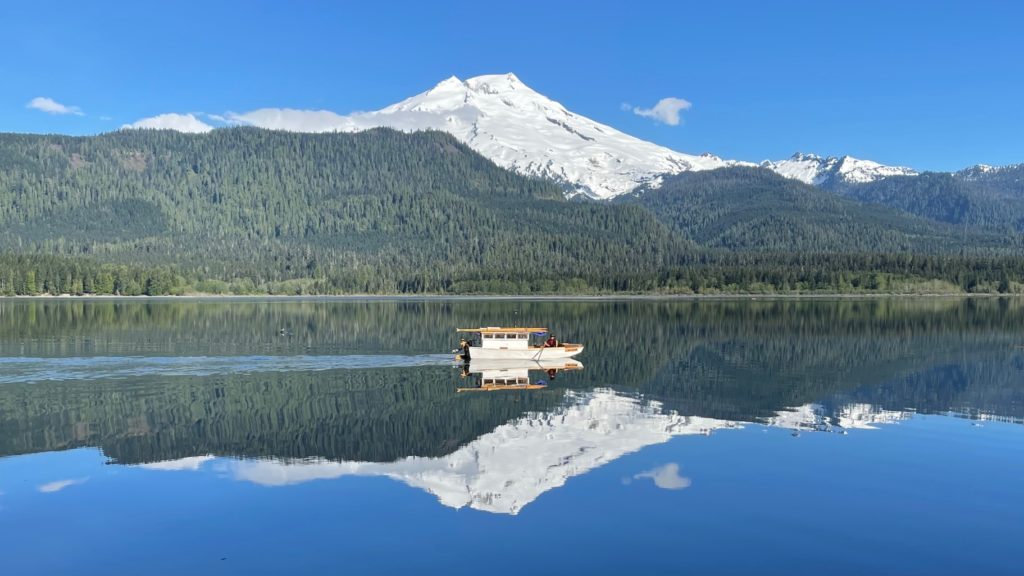
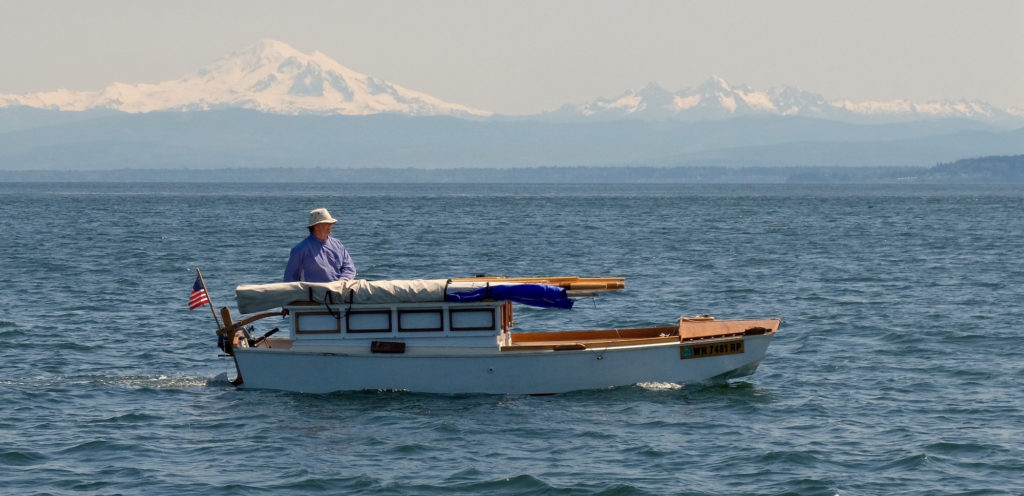
I was quite happy with my Caledonia yawl ALISON as a camp-cruising boat until my son built BONZO, an Escargot canal cruiser. I decided I needed a cruiser like BONZO with a cabin, windows, and wood stove, but one that I could sail, motor and row like ALISON. I gave up the Caledonia’s rough-water ability for a boxier hull that could stay on a nearly even keel no matter where weight was placed, especially for dining and sleeping. I was drawn to Phil Thiel’s APHASIA, which he describes as a sampan-type hull. I enlarged the hull by 8 percent and modified the bottom to put some vee in the forward sections. It was a roundabout way of arriving at a garvey hull.
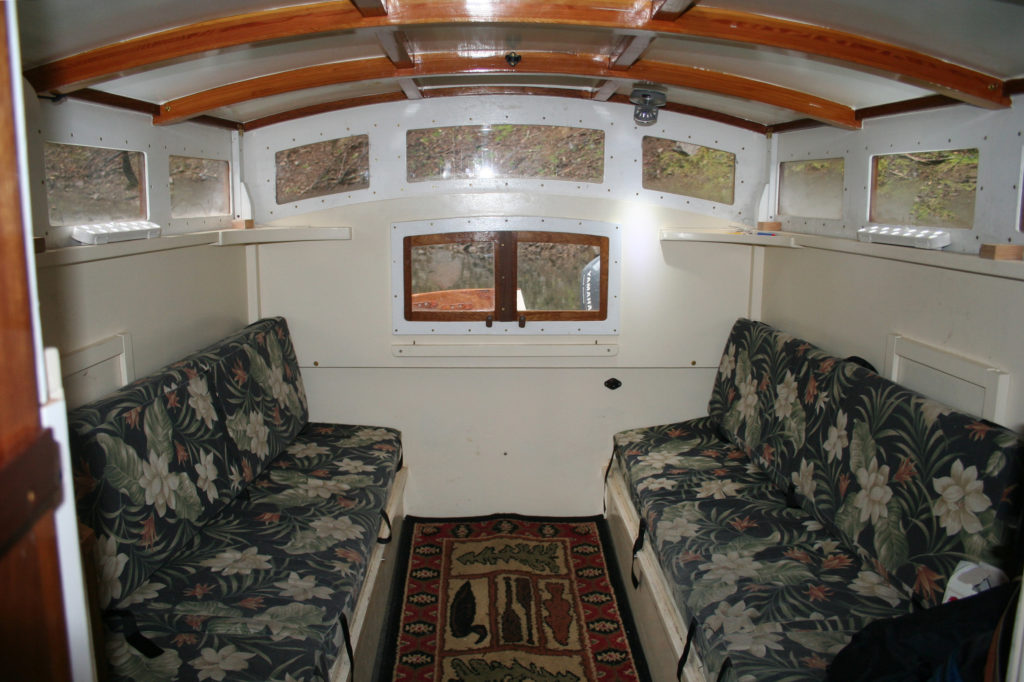
The hull went together quickly and I designed the interior as I went along, occasionally making sketches but more often using sticks and cardboard to mock up the accommodations. I had to get the hull out through a door, so the cabin was made to be removable. The centerboard trunk is placed off-center to keep it out of the way; it’s incorporated into the benches in the cockpit and cabin.
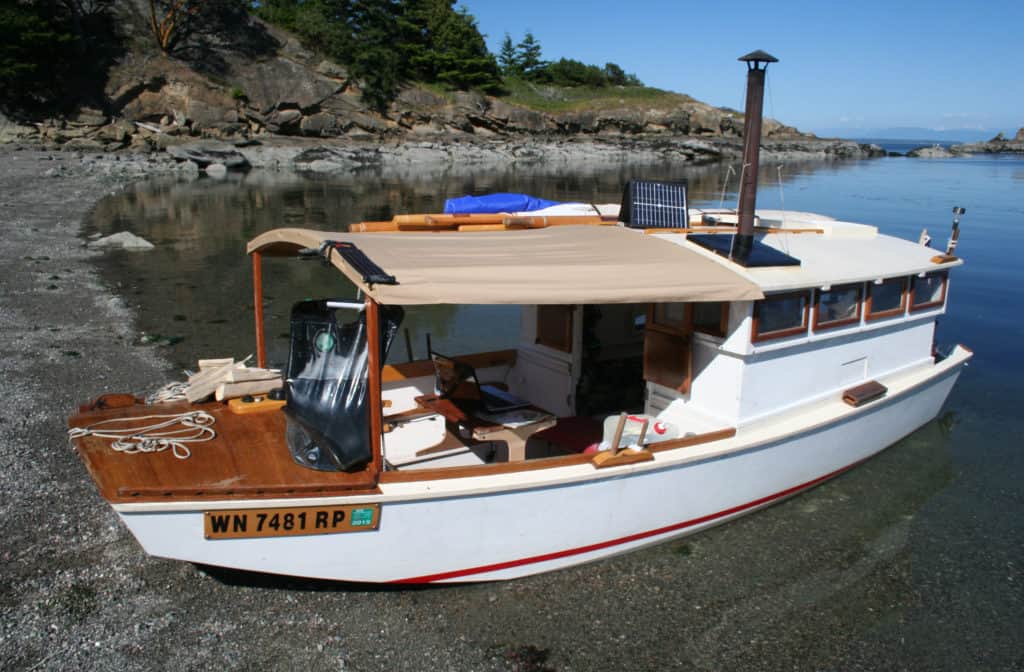
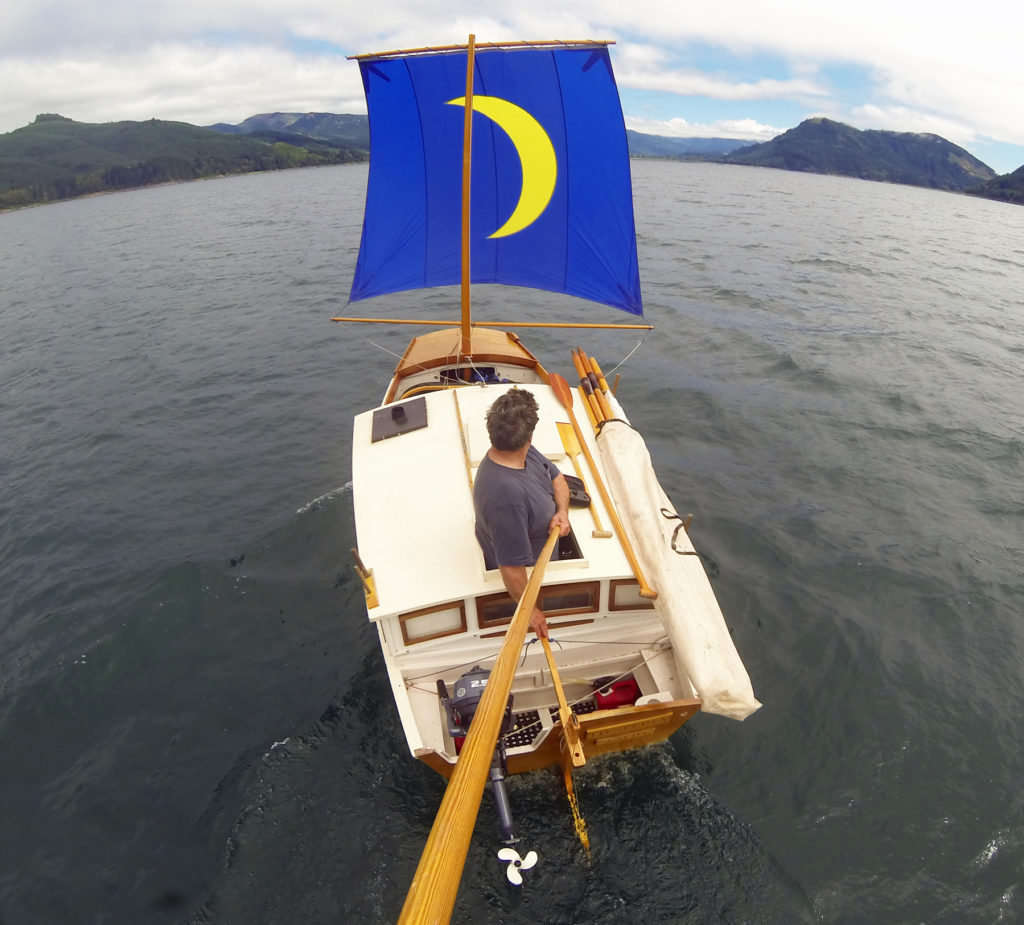
The cabin is built like a pop-top camper shell for a pick-up truck. Lowered, it provides a clear line of sight aft while I’m rowing; raised, it has good clearance for sitting in the cabin. I raise and lower the top by lying on my back and pushing the ceiling with my feet. Hinged support struts in the corners fall into place when the cabintop is raised. The doors have a removable center section to accommodate the 11″ of the cabintop’s travel.
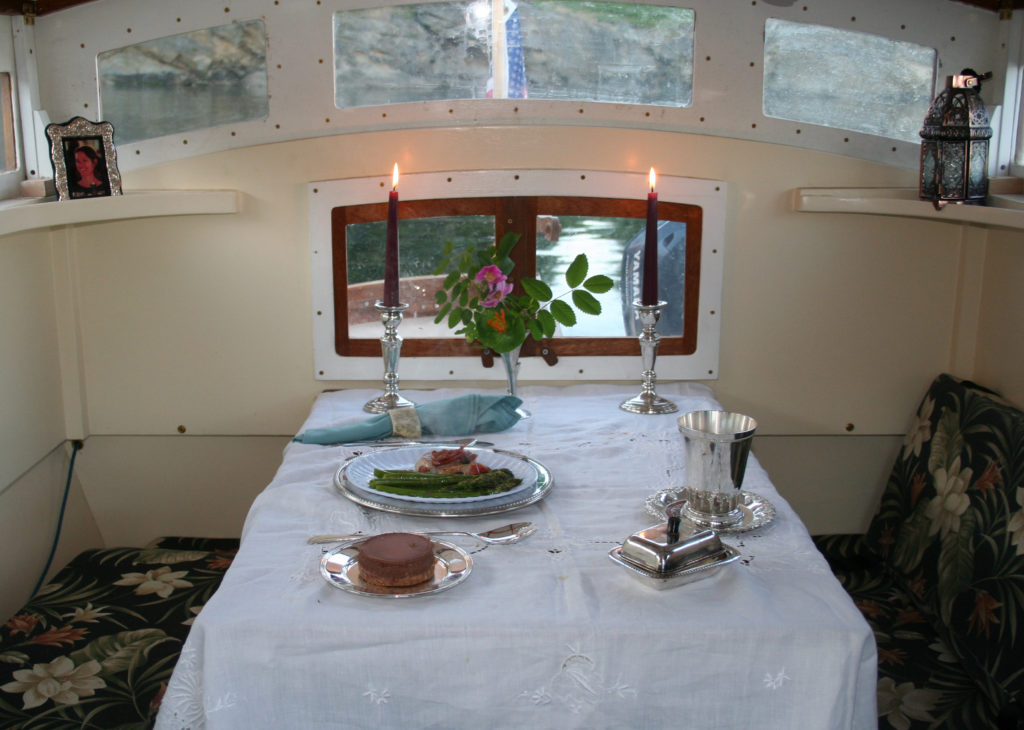
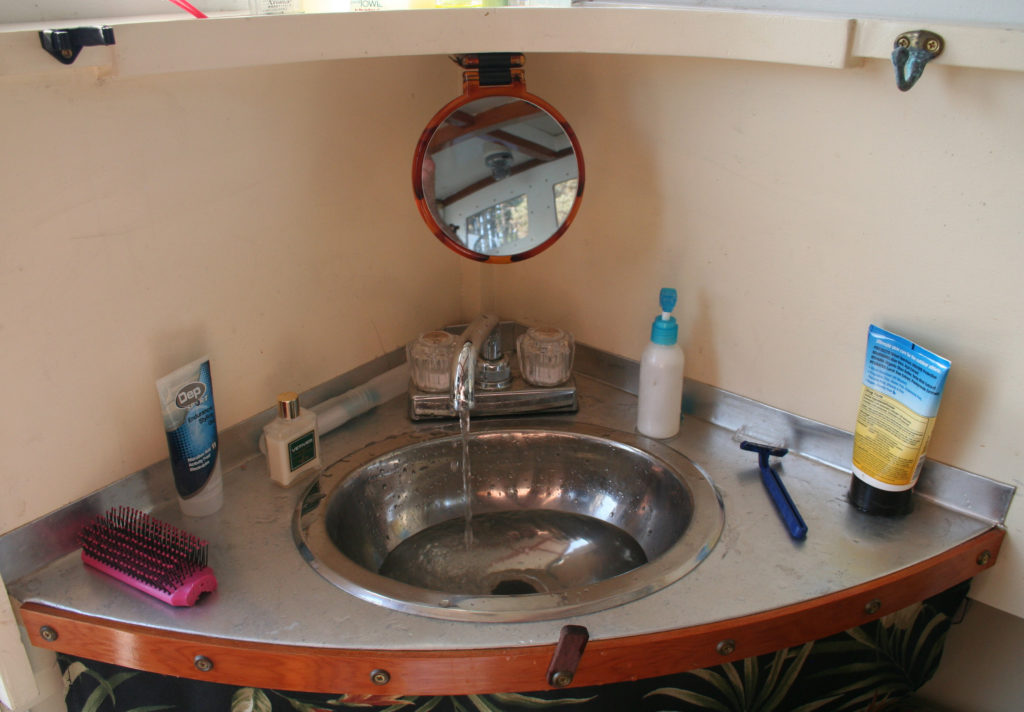
In one corner of the cabin, a shelf supports a wood-burning stove I welded together from sheet steel; in the other corner there’s a small sink. A collapsible water jug set on the roof connects to the cabin’s plumbing and a heat exchanger made of copper pipe butts against the stove to provide hot water for the sink.
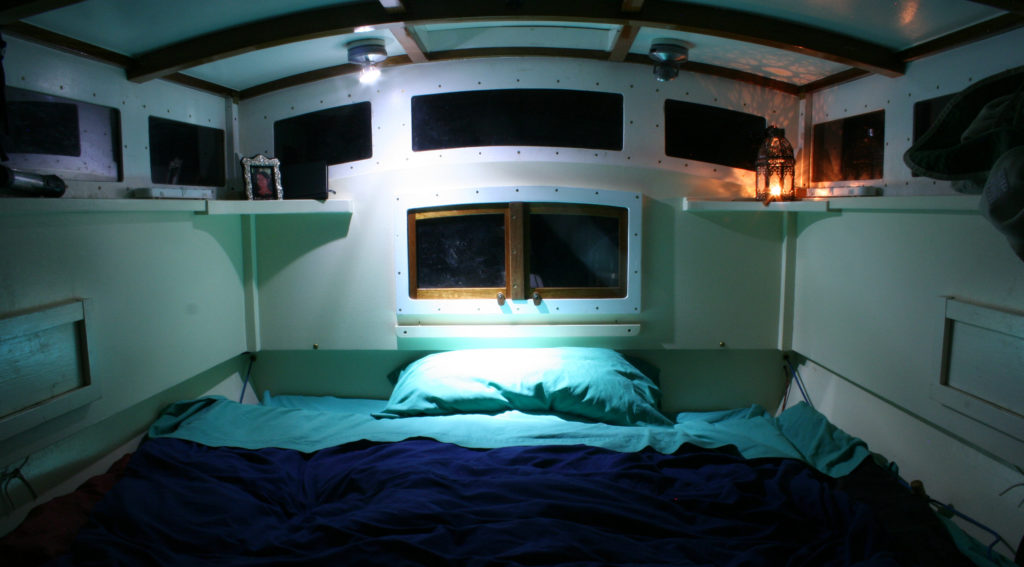
The passageway down the center of the cabin and cockpit has parallel sides and ledges to hold floorboards flush with the benches to create sleeping platforms in both the cabin and cockpit. Grabrails on the cabin roof are spaced to fit the cleats under the floorboards so they can be used as a catwalk or a sun deck.
A tiller line runs through the cabin and around the cockpit and another line connects to the outboard’s kill switch. Having the motor and cockpit separated by the cabin cuts down on the noise. The cabin sides have ports that open to thole-pin pads for rowing indoors in cold, wet weather.
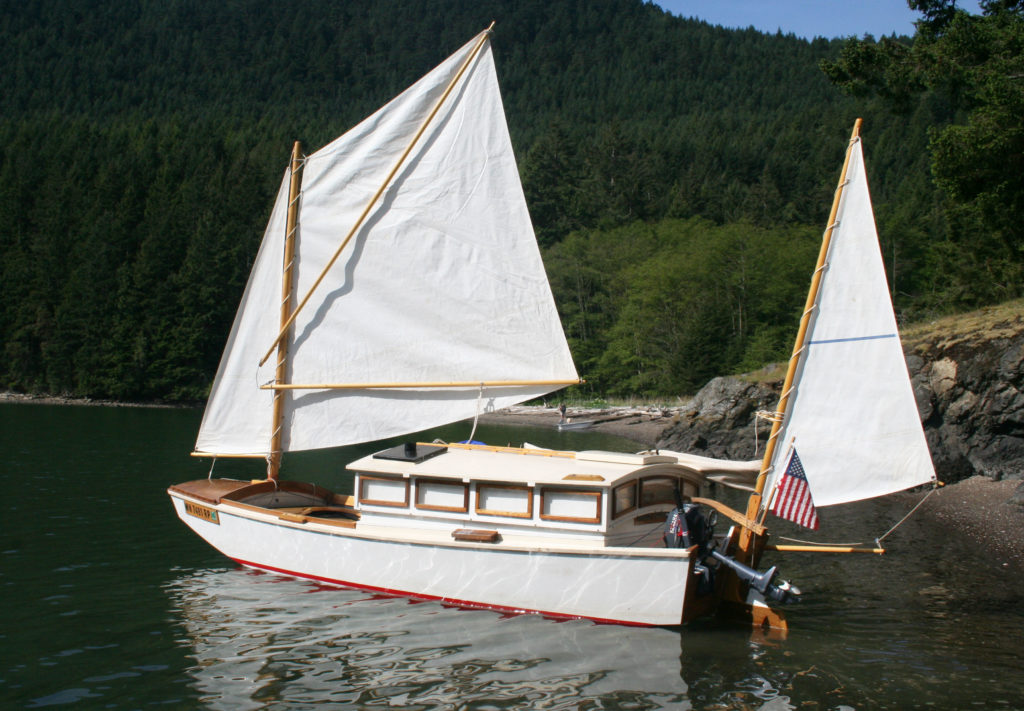
The masts and the main’s sprit and boom are all about 12′ long and can be stowed in the boat. The cabin’s windage gave the sail plan I’d drawn more of a weather helm than I like so I added a self-tending jib on a club for better balance. The jib, main and mizzen were all cut from the protected Dacron in the middle of a weathered roller-furling jib discarded by a larger sailboat.
Photos
Video
Map
No Records Found
Sorry, no records were found. Please adjust your search criteria and try again.
Google Map Not Loaded
Sorry, unable to load Google Maps API.
Comments
Post a Comment Cancel reply
You must be logged in to post a comment.
One thought on “17' Cunningham Garvey Houseboat (2011) - HESPERIA”
Owner’s Description
Photos
Video
Map
Comments
Post a Comment
You must be logged in to post a comment.
One thought on “17' Cunningham Garvey Houseboat (2011) - HESPERIA”
What an enchanting and clever little boat! And I love your style: candlit dinners!