Owner’s Description
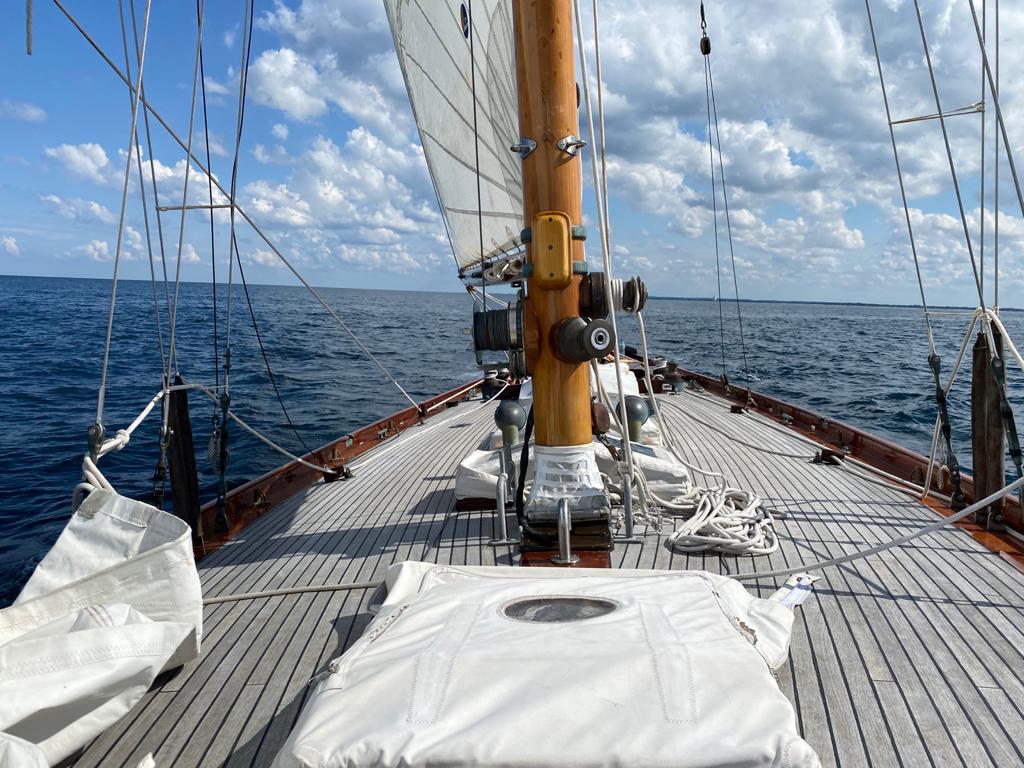
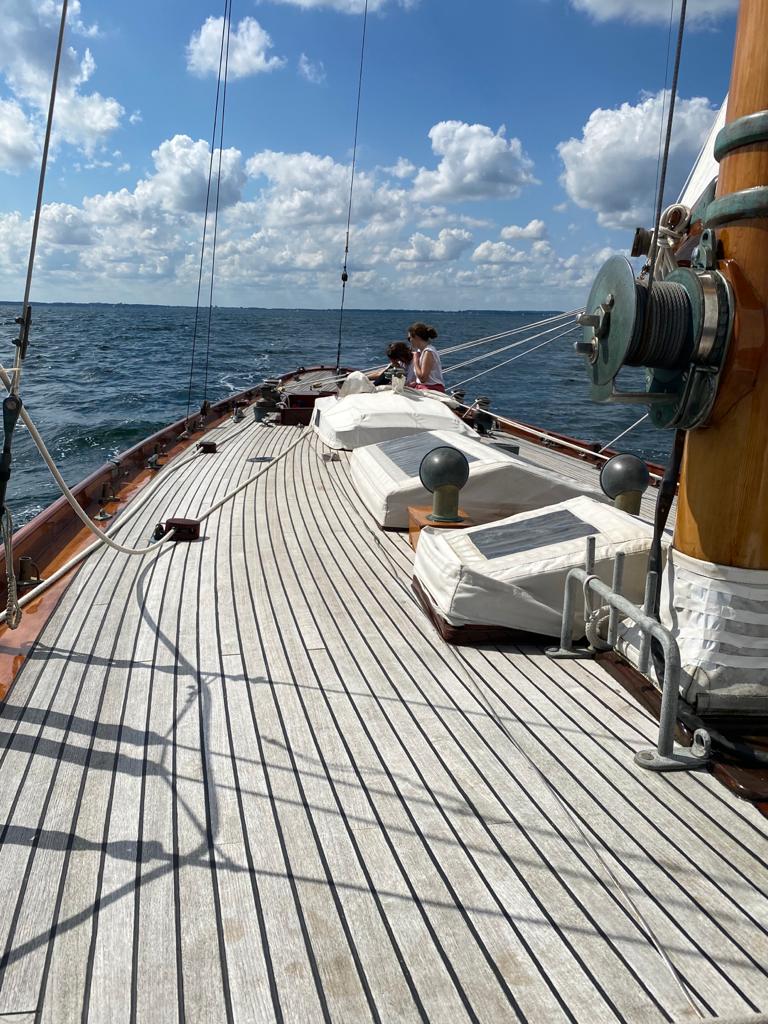
The beauty of a flush-decked 10m Rule cruising vessel
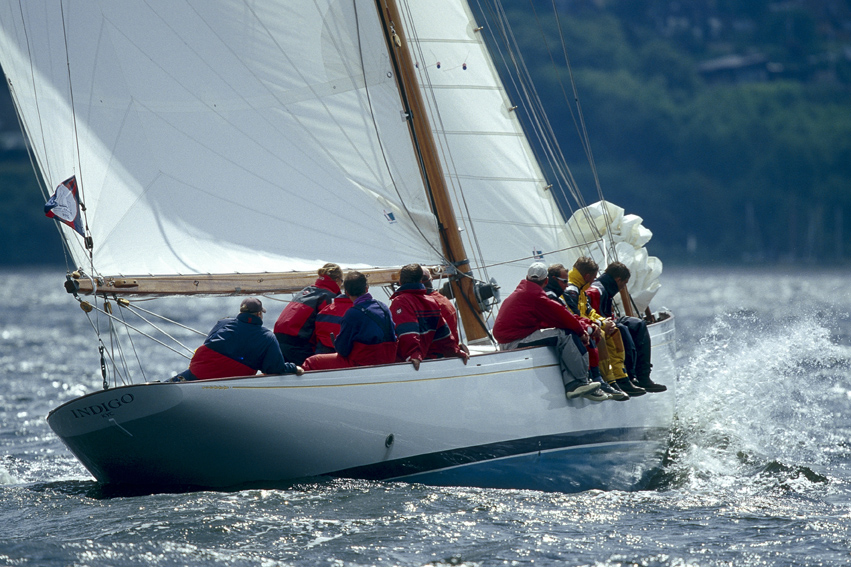
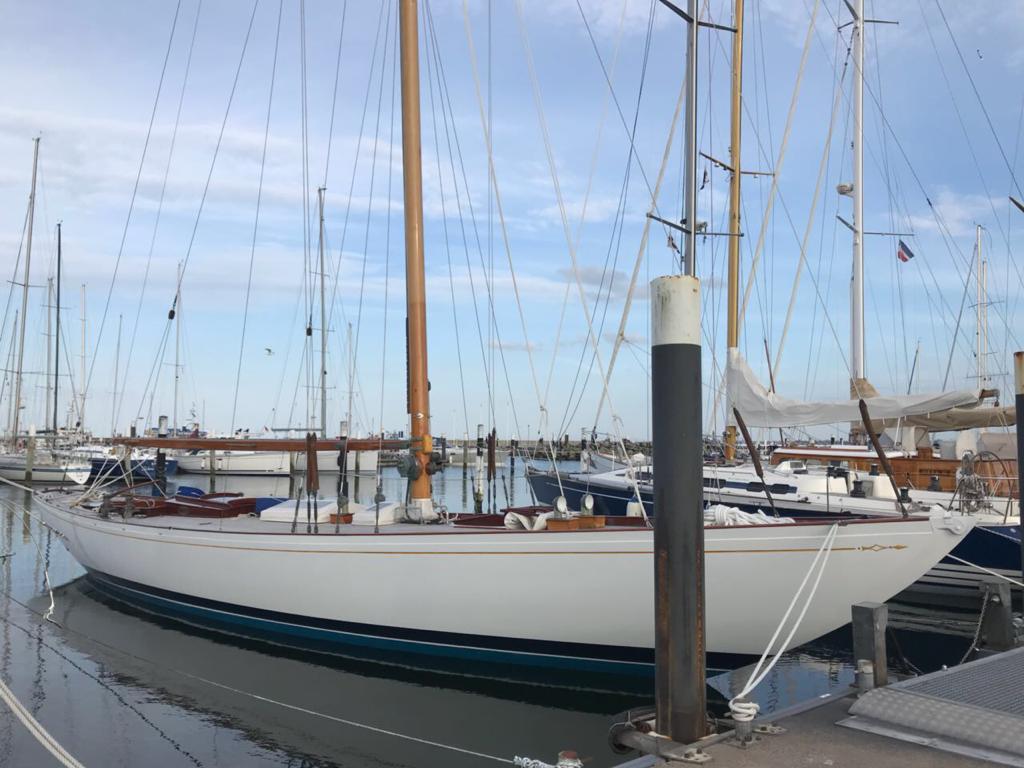
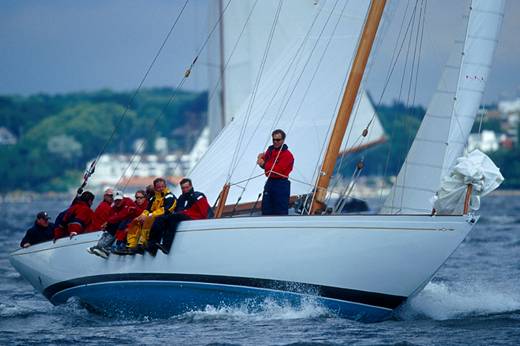
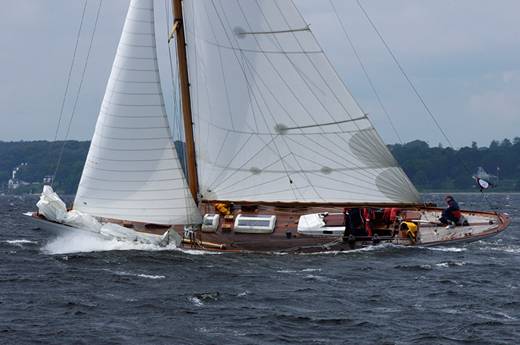
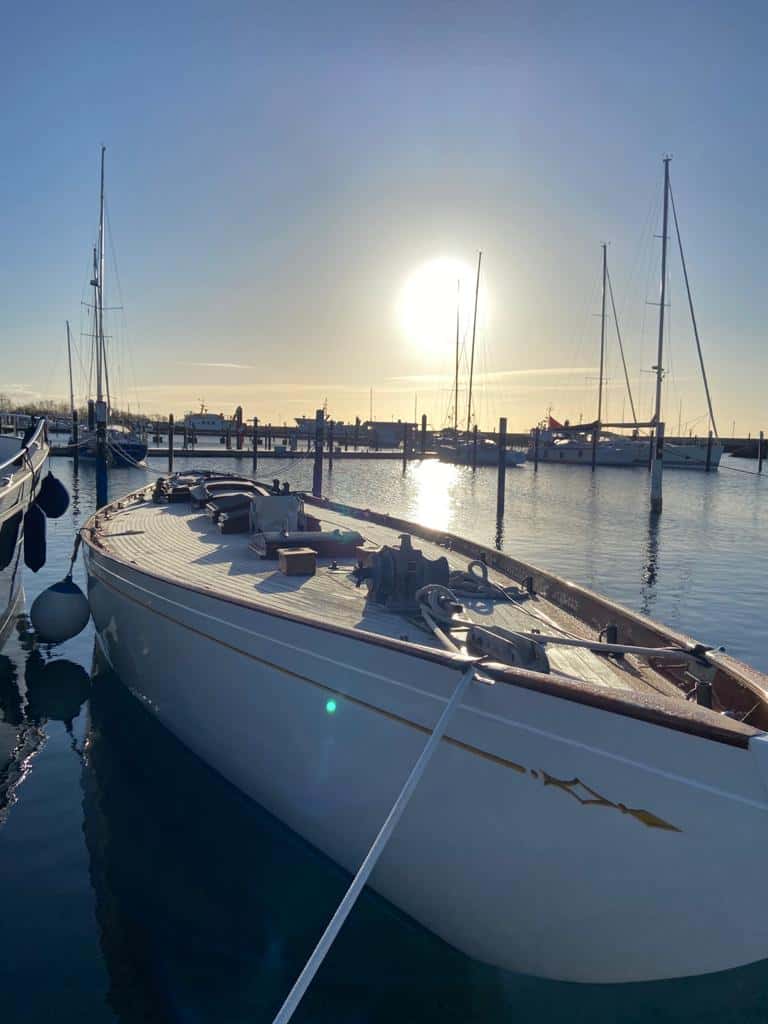
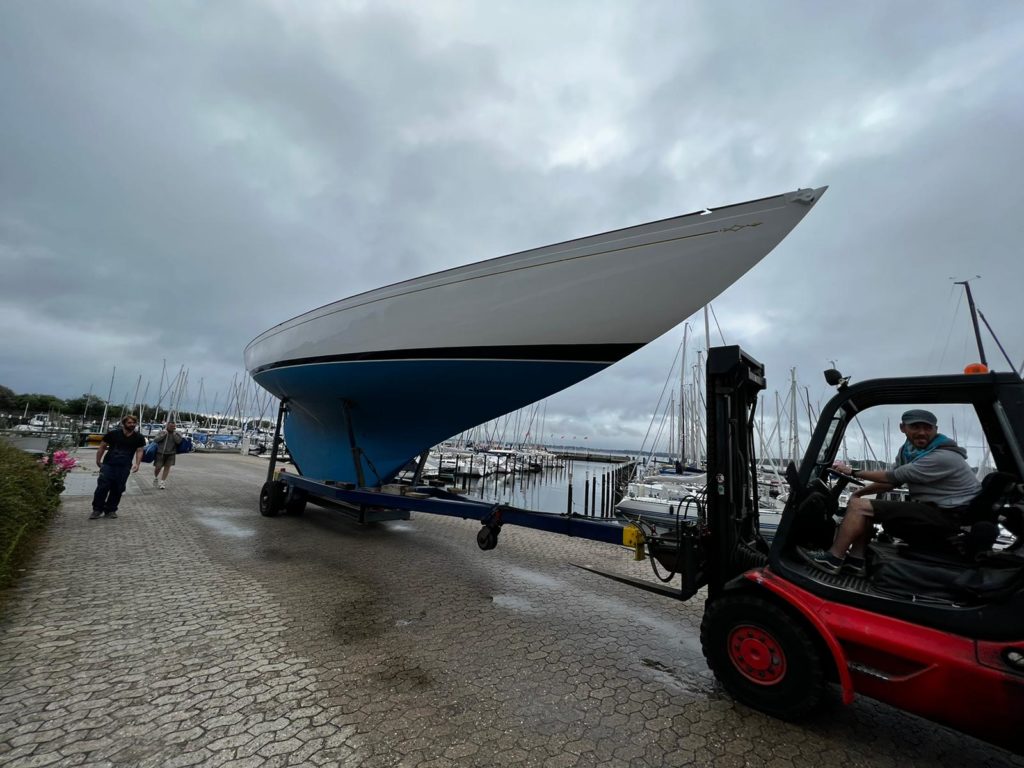
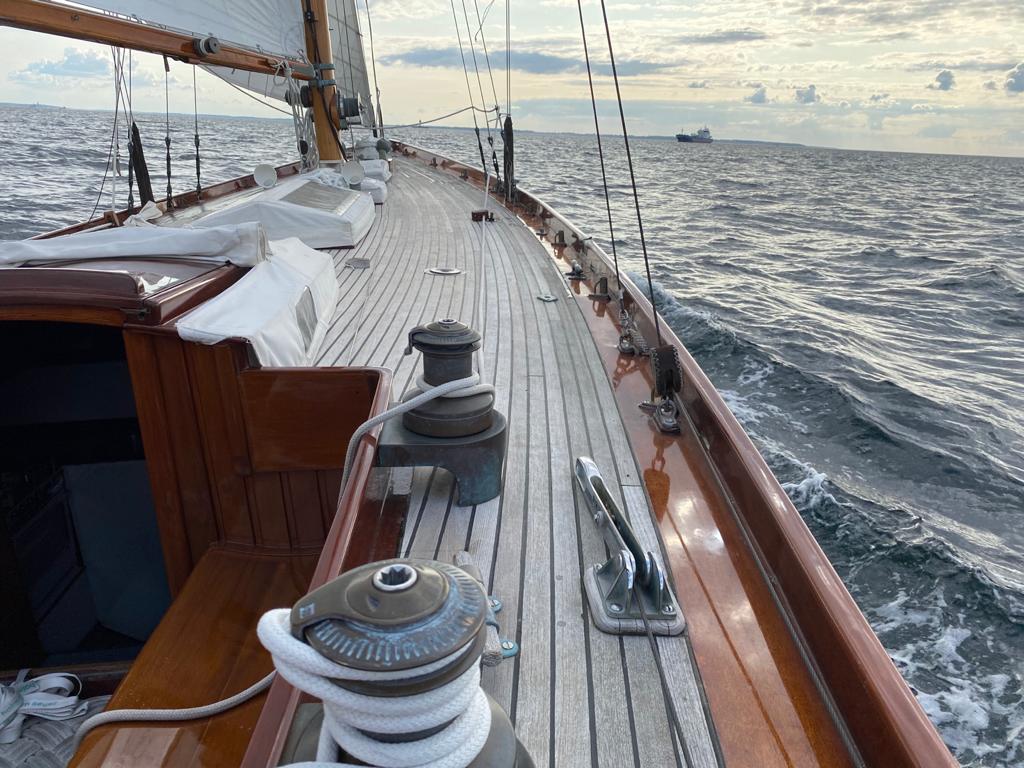
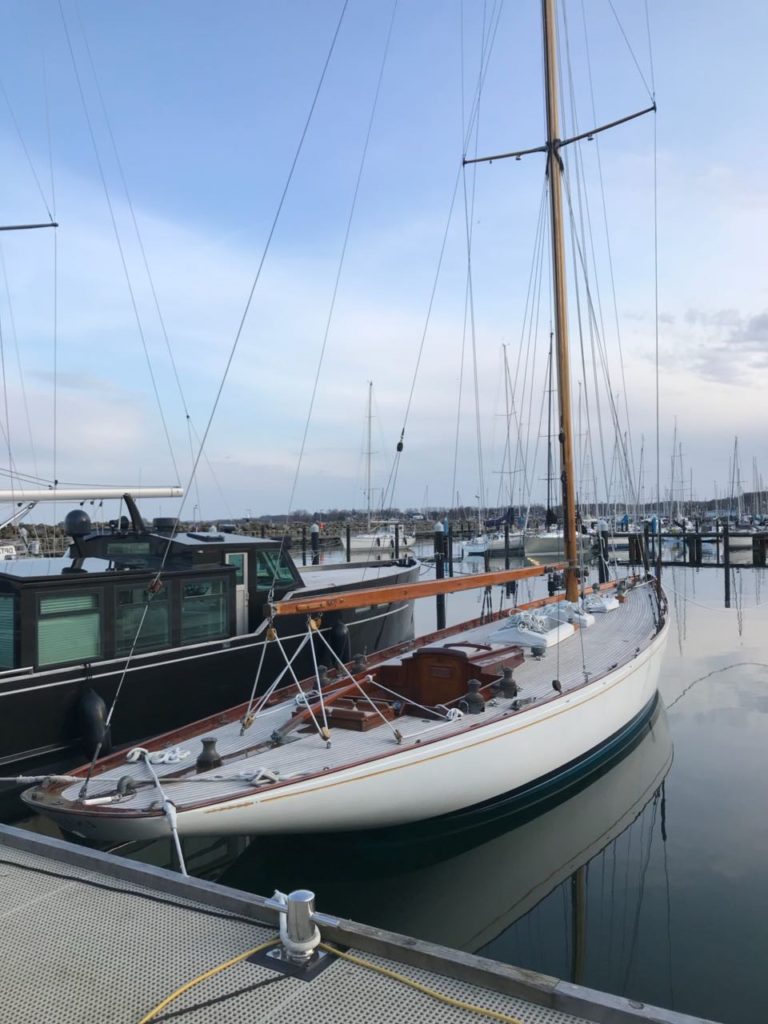
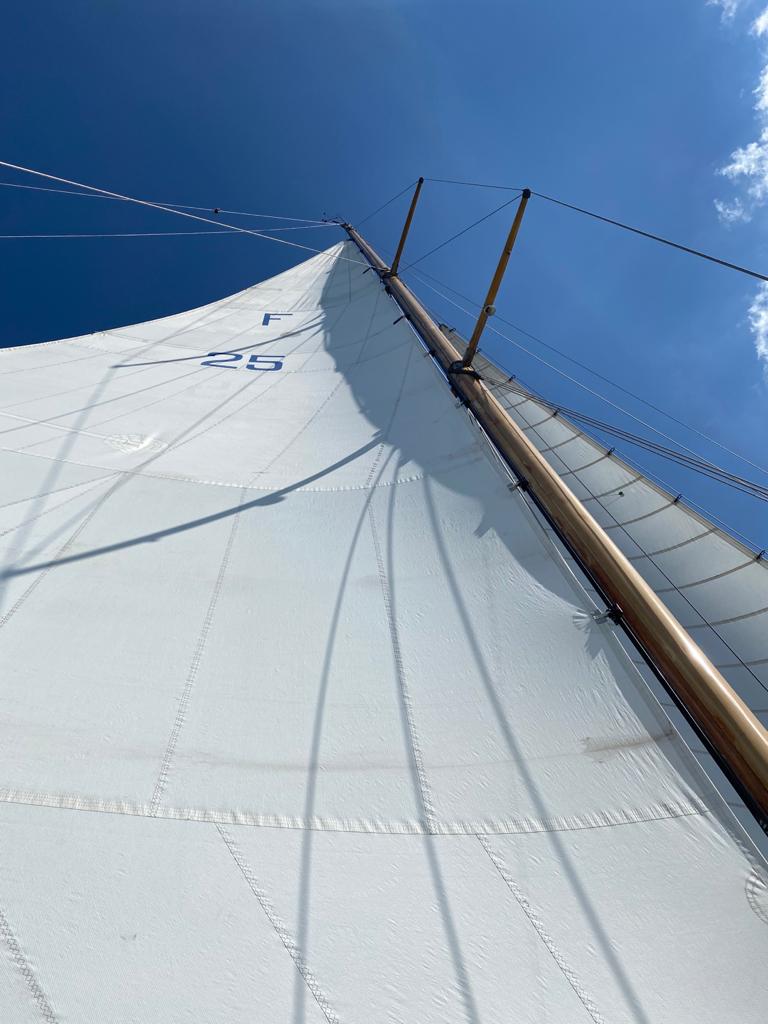
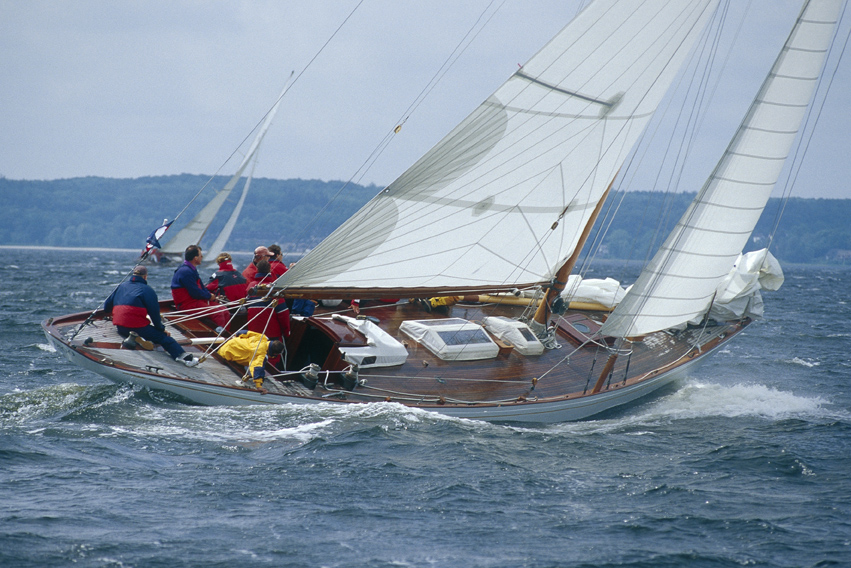
When the then chairman of the Royal Norwegian Yacht Club KNS, Halfdan Hansen, decided to retire from active racing, he commissioned Christian Jensen, who had build yachts for him before, with the design of a real gentleman’s cruising yacht of a size equivalent to the 10 Metre class. In order to bring the costs down, Hansen got four of his friends from KNS to place orders as well, using the same design. So a micro-series production took place in the winter of 1937/38 at the Soon Slip og Bâtbyggeri in Son, Oslofjord, with F20 – F24 being launched in spring. The owner of F21, L. Severin Skougaard, set sail for a crossing to England but returned half way when he found the deck was leaking. Forthwith, he commisioned a new boat to be build in winter 1938/39 under the watchful eyes of his trusted bosun, using only the best materials and workmanship. F25 was delivered in spring 1939 and christened Gannet III (now INDIGO).
During the years before WW II, cruising yachts were built in the Nordic countries which roughly followed the Int. Metre Yacht Rule. They were built for endurance, with a wider beam and more draft, both of which enabled them to sail under full canvas in the strong winds of Norway’s south coast. These yachts were given sail numbers according to the old metre yacht lettering from 1906/07, i.e. E for twelves, F for tens, H for eights. They were not meant to be Int. Meter Class racers but gentlemen’s cruising yachts.
All five sister boats to INDIGO are believed to have survived to this day.
Photos
Map
No Records Found
Sorry, no records were found. Please adjust your search criteria and try again.
Google Map Not Loaded
Sorry, unable to load Google Maps API.
Comments
Owner’s Description
Photos
Map
Comments