Owner’s Description
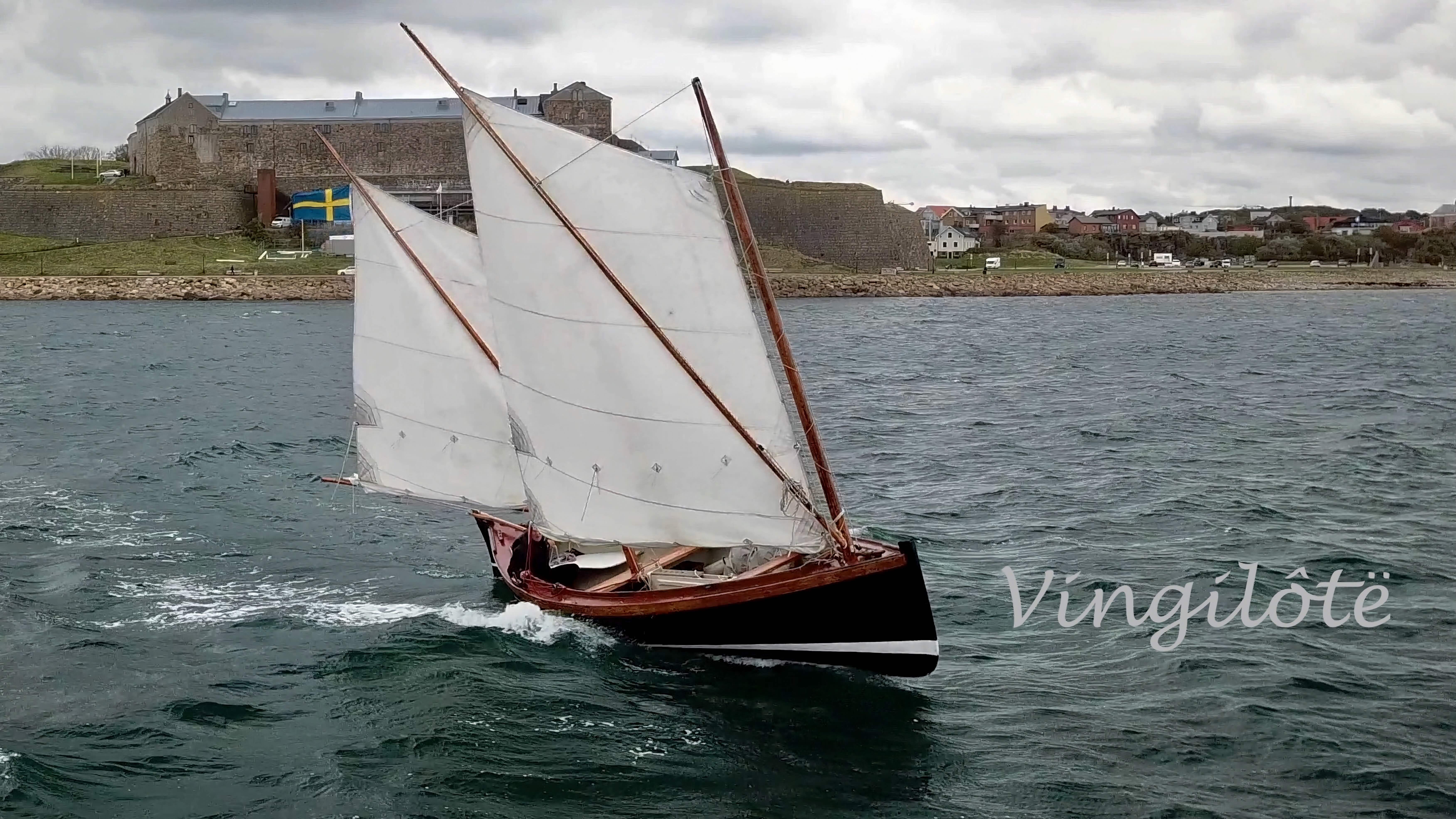
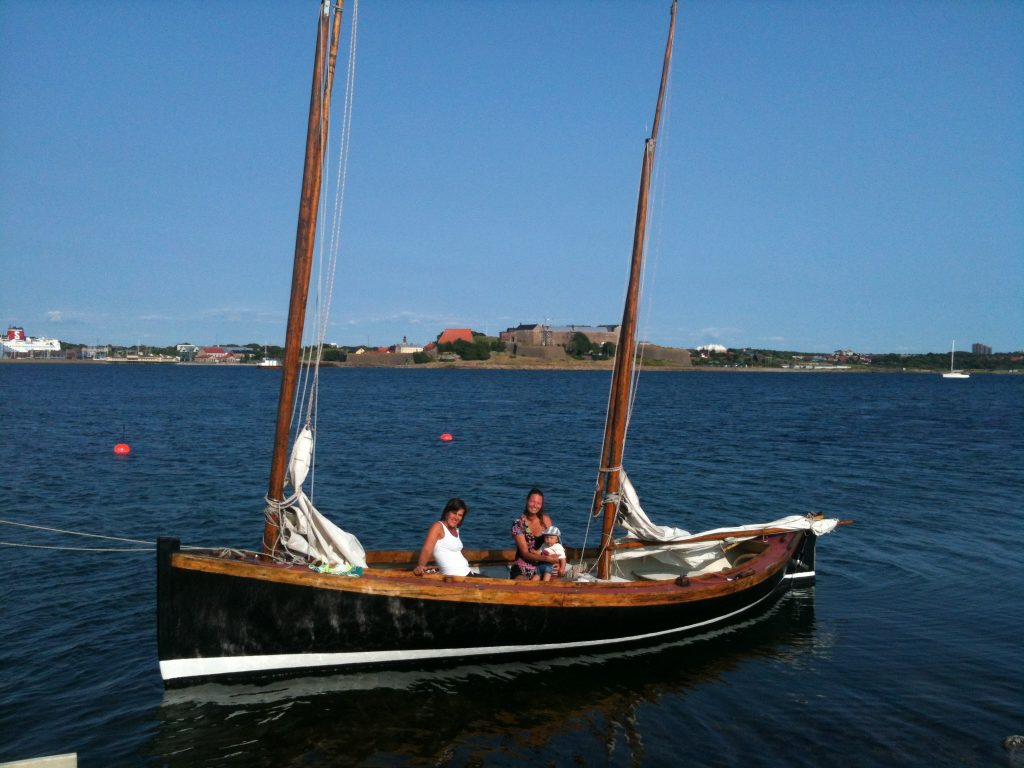
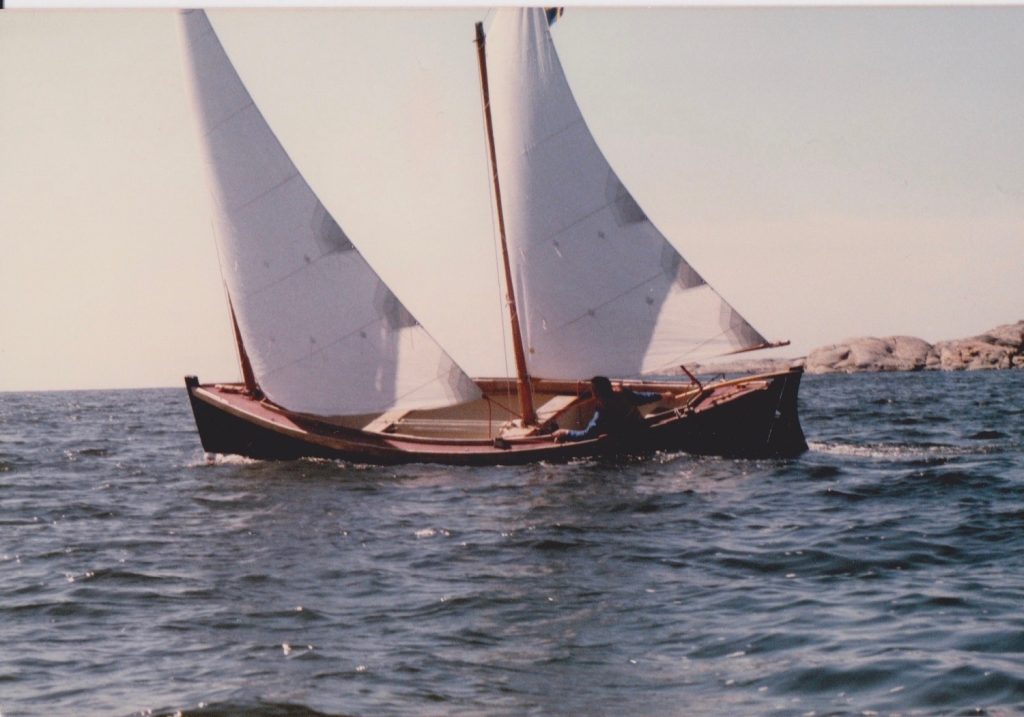
Vingilotee is a replica of a Crotch Island Pinky, built by my father, Bernt, and me in 1984. The original was built by John Walker in Casco Bay, Maine, around 1880. She is 26 feet LOA and has a displacement of 2,600 pounds.
Our Story
My father, Bernt Sallén, began building fiberglass boats in Varberg, Sweden, in 1958. Over the next 25 years, the company produced over 80,000 boats, primarily under 28 feet in length. While most were motorboats, my father’s heart and mind were always devoted to sailing. Growing up in this environment, it felt natural for me to study naval architecture. However, as most Swedish shipyards closed in the 1970s, I ultimately pursued a career in industry. Still, my passion for small boats remained strong.
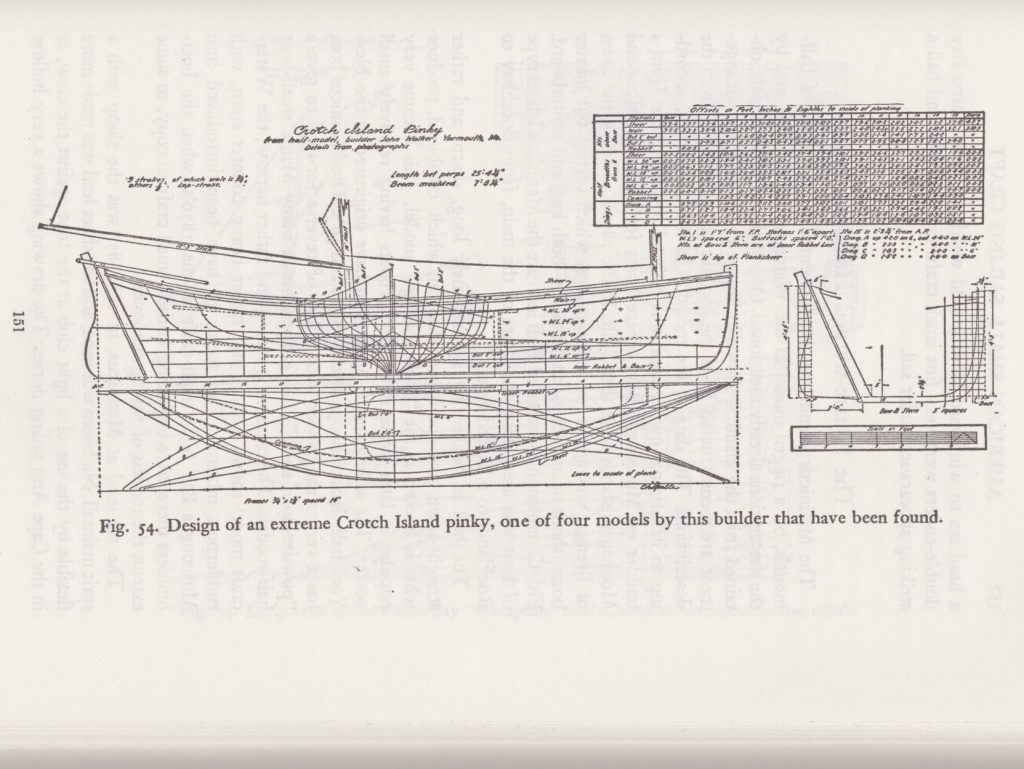
Father had a vast collection of books on sailing vessels, and one of my favorites was American Small Sailing Craft by Howard Chapelle, which surveyed 19th-century boats along the American East Coast. Among the most striking was the Crotch Island Pinky, a type of boat used for lobster fishing.
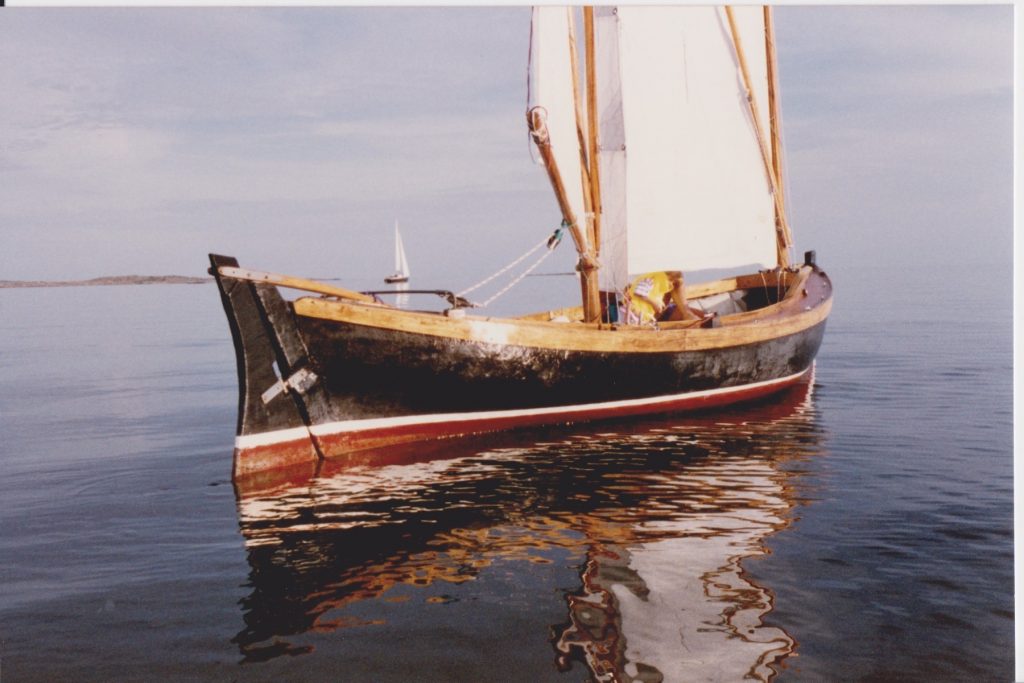
Chapelle described these boats as being designed for both speed and safety. Their long, fine run reduced wake disturbance, preventing following seas from breaking over the stern—a crucial feature for survival in heavy weather. Their deep forefoot and wall-sided bow minimized spray, preventing ice buildup when sailing windward in winter conditions. Casco Bay double-enders were known for their speed, seaworthiness, and striking appearance under sail.
Building Vingilotee
In 1984, when my wife and I were expecting our first child, I realized that if I wanted to build a boat, it had to be now—otherwise, it wouldn’t happen for another ten years. The choice was obvious: the Crotch Island Pinky.
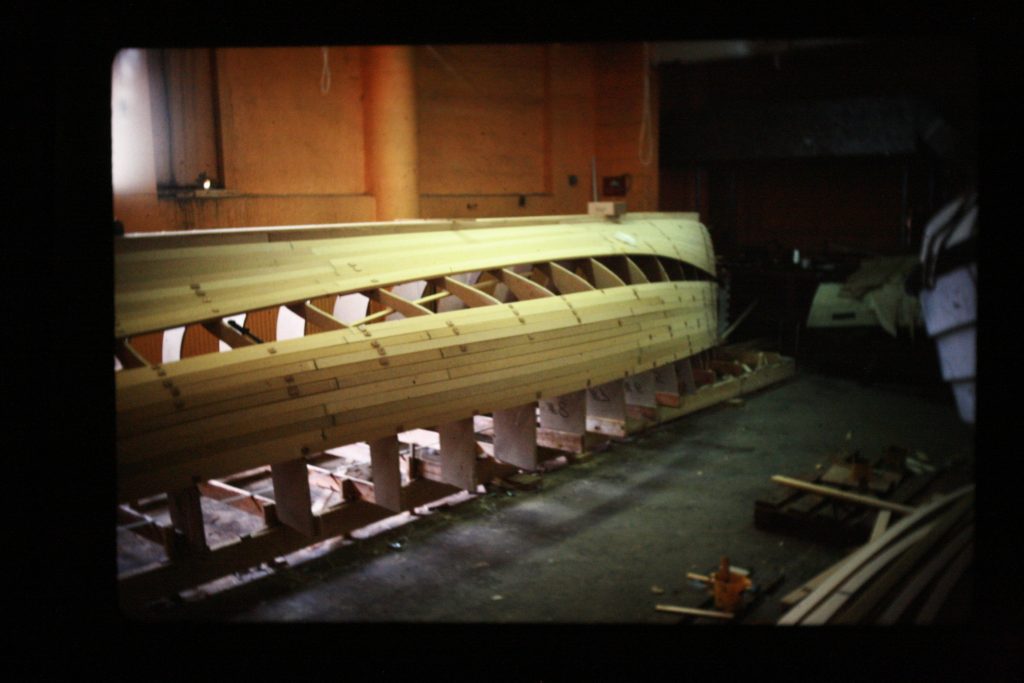
Using the small sketch from Chapelle’s book, I expanded the lines to full scale on our living room floor. My father and I decided on fiberglass sandwich construction with a Divinycell core. This material was readily available to us, but more importantly, we lacked the skills to build in wood. We also opted for a workboat finish; rather than striving for a polished look, we preferred spending time sailing.
Starting at Easter, we made steady progress and launched the boat at the end of July—three weeks after our daughter Hanna was born. We named her Vingilotee, inspired by J.R.R. Tolkien’s The Silmarillion. (Eärendil, bearing the Silmaril upon his brow, sailed westward in Vingilotee to seek the aid of the Valar. In recognition of his quest, they set his ship in the sky, where the light of the Silmaril shone as the Evening Star, a sign to the world that Eärendil had reached the gods.). Our budget was $1,000, but we spent just over $500—the rest went toward a launch party at the old castle in Varberg, where we celebrated with 100 friends. It was a fantastic evening!
Finishing Touches
Over the following winter, we completed the final details. The unstayed masts were made from spruce cut in a nearby forest. To minimize splitting, we left a spiral of bark intact during the drying process. The trimmings were crafted from oak.
The long, heavy sprits were permanently suspended from straps on the mast. The sail was hoisted with a halyard, and the sprit boom nock was secured with a simple, effective outhaul system.
The centerboard was constructed from two plywood sheets, filled with a mix of polyester and rock flour, and coated in fiberglass—making it exceptionally durable. For ballast, we used lead bars. Throughout the build, we followed the same philosophy as the old-time fishermen: simplicity, ease of handling, and locally sourced, low-cost materials.
Sailing Vingilotee
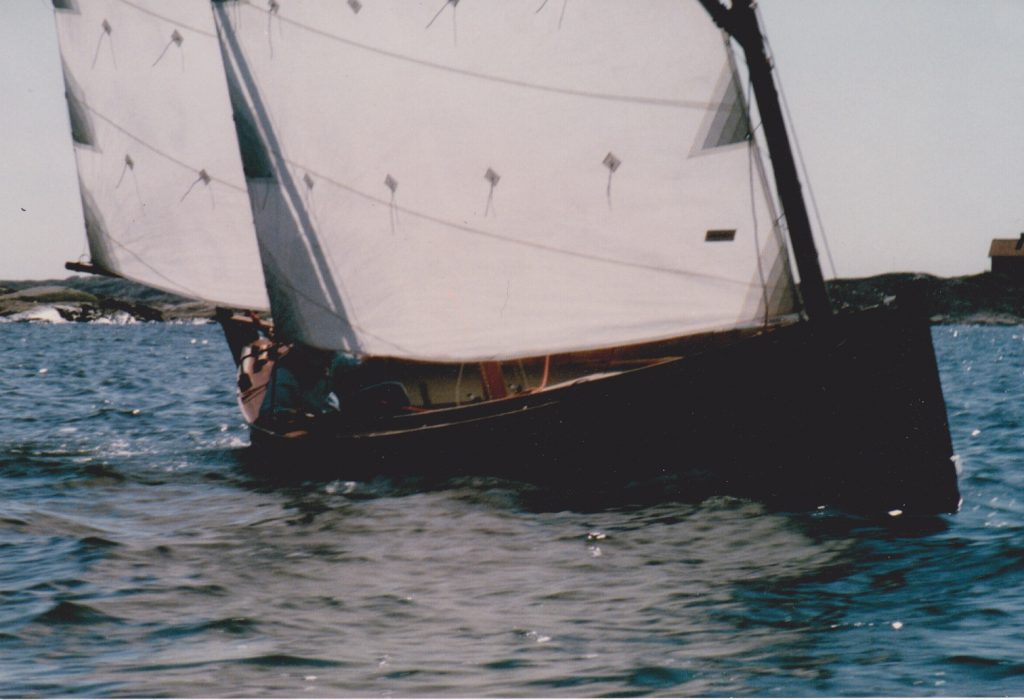
Sailing Vingilotee is a pure joy. Feeling her heel over, dragging one’s hand in the water, and sensing the slight pulse of the rudder—these are the moments that make sailing her truly special. She is easy to handle single-handedly, well-balanced, and responsive. She sails well close to the wind and, with sheets eased, keeps pace with modern boats of similar length.
Her rig with the boom on the mizzen makes maneuvering in tight spaces effortless—we can even reverse under sail with good control. It has become a tradition to sail into Varberg’s old harbor, weaving between guest boats to give tourists a taste of maritime history.
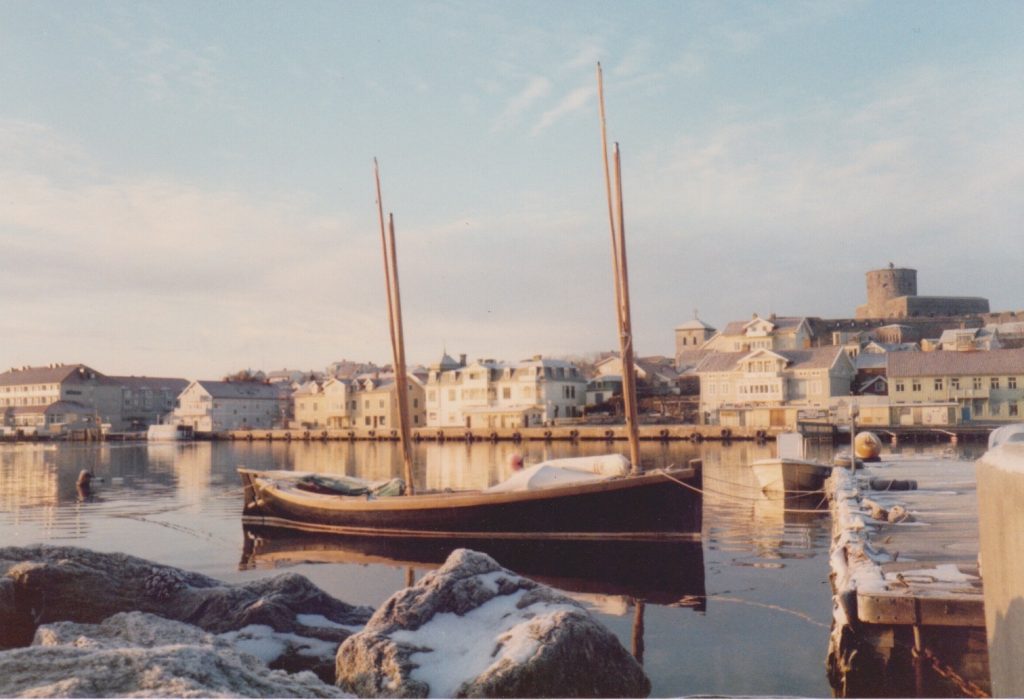
In the early years, Vingilotee alternated between Varberg and Marstrand, a 55-nautical-mile stretch up the coast. One particularly memorable trip saw us riding a strong tailwind, covering the distance in just nine hours at an average of six knots.
The Swedish west coast and Kattegat offer both archipelagos and exposed waters. With unpredictable weather and frequent low-pressure systems, conditions can change rapidly. Despite this, Vingilotee has ventured far, even crossing to Denmark. She easily sleeps four under a tarpaulin stretched over the sprit boom.
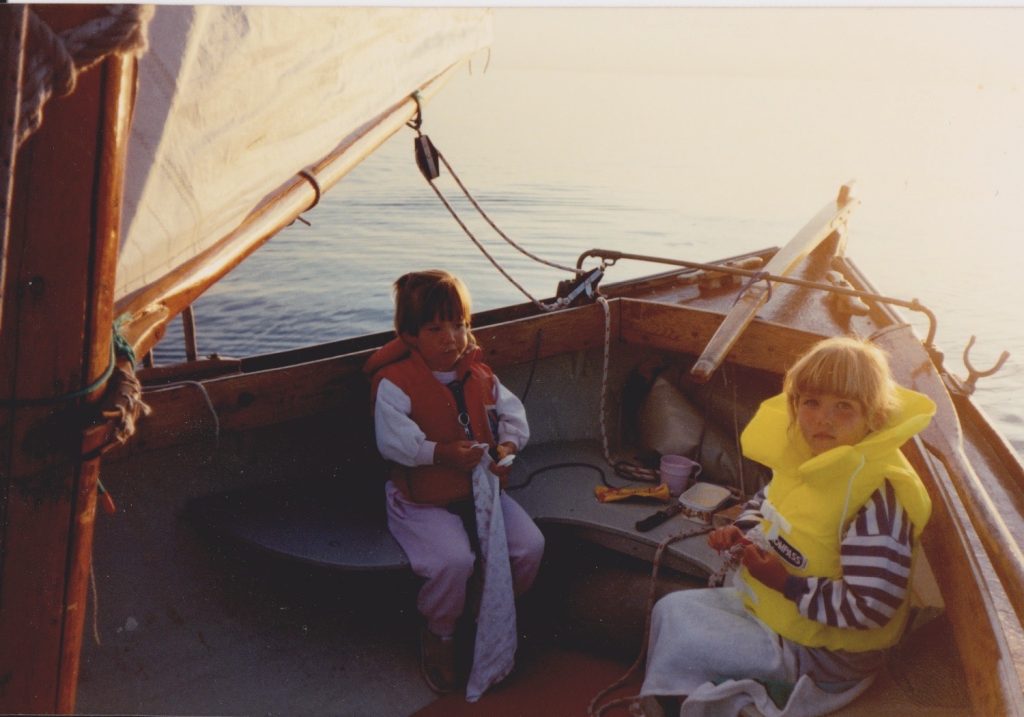
The open cockpit comfortably accommodates our whole family—six adults and four grandchildren. The deep cockpit and low freeboard provide a safe and secure environment for the children, making Vingilotee the perfect family boat for small adventures.
Searching for Vingilotee’s Roots
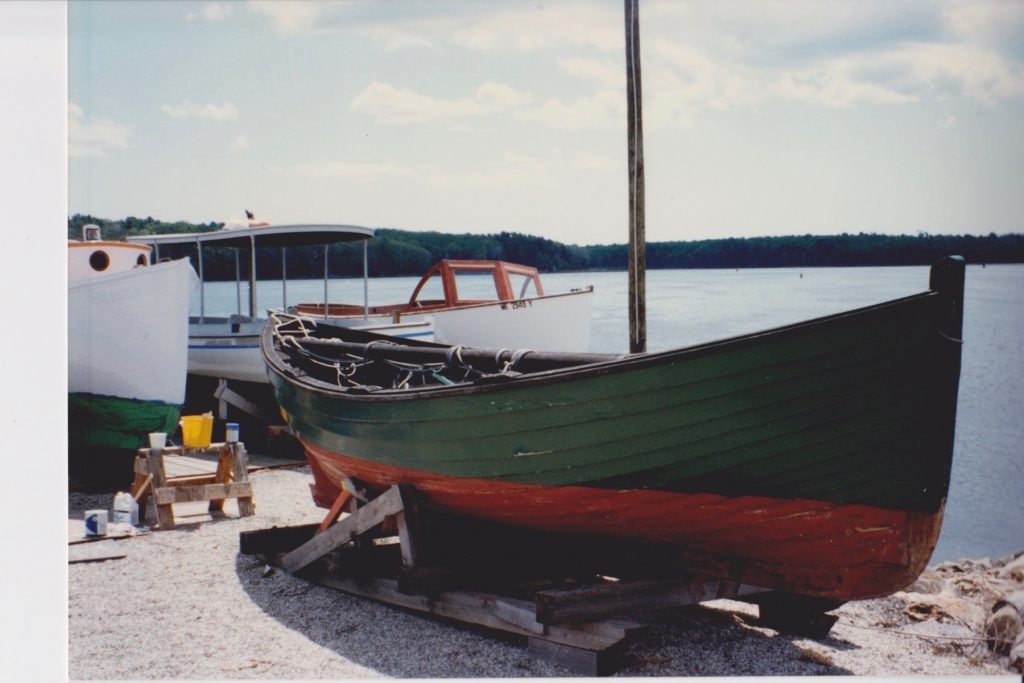
During a business trip to the U.S. in the mid-1990s, I took a detour to search for Vingilotee’s origins. I visited Portland, Maine, explored Casco Bay, and even took a ferry to Crotch Island. It was fascinating to see the coastline, with its mix of open water and islands, and to imagine the conditions in which these boats once sailed. I also visited the museum in Rockport, where I found a boat closely related to Vingilotee.
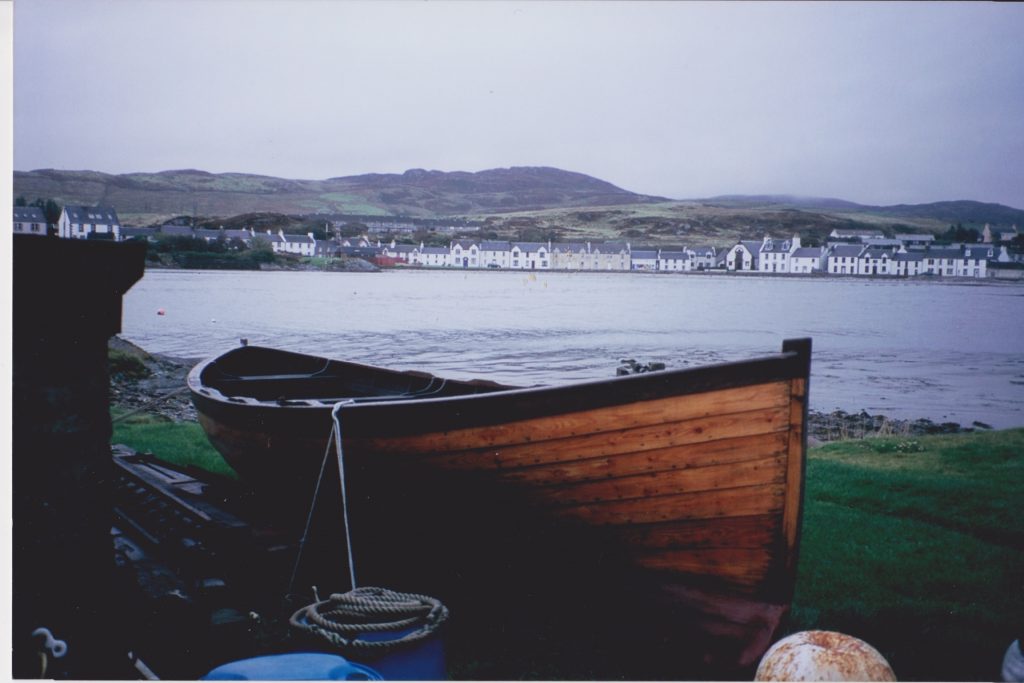
John Walker, the original builder, was likely of Scottish descent. This led me to later visit Islay on Scotland’s west coast, where I found yet another relative of Vingilotee, further deepening my connection to this remarkable lineage of boats.
A Legacy on the Water
Everywhere we sail, Vingilotee draws admiration, waves, and curious questions. But most remarkable of all is how accurately Chapelle described these boats. She rarely takes spray over the bow, and her wake is practically nonexistent.
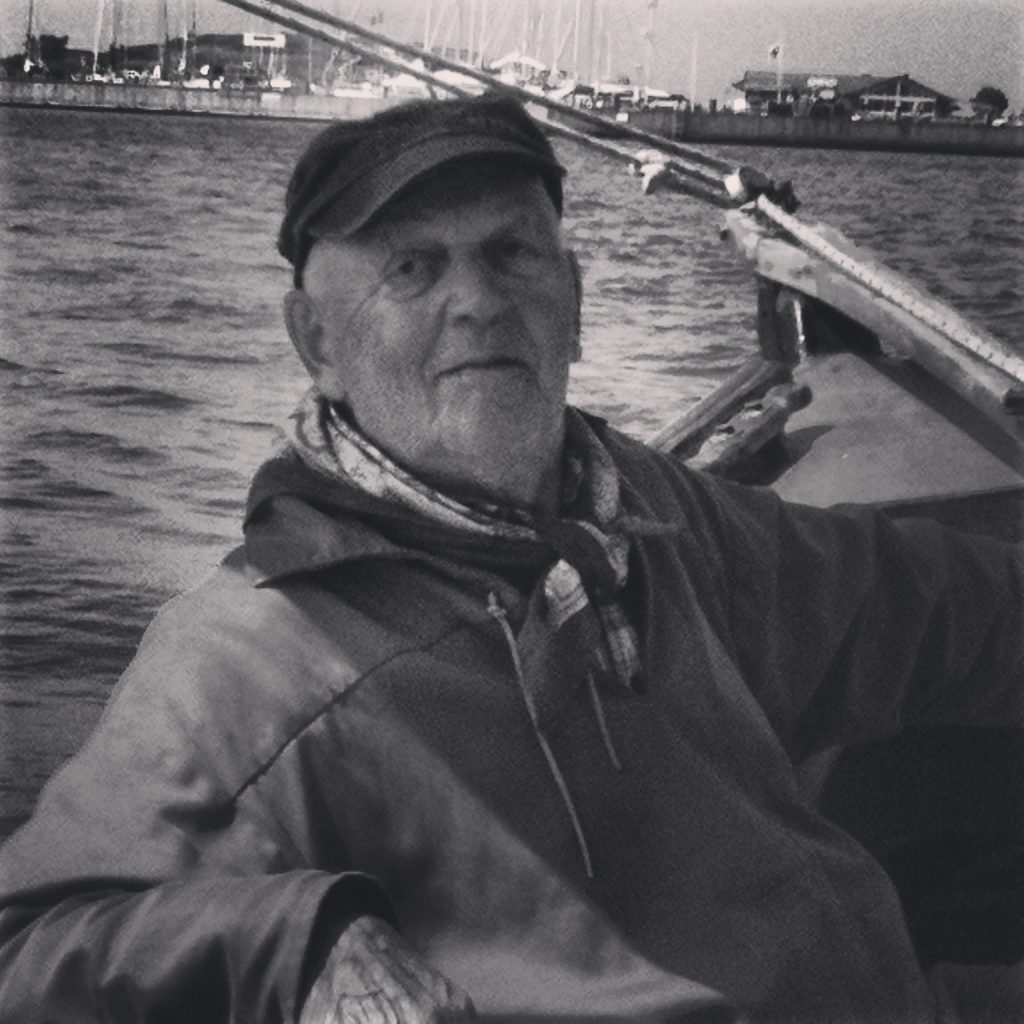
When my father turned 100, he told me that he had finally gone ashore for good. Instead, he enjoyed watching us sail Vingilotee from the front porch of the house on the old castle grounds. He passed away last year at 102.
I have owned and sailed many boats, each with its own memories. But the one that holds my heart is our Crotch Island Pinky, Vingilotee.
Photos
Video
Map
No Records Found
Sorry, no records were found. Please adjust your search criteria and try again.
Google Map Not Loaded
Sorry, unable to load Google Maps API.
Comments
Post a Comment Cancel reply
You must be logged in to post a comment.
4 thoughts on “26' Walker Crotch Island Pinky (1984) - VÍNGÍLÔTËE”
Owner’s Description
Photos
Video
Map
Comments
Post a Comment
You must be logged in to post a comment.
4 thoughts on “26' Walker Crotch Island Pinky (1984) - VÍNGÍLÔTËE”
Thanks for sharing your story. This belongs to a close friend, and we share simular sailing experiences but in a warmer climate.
https://dev.classicboatshow.com/listing/ross-g-leonard-21-van-dine-crotch-island-pinky-1972/
Hi Michael, what a lovely boat. Do you know more about how it came to be built several of them?
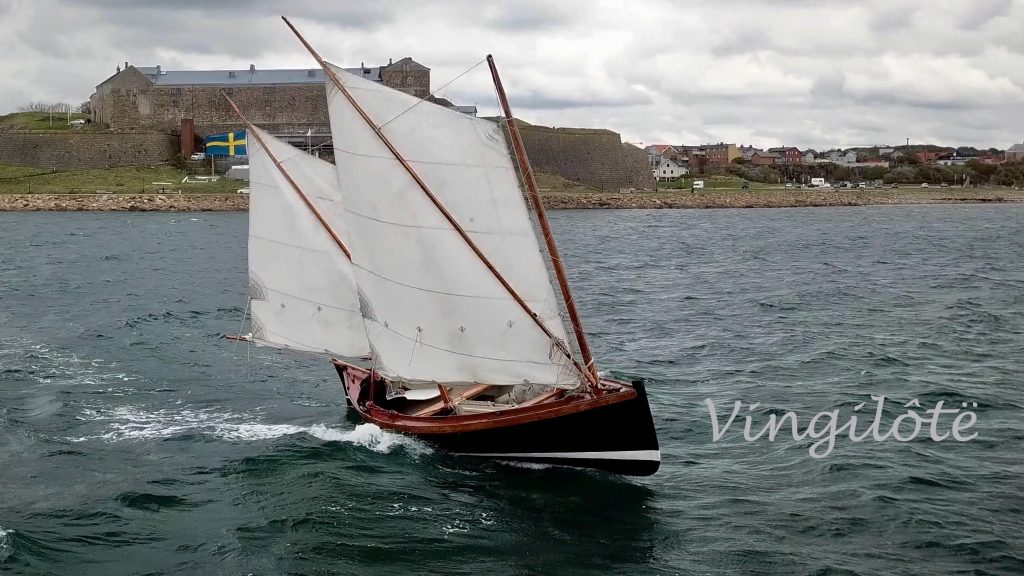
Lovely boat, and a mesmerizing video. I could watch it for hours.
Hi Jay and thanks. A friend of mine had a drone so we took the opportunity when there was a nice southern wind blowing. Unfortunately he ditched the drone in the water a couple of days later. I would have liked to have much more video like this. (Have to find new friend 😉)