Description
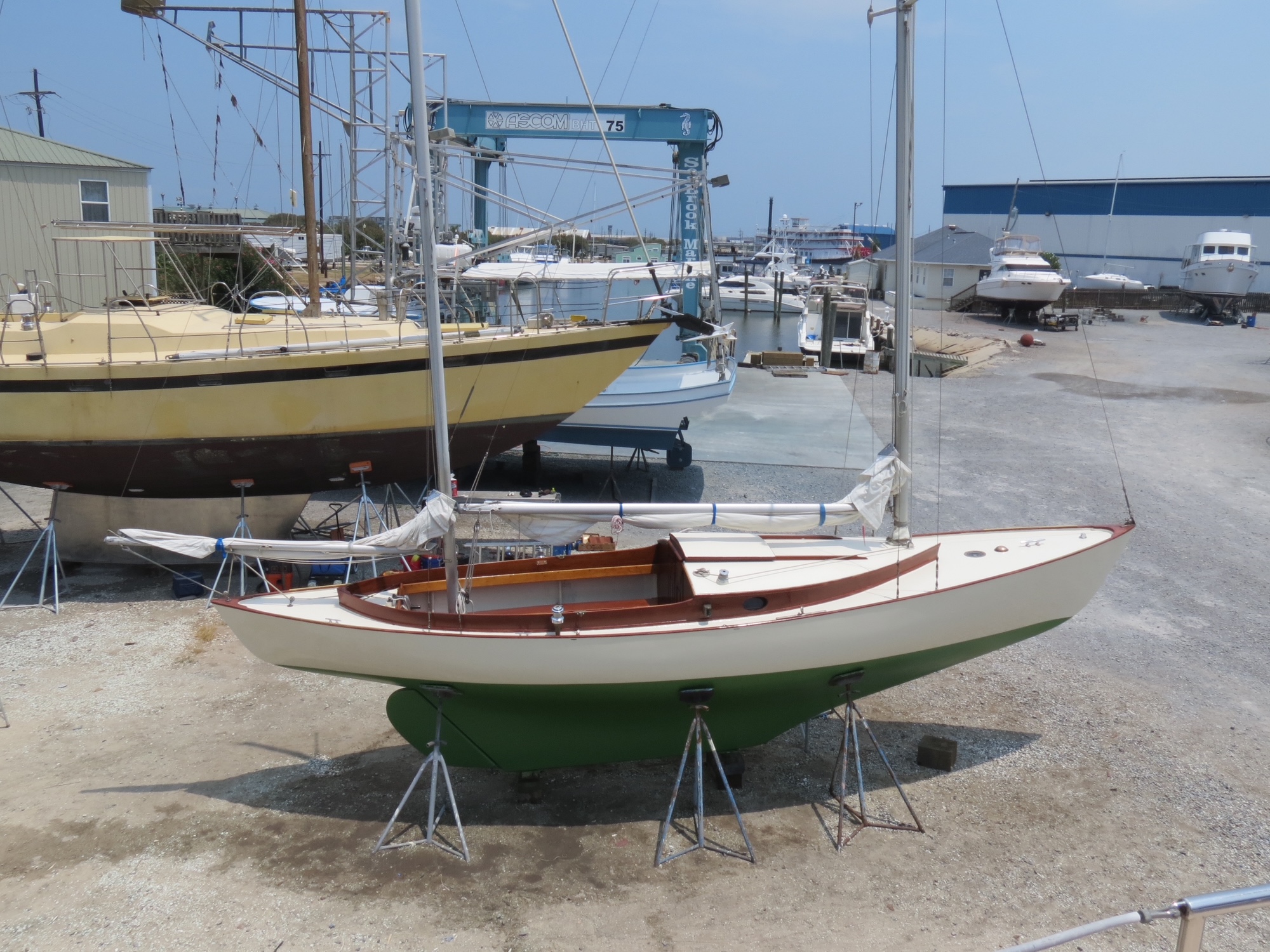
My hope in listing Cygnet at this site for the price of zero dollars is to find a steward who will aim to restore her dignity and brighten her days. She will require some effort from a qualified hand. Every part of this little ship is accessible and is therefore replaceable. Her current troubles are all related to weathered wood.
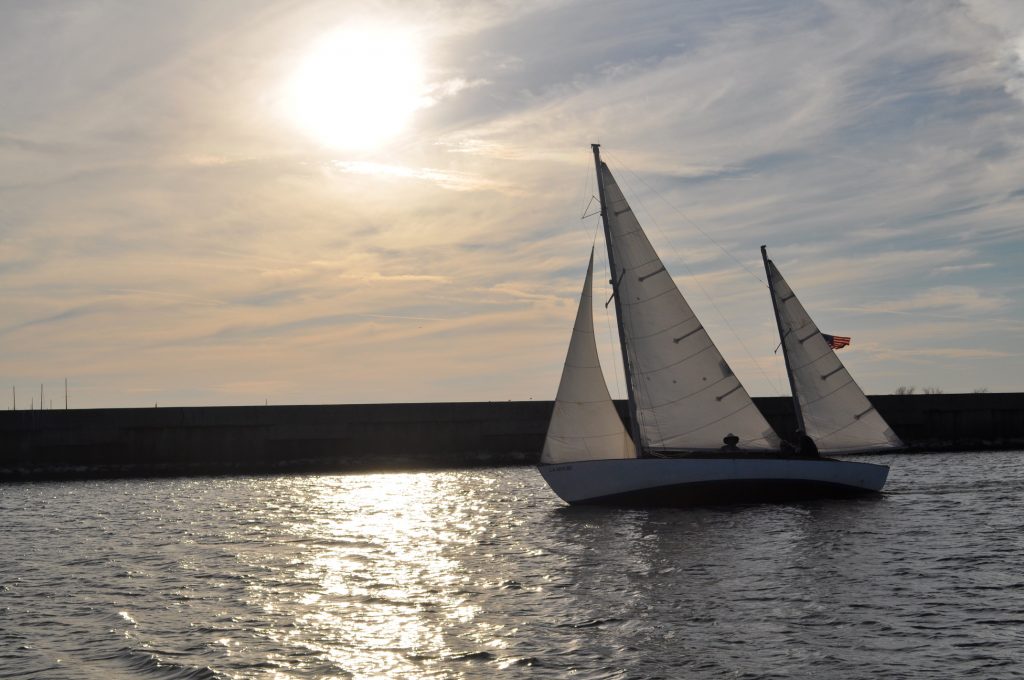
The internet is full of praise for the Rozinante and all of it is true. She moves along well in light airs, stands up to a blow, and carves swiftly through a seaway (including the steep, short-period waves we see here on Lake Pontchartrain.) We mostly sailed in and out of our slip but she does have a custom removable bracket to support a small outboard on the port side. The sweeps worked just as well, though, when totally becalmed.
We’ve had so many great days with her but, sadly, that oft quoted list of life circumstances has conspired against us.
We bought her in 2011 from the two sons of the fellow who originally had her built. As teenagers, they were in the company of the shipwright during her construction then sailed her into their middle age. Her fiberglass hull was laid up in 1976 by South Coast Seacraft and she was launched in 1980. The sons only made her available to us after finding the Herreshoff Nereia of their dreams when they determined they couldn’t keep up with two classic boats (not counting their Herreshoff 12 ½).
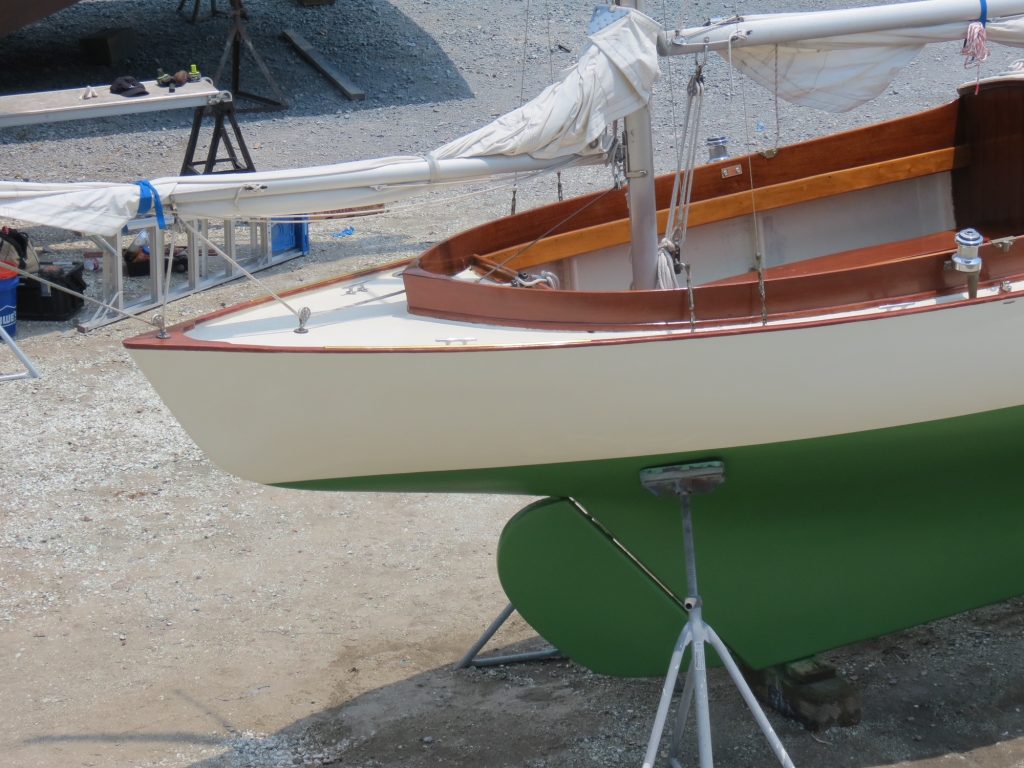
They made practical choices in their use of fiberglass for the hull and aluminum for the spars. We’ve been thankful for it in this climate. I imagine it could disqualify her from some of the beauty pageants in the Northeast but she is lovely and spirited, nonetheless. I will paste a lengthy general construction history below.
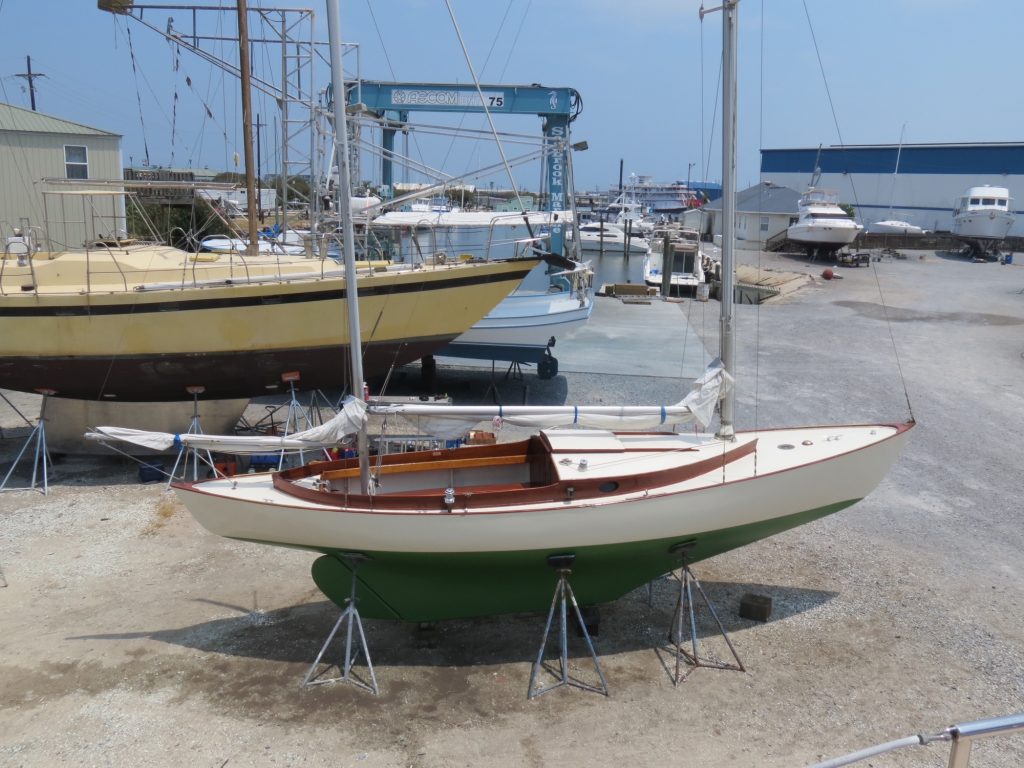
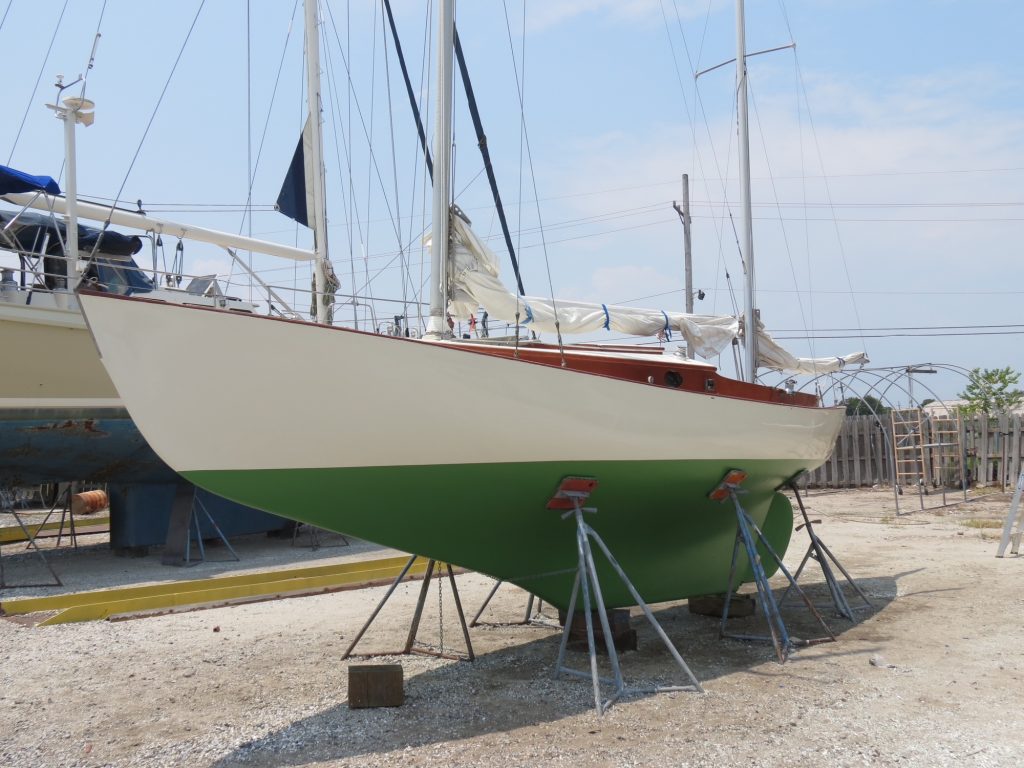
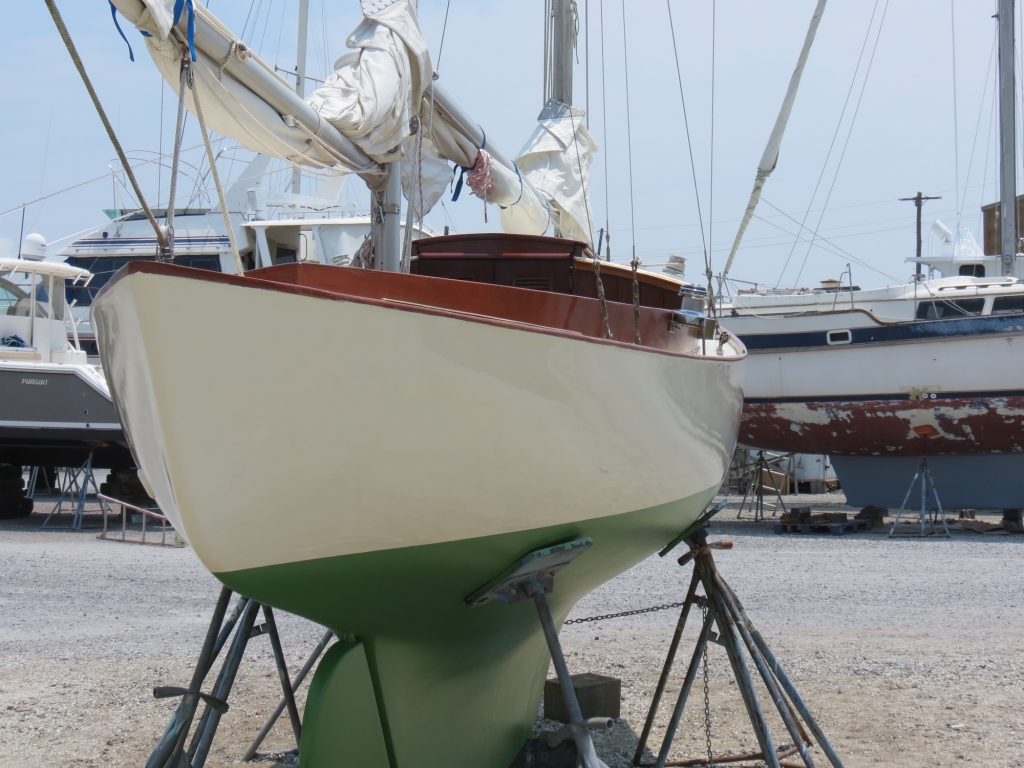
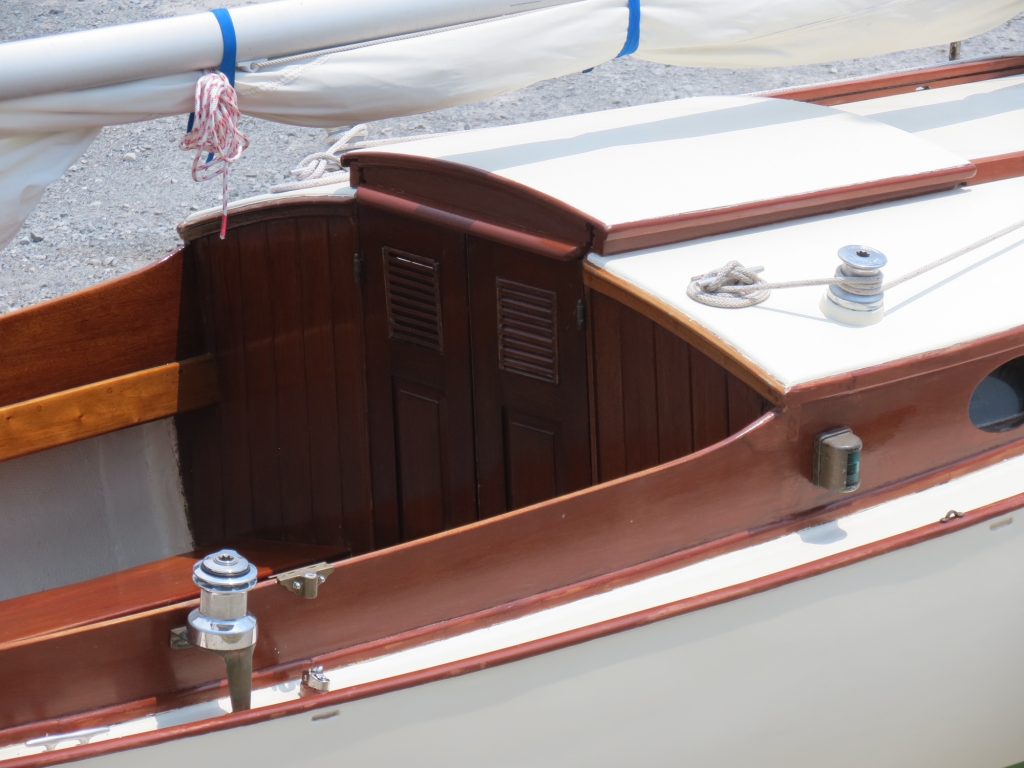
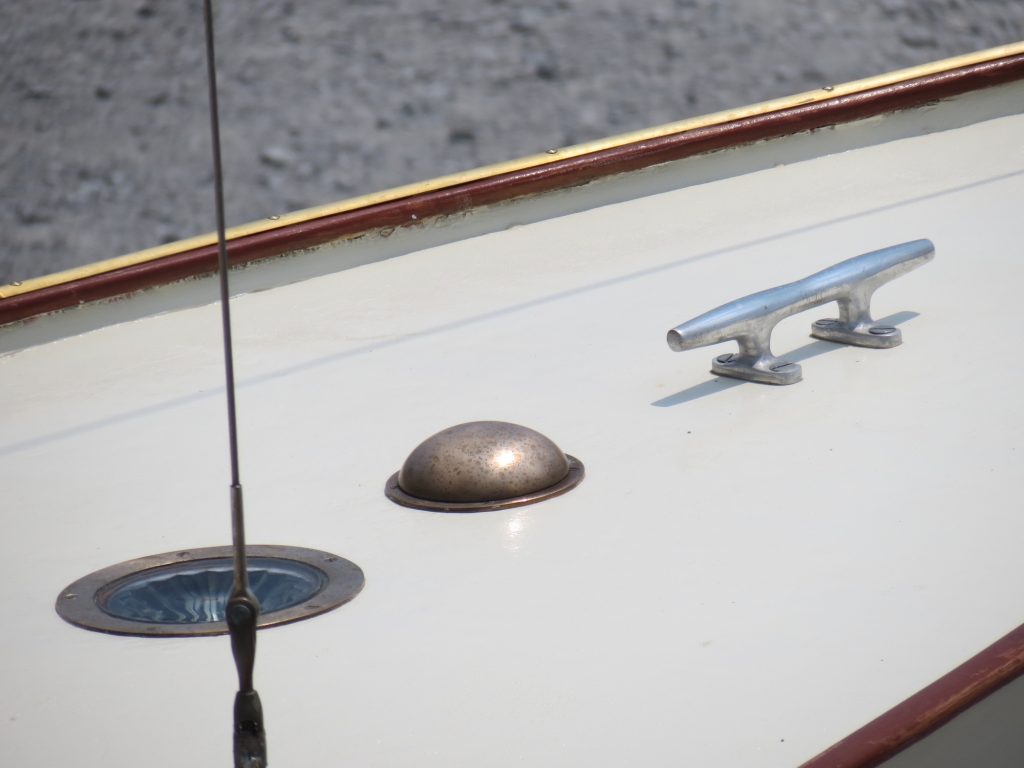
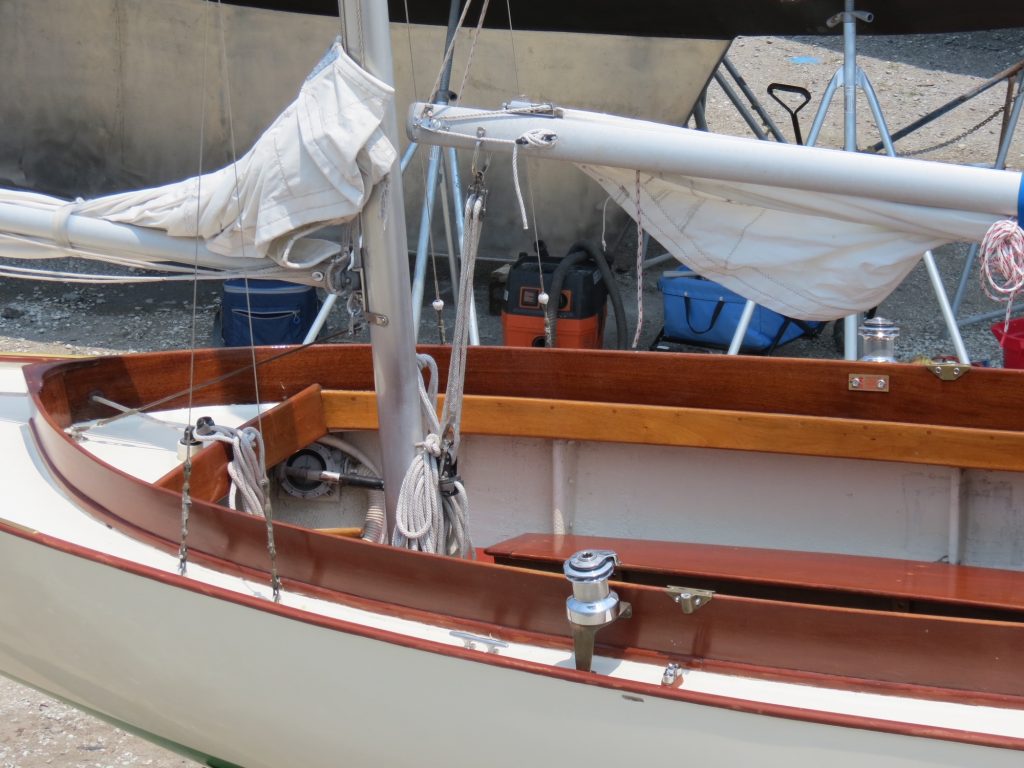
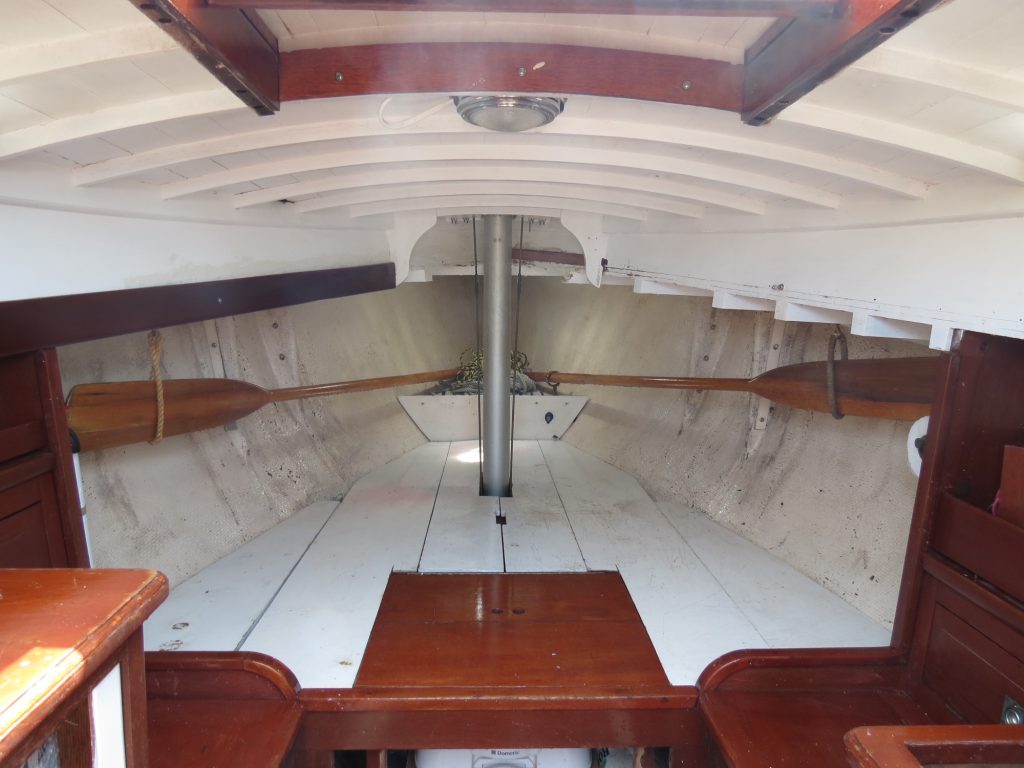
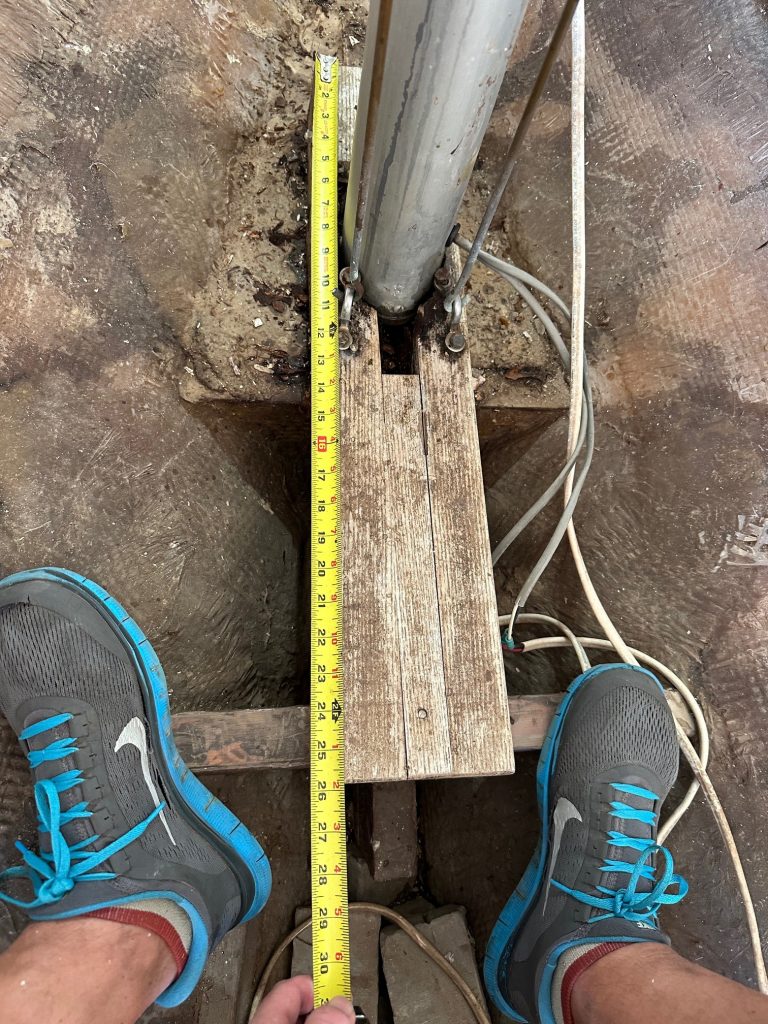
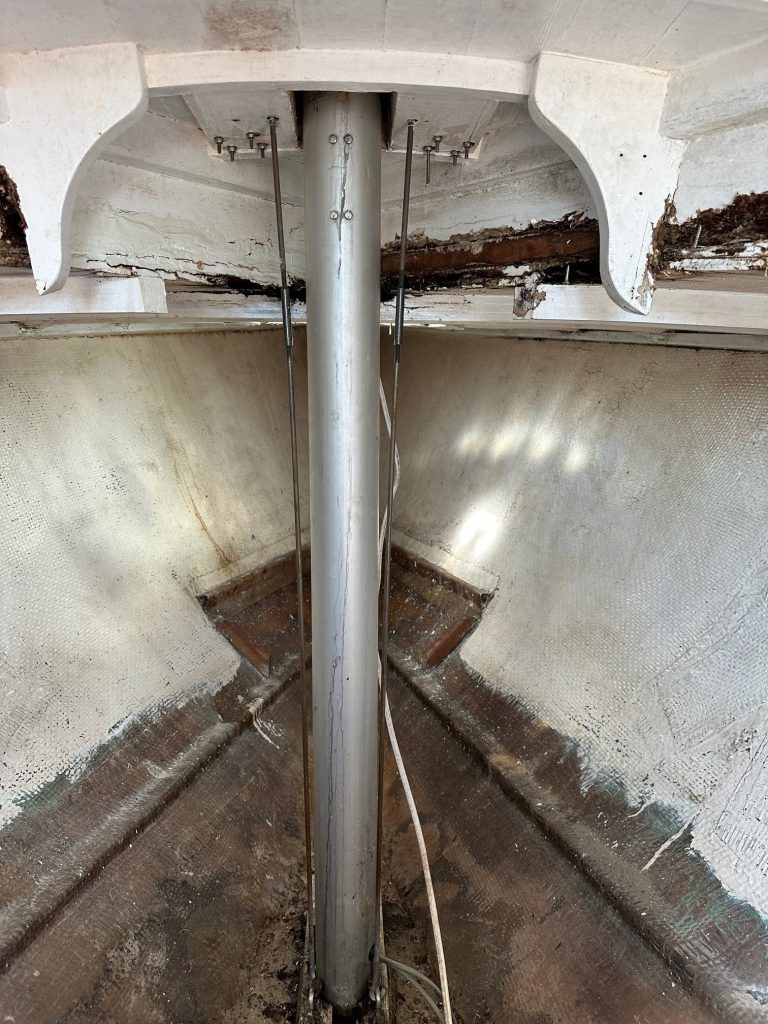
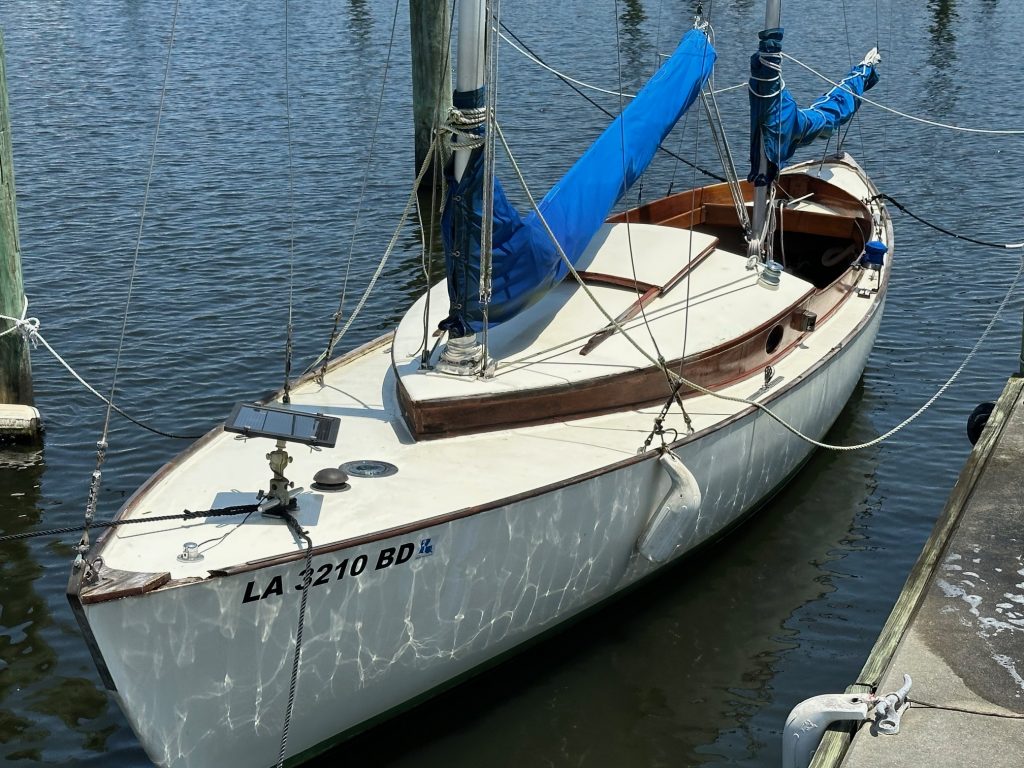
The photographs you see on the hard and of the fully assembled interior are from 2018 when we last hauled her out and spiffed her up. I wanted to share those so you could see her potential (and the high water mark of our stewardship.) If you were to visit her today in her slip you would find that the starboard coaming has separated from the cabin. You would find sections of rotted wood on the interior where the cabin trunk meets the deck. You would also see that the block of white oak afoot the mainmast has weakened allowing the mast to sink in by at least an inch, which has put slack in her rigging. The brightwork (or rather the lack of it) would hurt your heart.
The photographs of the disassembled interior and of the boat in her slip were taken just a few days ago (June, 2025).
If you’re interested in taking her on, then I can provide more explanation and photographs. I came to this site in hopes she would be elevated to good status and enjoyed on new waters…not scavenged for her self-tailing winches, deck prism, or other good bits and pieces.
General Construction History:
Cygnet was built primarily with the following materials:
• Hull – Laminated polyester resin impregnated fiberglass
• Hull – shear clamp was through-bolted from outside of hull with screws that were receded into glass and then surfaced with filler.
• Shear Clamp – Long leaf yellow pine
• Deck Beams – Laminated fir – equal camber throughout: fore and aft
• Cabin Beams – Laminated fir – equal camber throughout: fore and aft
• Decks– Marine plywood screwed to beams covered with polyester resin impregnated mat and woven roving fiberglass cloth.
• Cabin Trunk & Cockpit Coaming – Mahogany, steam bent, screwed from front and rear stem to amidships, from below, through deck with 3” screws, lapped at bulkhead, and bedded to deck with 3M-5200. Quarter round at deck around coaming and trunk is considered to be sacrificial. Deck has a raised strip fastened to the marine plywood which forms a raised shelf, 1” wide (approx.) to which the cabin trunk and cockpit coaming sat upon. The fiberglass deck covering was brought over this raised shelf when laid.
• Cabin top and hatch top – Fir planking covered with polyester resin mat and woven roving fiberglass cloth.
• Chain Plate Gussets – White Oak with stainless steel chain plates through-bolted into gussets. Entire gusset was coated with polyester resin during construction with bottom ¾ fiberglassed to hull.
• Main mast step – Originally oak frame covered with fiberglass. Eventually replaced with polyester resin mixed with shredded glass filler using original frame as mold.
• Mizzen mast step – Oak boiled in linseed oil then cross pined with stainless drifts into fiberglass “floors”.
• Seats – Mahogany
• Cap Rails – Mahogany screwed through to shear clamp. Screws bedded.
• Bulkhead – Boarded and splined mahogany. Under compression, structural member.
• Helmsman Seat – Easily removable, no fasteners, mahogany
• Aft lazarette facing – Teak screwed in and removable to access small grating.
• Cockpit and cabin gratings – Teak
• Interior components – Mahogany with pine V-birth boarding
• Ice Chest – Polyester Resin (hardened with wax to produce gel coat), fiberglass, white pigment, wrapped with fiberglass insulation. Not easily removable.
• Stove – Mount located above ice chest on bulkhead. Fitting for “Sea-Swing” aluminum stove carrier for “Peak”, “Primus”, or other brand burner and fueled with replaceable propane screw top fuel bottle (the green ones at the store for camping stoves). Later fashioned into a gimbaling drink holder. Can be reversed.
• Ballast – Ballast was hand cast lead in an angle iron constructed mold to form “pigs”. These triangular pigs greatly simplified nesting in the keel. Weight distribution was divided by sections.
• Two stainless rods in the cabin next to the mast. These rods reinforce the structural integrity of the cabin top to the keel. The mainmast force is pushing down at the mast step. This force tries to “collapse” the hull by forcing the sides inward. The bulkhead, deck, cabin trunk, and cockpit coaming, all help to prevent this. The rods take the upward force on the cabin top.
• Mast and spars were custom fabricated by Zephyr Products, Inc. from Wareham, Massachusetts. Cross sectional dimensions represent accurate load carrying capability. It might concern some that Cygnet’s (all Rozinantes’) rigging is too “dainty”. This however is not the case. The rigging is quite ample for the loads it carries.
• Rigging was also purchased from Zephyr with the following dimensions:
Quantity Size Length
Forestay 1 7/32 23’ 3.5”
Backstay 1 1/8 27’ 1”
Main Upper 2 3/16 23’ 3.5”
Main Lower 2 7/32 14’ 11”
Span Stays 2 1/8 14’ 5&3/8”
Spring Stay 1 1/8 19’ 9”
Mizzen Upper 2 3/32 17’
Mizzen Lower 2 1/8 10’ 11&1/2”
Main Lift 1 3/32 31’
Mizzen Lift 1 3/32 20’Photos
Map
No Records Found
Sorry, no records were found. Please adjust your search criteria and try again.
Google Map Not Loaded
Sorry, unable to load Google Maps API.
Description
Photos
Map