Owner’s Description
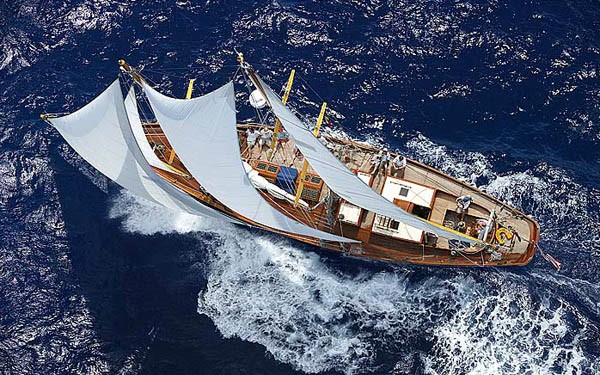
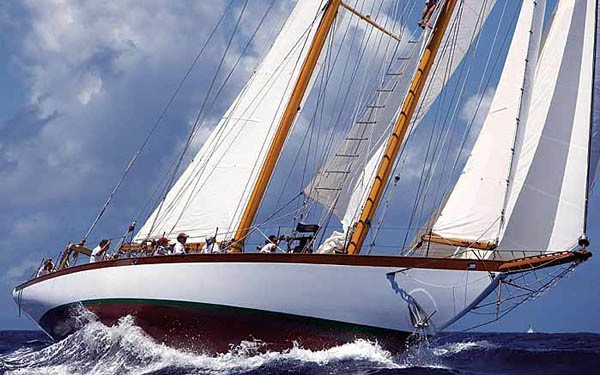
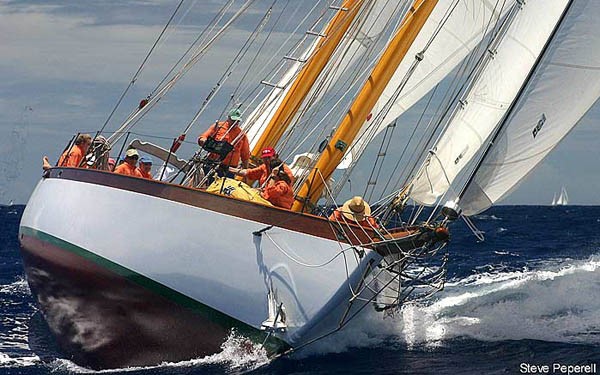
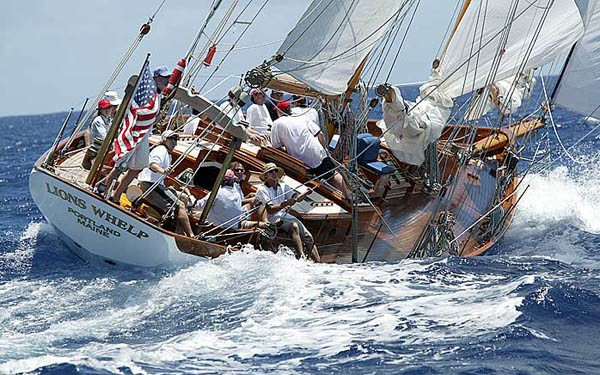
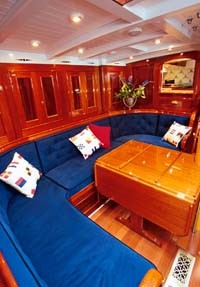
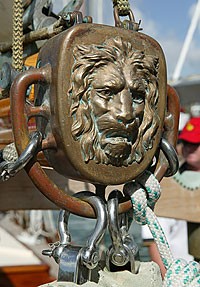
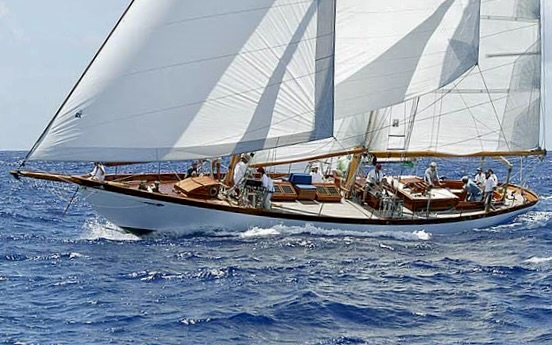
LION’S WHELP is truly a one-of-a-kind yacht. Stunningly beautiful, this traditionally lined Alden Schooner was built with cutting-edge tehchnology to the highest possible standards, making her as capable a world wide cruising vessel as possible. She has been featured in Cruising World magazine.
One of her co-owners, who runs a substantial yacht yard (Portland Yacht Services) and has done a prior circumnavigation on a schooner, sought to build or acquire another vessel capable of cruising anywhere in the world. Equally important was that she be a reasonable vessel to maintain, sail locally with a small crew, and be so carefully built and detailed in construction that her longevity would be assured. After several years of searching, an uncompleted Alden designed hull was found in California. The vessel was purchased in 1999 and brought to his own yard where the repairs warranted from the improper storage of the hull were done, the hull completed in 2001, and the balance of the construction project (decks, systems and interior) completed in 2003. As a consequence the 1986 hull number assigned belies the true age of this magnificent yacht as she really was completed in 2003.
To satisfy these discriminating owners, the yacht had to be at once capable of local cruising with a small group or cruising worldwide with a number of family members and friends. Other requirements included being able to withstand a serious grounding, collision with an ice berg or container, be so well constructed that exposure to long term structural degredation was minimized, and most importantly be a joy to be aboard. All of this and more was accomplished in her construction! Built at a cost of over $6,000,000 she would run over $8M USD to build today.
To say that the attention to detail on this vessel was intense is an understatement. In determining the hull scantlings and finish, the owners not only relied on naval architects but also studied yachts that had gone aground, examined the extent of their damage and then developed scantlings and build techniques to withstand those levels of traumatic collision or grounding. Drop tests were done on test panels to insure the hull envelope strength as a practical matter vs. relying on calculations. Much of this is evident in the hull section below where construction details are outlined.
Photos
Map
No Records Found
Sorry, no records were found. Please adjust your search criteria and try again.
Google Map Not Loaded
Sorry, unable to load Google Maps API.
Comments
Owner’s Description
Photos
Map
Comments