
Owner’s Description
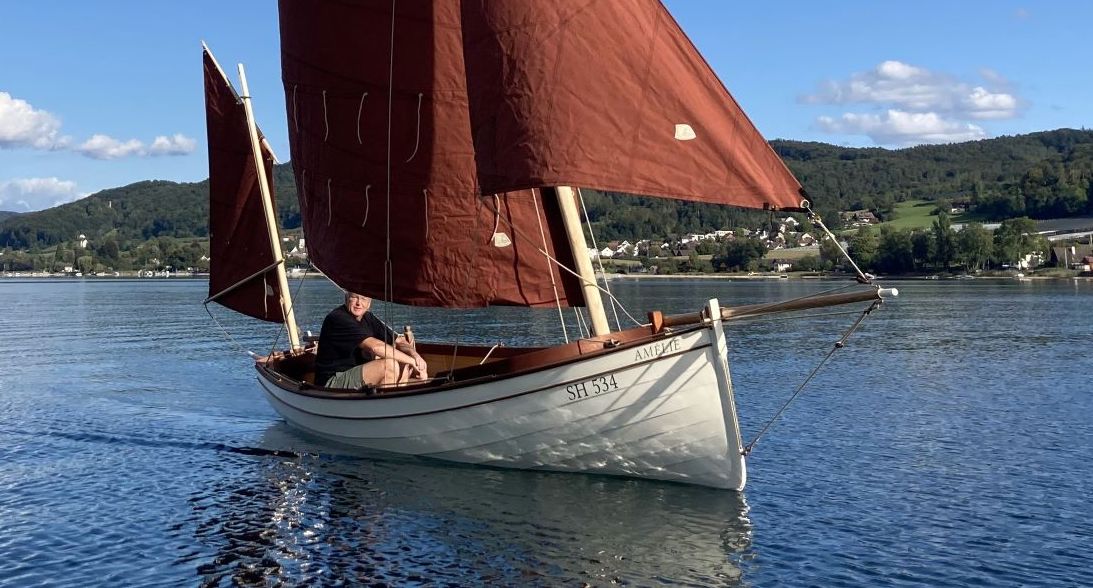
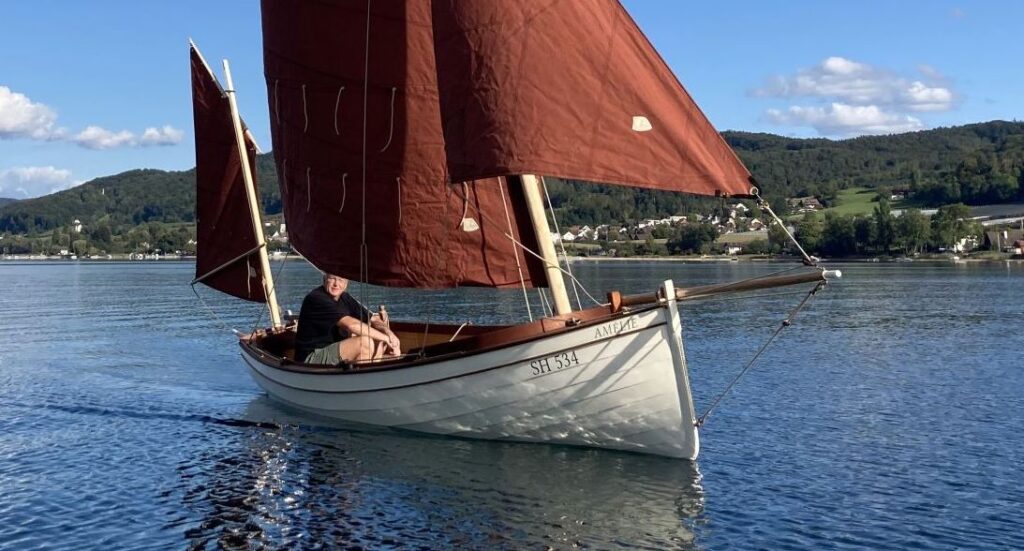
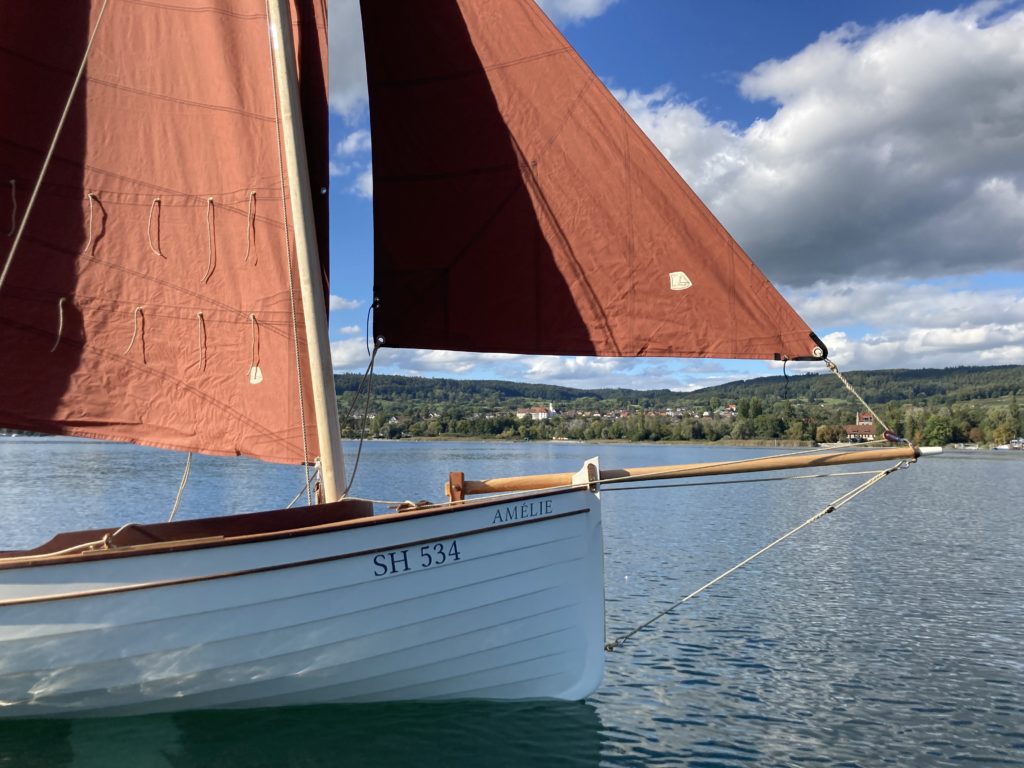
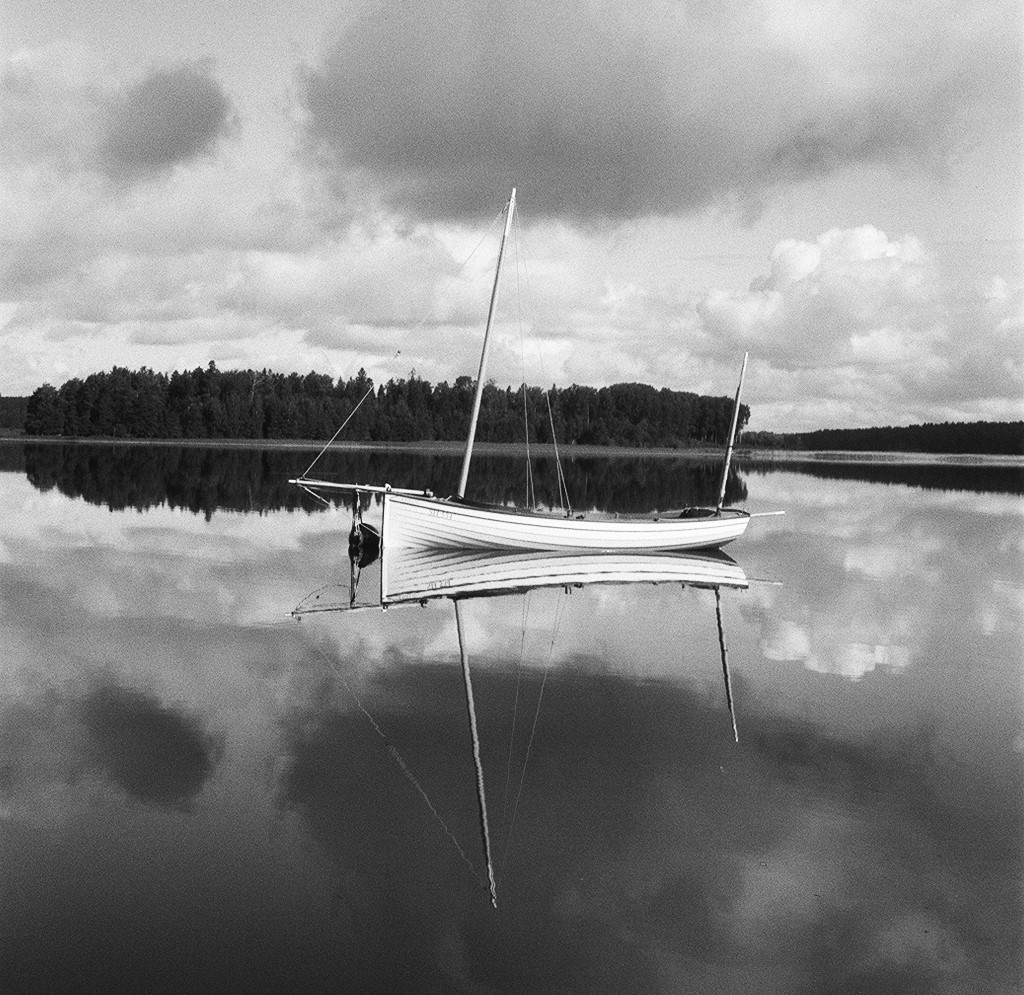
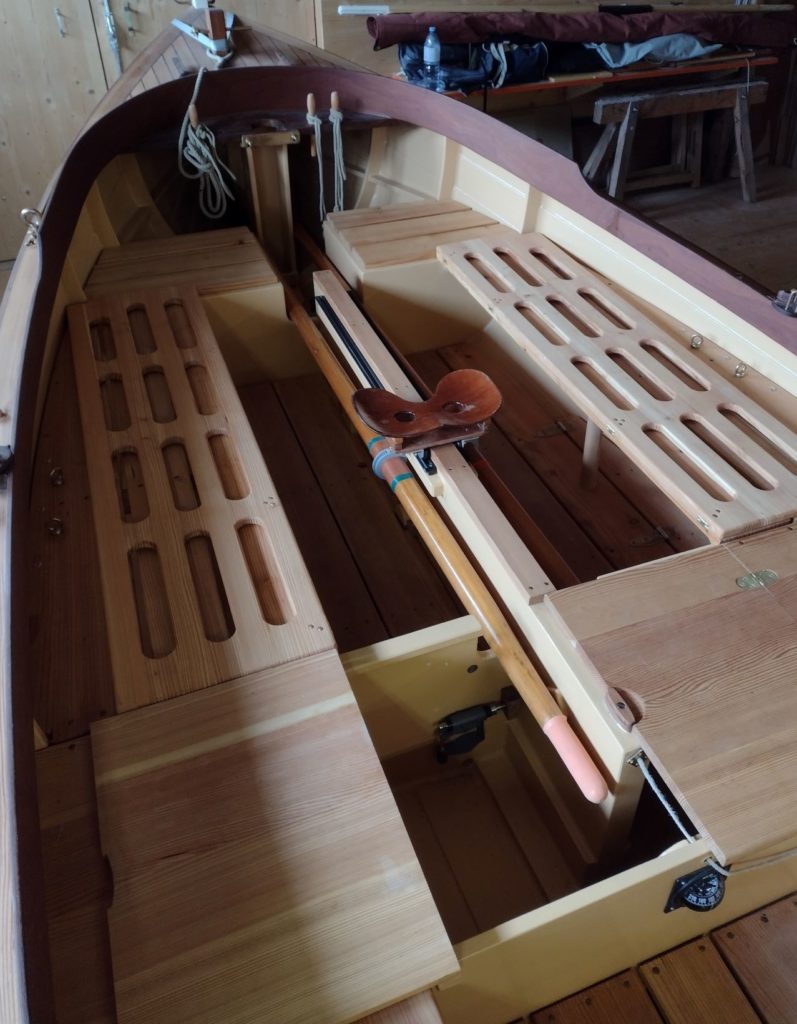
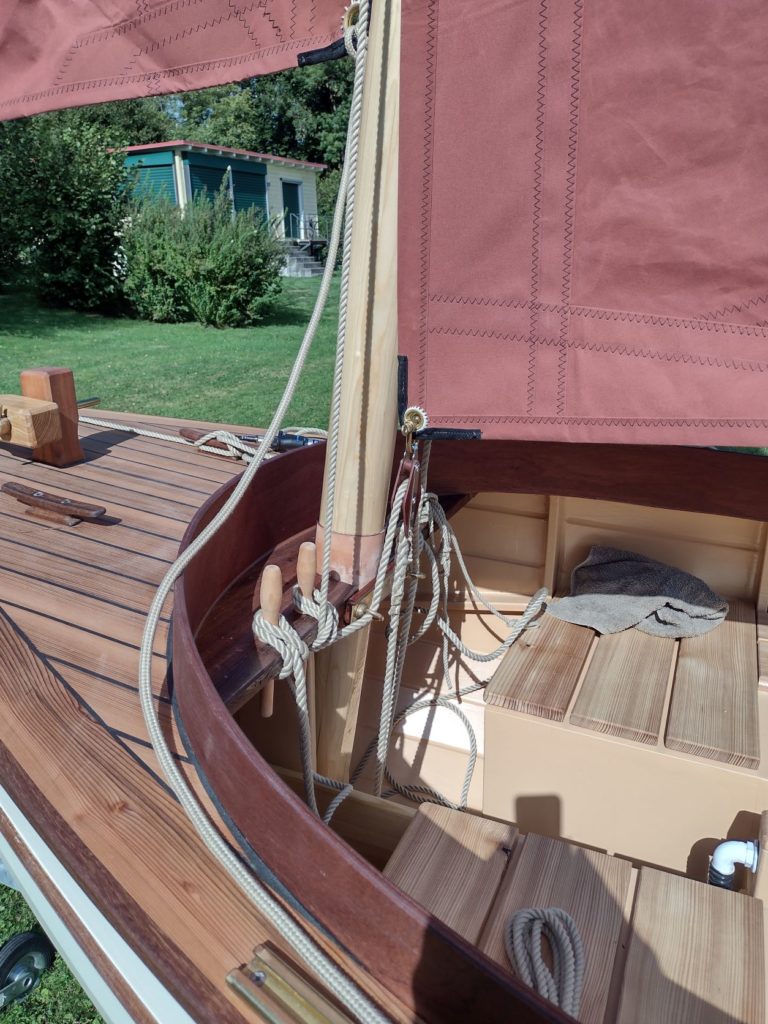
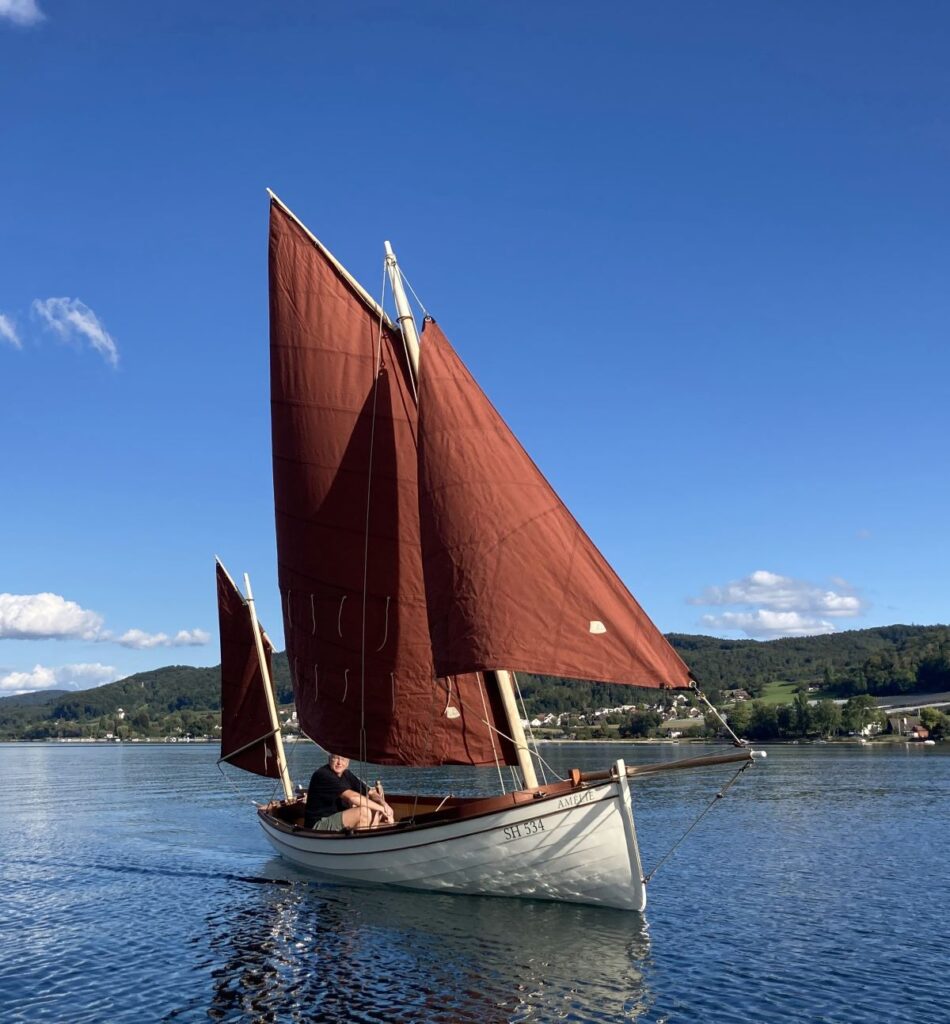
This little lug yawl was drawn by Canadian yacht designer Don Kurylko and is based on traditional British inshore working craft. I purchased the very detailed plans for Myst online after reading several articles and forum posts. She is a robust little ship and well adapted to camp cruising with her foldable grate benches that can form a generous sleeping platform.
I sometimes wonder if Amélie is the only Myst in Europe or if there are any sisterships around…?Alterations
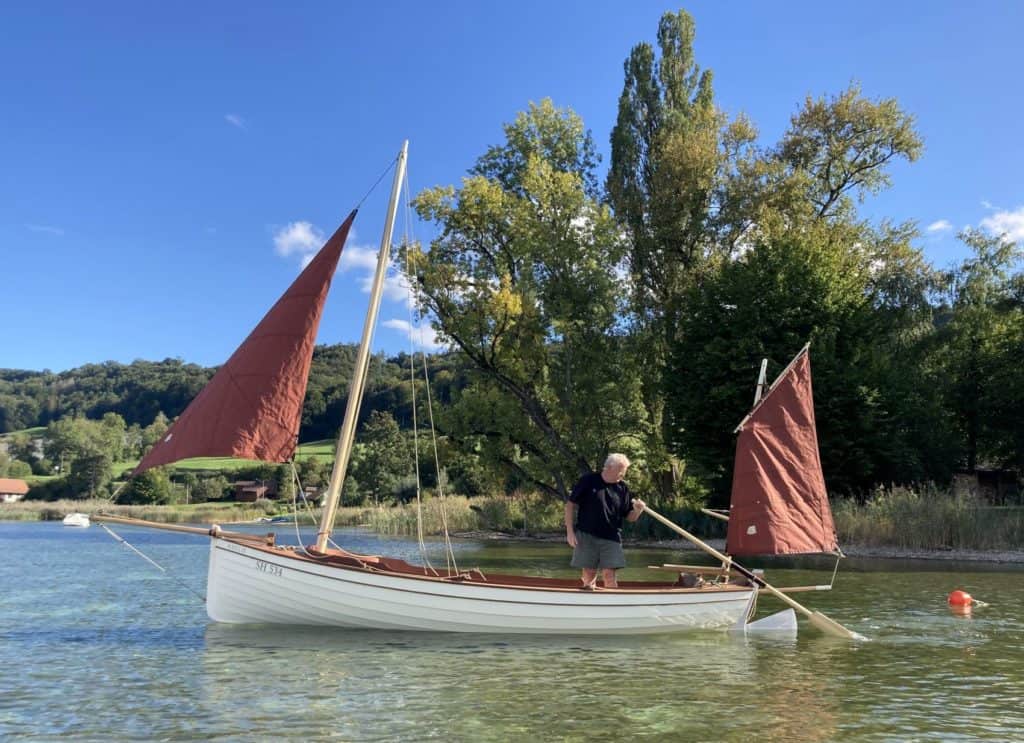
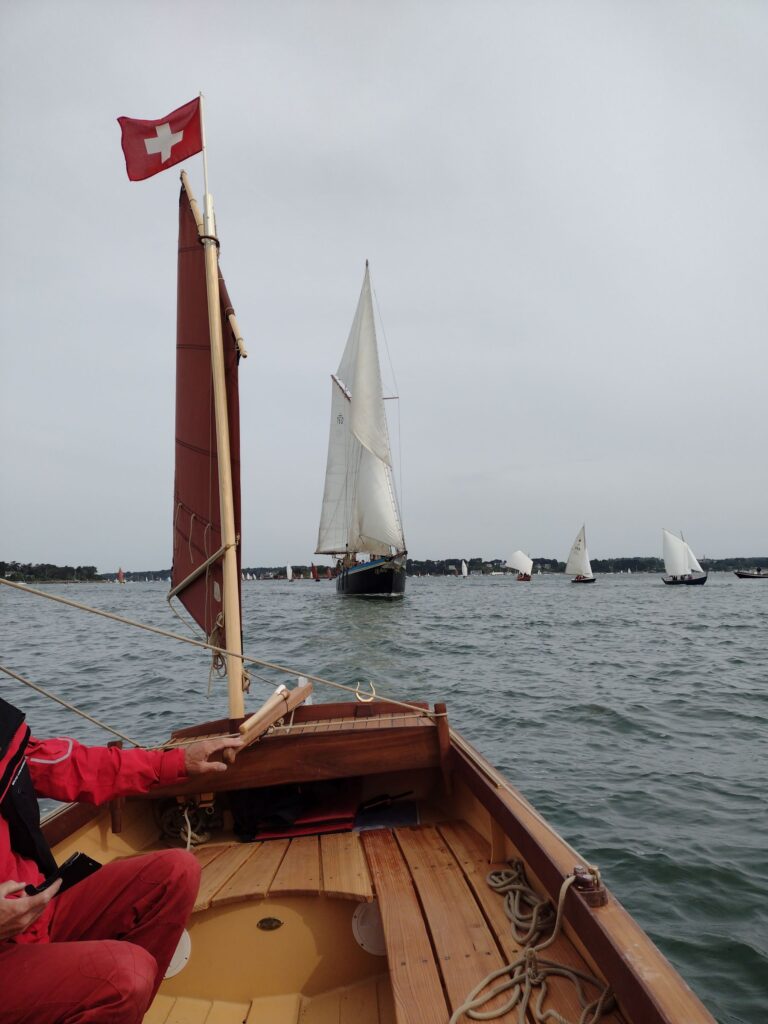
As I have been a rower for the better part of my life I wanted to be able to row Amélie “properly”, meaning: a pair of long sculls, sliding seat, proper oarlock span, removable footbraces. This called for a slightly (4 inch) wider beam, modified bulkheads and a relocated and split forward buoyancy tank to stow the oars out of the way when sailing or camping. The sliding seat rides on two rails close to the top of the centerboard case and makes for good rowing performance. Amélie has therefore no engine and for shorter trips she can be sculled over the stern with the third oar on board. I find this extremely elegant, efficient and practical in tight spaces. This third sculling oar also serves as a sprit boom when sailing downwind.
I am a clinker (lapstrake)-lover and have developed my method in CAD to convert round-bottomed hulls to clinker. Fair lines and two magic words are paramount here: “Developable Surfaces”. Instead of running bevels at each strake I cut step-like chamfers at the bottom edge of a strake that sit on the upper edge of the adjoining strake, glued and filleted with epoxy. (Yes, the biggest boat kit producer in the U.S. had the same idea and even found a proper name for it). All the wooden parts were CNC-cut.
The plans call for lead ballast but I prefer water ballast in bags under the floorboards, which is less “heavy” after a capsize and can be poured overboard when a lighter boat is needed for a long day of rowing. Minus 80 kg (180 lbs.) makes quite a difference on a windless day.The Hull
From the original linesplan a CAD 3D-model was created and slightly enlarged in beam. Instead of strip planking I chose glued plywood lapstrake, a method which I find easy, fast and clean to build with much less and more pleasant sanding (if that exists at all ;-). However, fiberglassing clinker properly is almost impossible – which makes the hull lighter but less robust. Amélie has a swing-up rudder and a pivoting, lightly ballasted centreboard. There are four airtight buoyancy tanks for safety and dry storage.
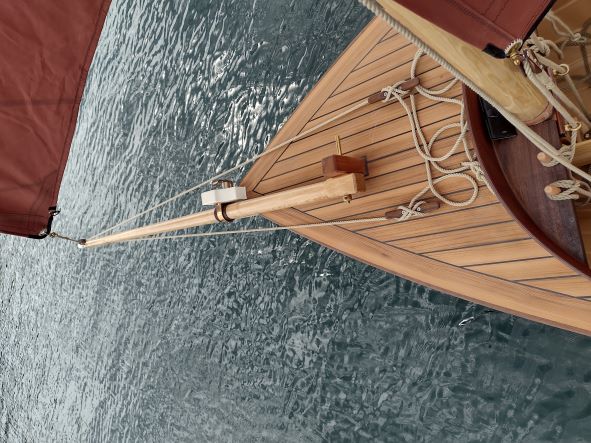
The hull is built of Okoumé plywood, but I tried to use local lumber such as Pine, Larch, Walnut and Cherry as much as possible. Some long-kept thin mahogany plywood from an old project (a spectacular failure) finally also found its place.The Rig
Yes, there is one mast , one sail and a few lines more than in a normal dinghy… But it is well worth it: The lug yawl rig is a huge pleasure to sail! She is beautifully balanced, self-steering and there are so many configurations to play around with, including sailing astern under mizzen alone and heaving-to. And if things are getting a little too excited we simply drop the main – a matter of five seconds. We sailed Amélie under mizzen and jib in pretty rough conditions comfortably and still to weather.
The Name
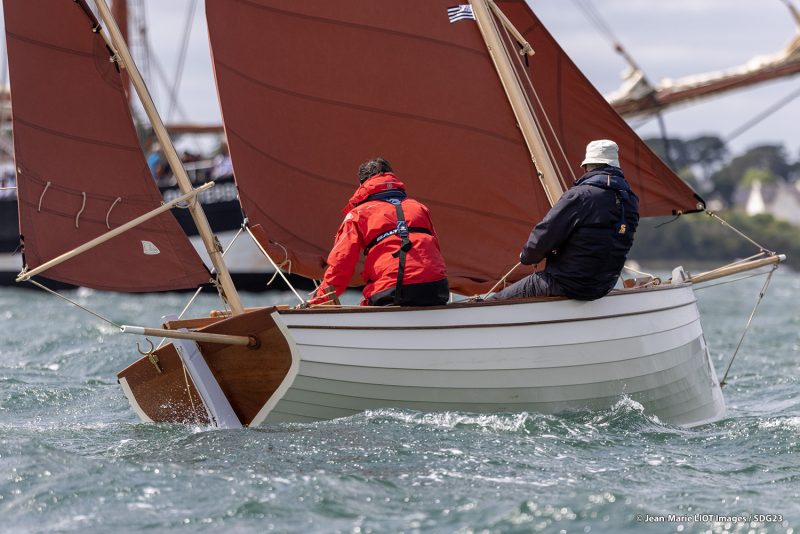
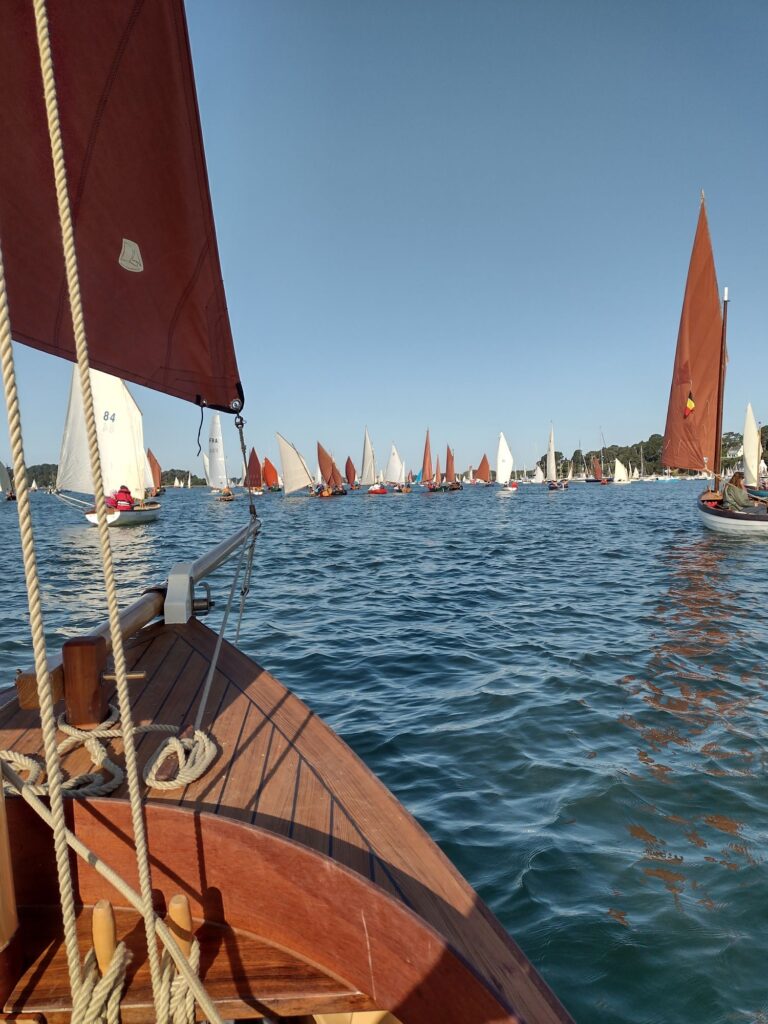
“Amal”, the courageous, strong and faithful; she lived well up to her name in the tidal currents of the Golfe du Morbihan in Brittany at the “Semaine du Golfe” in spring 23, when wind against currents produced quite choppy conditions.
Photos
Video
Map
No Records Found
Sorry, no records were found. Please adjust your search criteria and try again.
Google Map Not Loaded
Sorry, unable to load Google Maps API.
Comments
Post a Comment Cancel reply
You must be logged in to post a comment.
4 thoughts on “18' Kurylko Myst Lug Yawl (2022) - AMÉLIE”
Owner’s Description
Photos
Video
Map
Comments
Post a Comment
You must be logged in to post a comment.
4 thoughts on “18' Kurylko Myst Lug Yawl (2022) - AMÉLIE”
Lovely boat, Konrad.
Nice work, and she moves well.
And I love Tufnol too!
Thanks!
Thanks, Ian – glad you like her too;-)
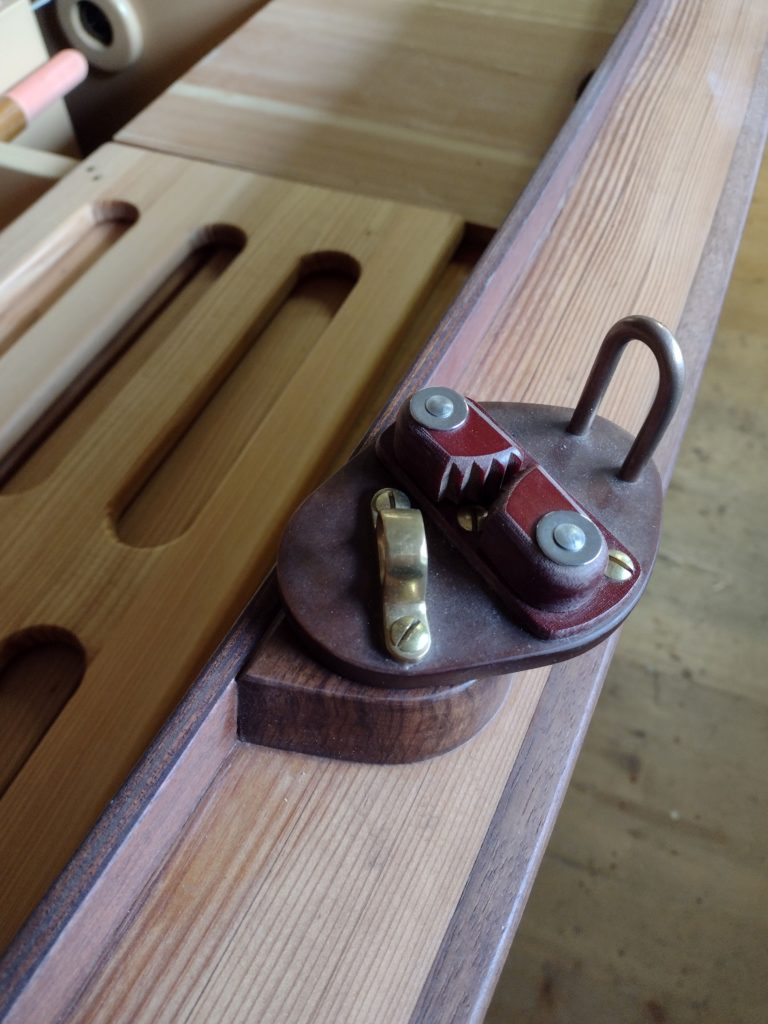
Yes, these Tufnol blocks and cleats are great for a variety of boats. I didn’t want her to be too “yachty” and they go well with the woods I used.
Nice dinghy! Very clever system to get a platform for sleeping…
Thank you Kemp. We did not have the chance yet to overnight with Amélie, but the system was perfect for a little siesta in the automn sun 😉