Owner’s Description
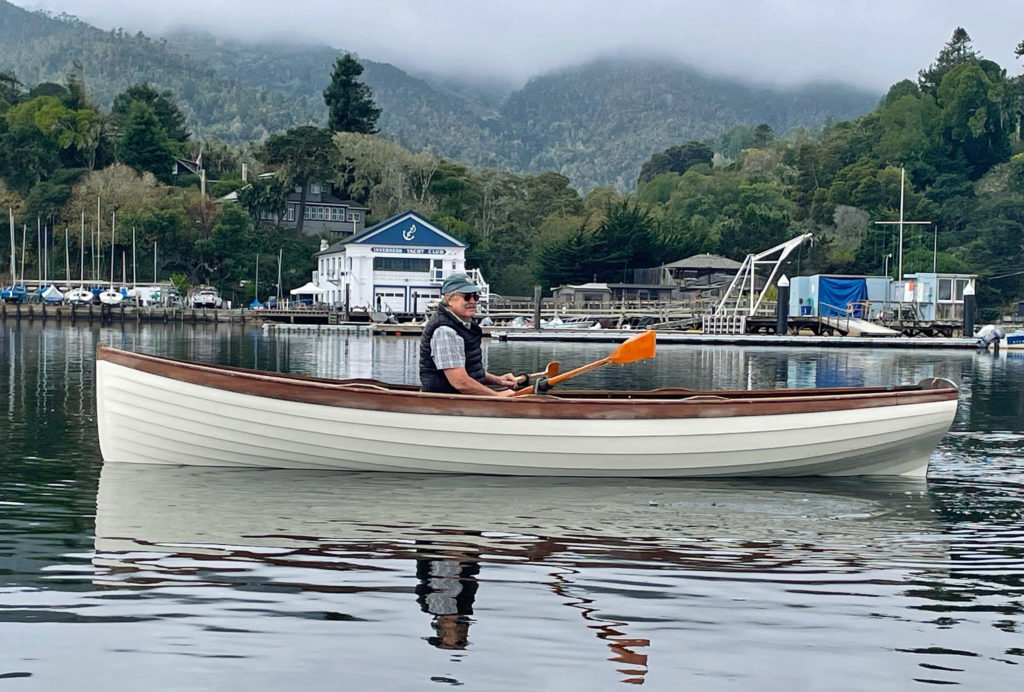
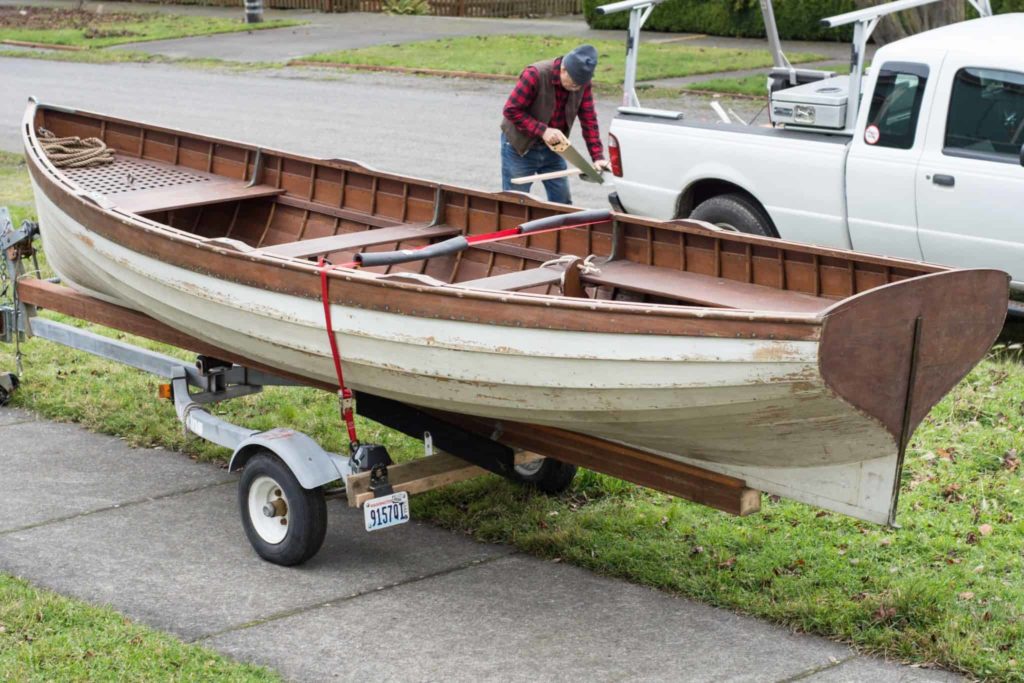
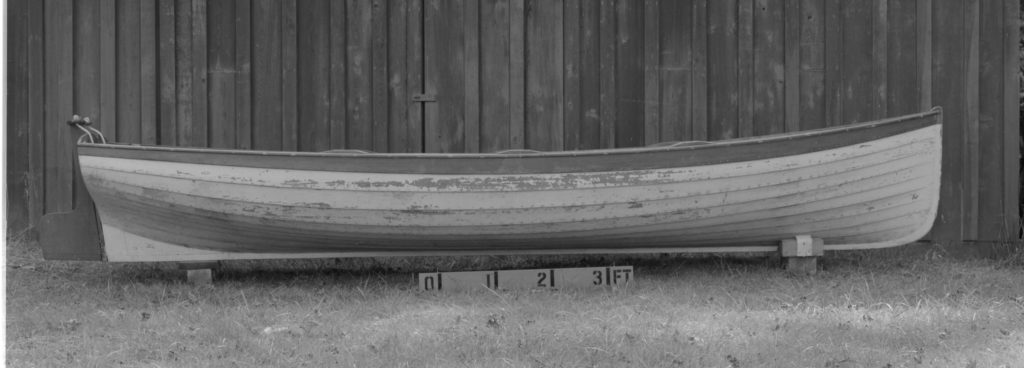
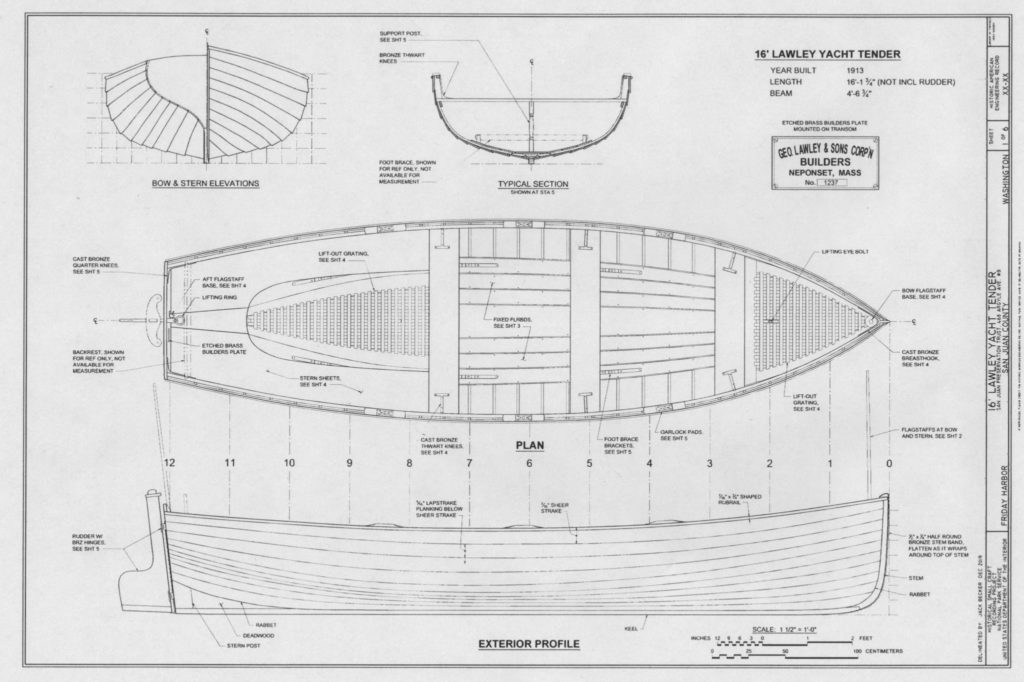
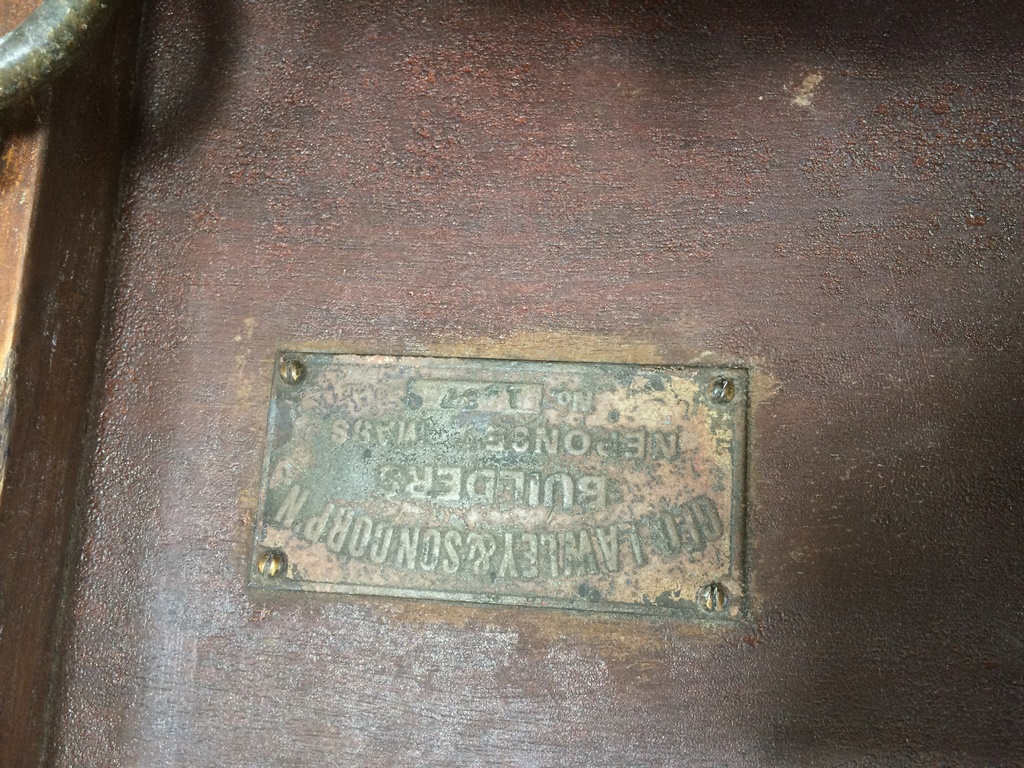
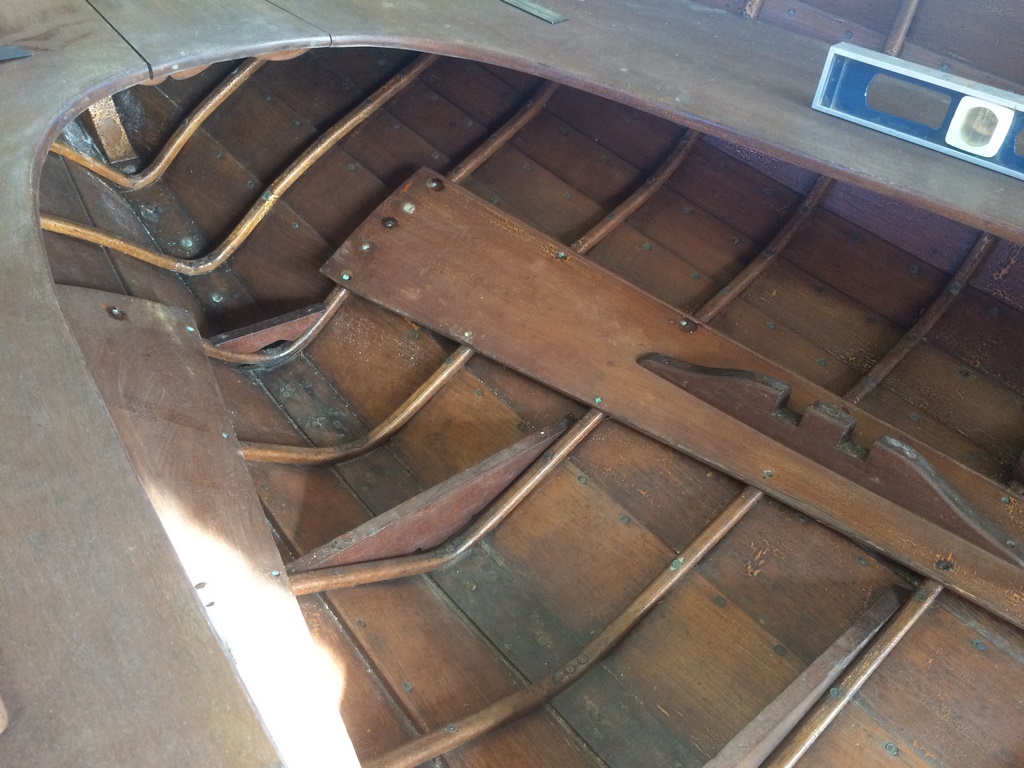
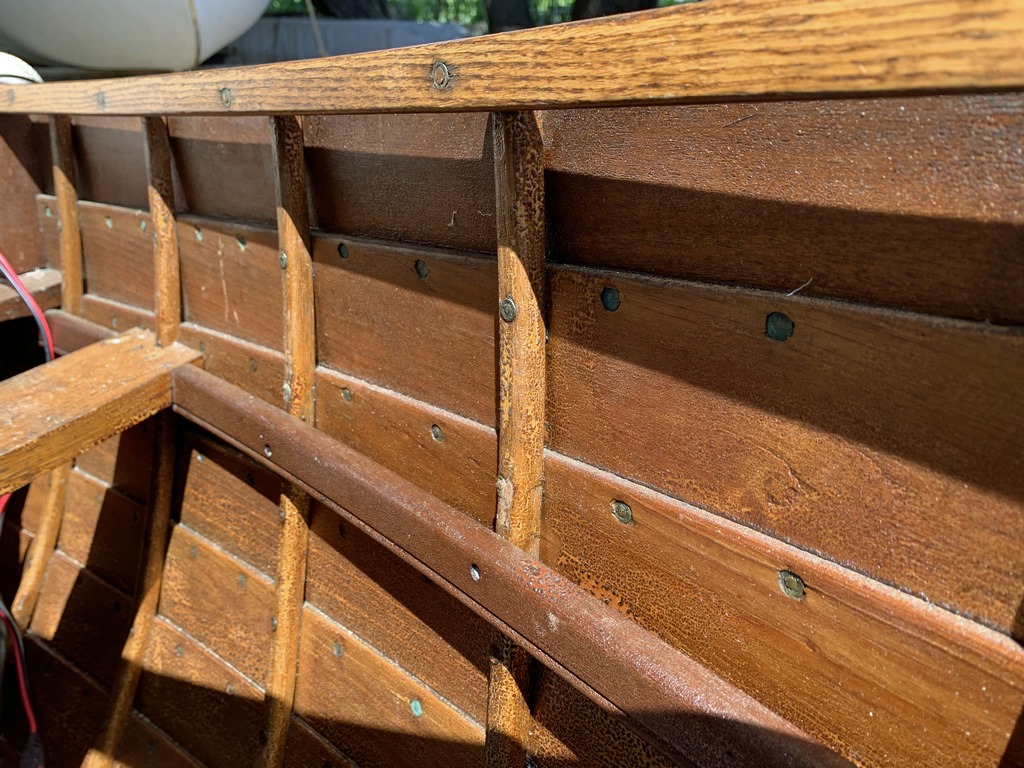
Lawley tender, 16′ lapstrake whitehall style, hull #1237. T/T Gulma (Eloise) Lawley project no. 760 & T/T Dwyn Wen. Designed and built by George Lawley & Sons, Neponset, MA, 1913. Although fuller in shape than a whitehall, the scantlings are light.
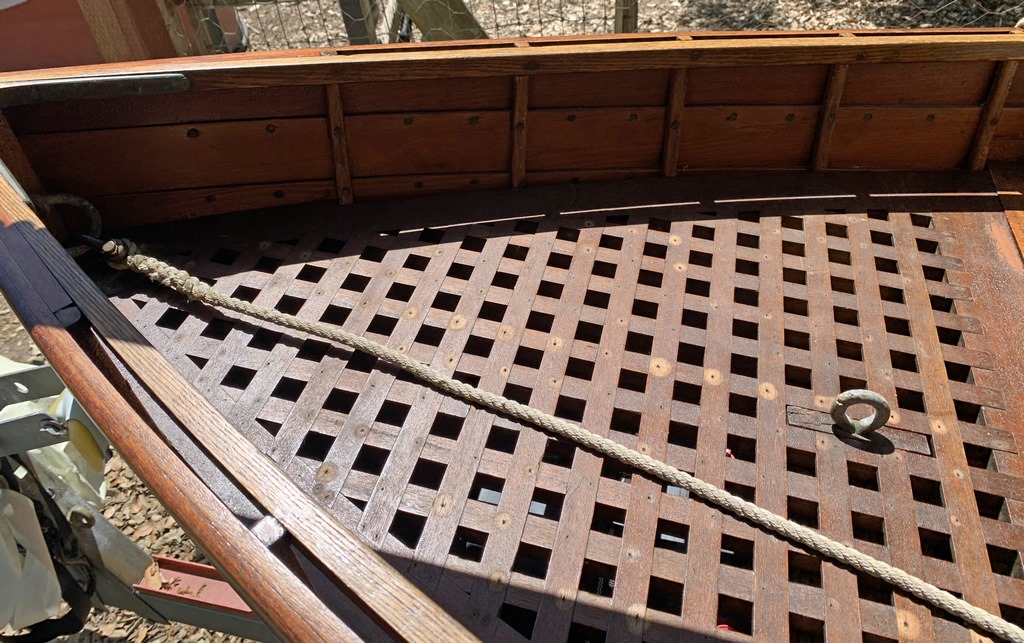
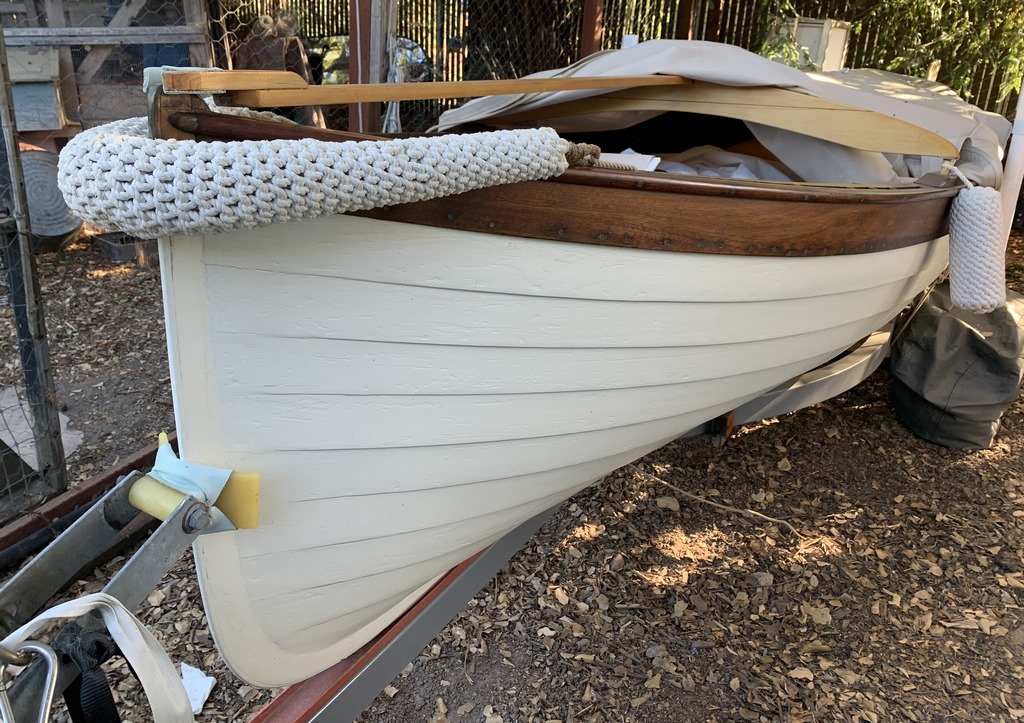
Extraordinarily well preserved due to 80 years storage in a barn hayloft. The condition is a ‘working preservation’ — only enough repairs and finishing has been done to maintain the boat in as found condition and still function as a working vessel. Hull leaks have been sealed below the waterline, and the exterior has been scraped, faired, primed and painted to an off white very close to the original color. The shear planks, rails, and interior have been oiled to preserve the original 110 year old varnish. This vessel is complete with original rudder and tiller yolk, floorboards, two foot braces, and flagstaffs. Oars & locks, the center foot brace, and aft thwart backrest have recently been added. There are no indications this boat has ever spent idle time in the water — she would have been stored in side davits and canvas covered, only being used while cruising for outings and trips ashore; before being stored in a barn in the San Juan Islands, WA, USA, until 2019. This tender is well documented thanks to Jack Becker and the Mystic Seaport Museum archives. Jack Becker did a wonderful job of drawing up the plans that were used for submitting this vessel to the National archives — drawings can be found at the Historic American Engineering Record, a division of the National Parks Service: 16’ Lawley Yacht Tender, HAER WA-231.
This boat was built by Lawley as the tender to Gulma (86′ auxiliary centerboard schooner, Doc. no. 211267) for John H. Cromwell, who sold Gulma with the tender to Dr. Robert Hale Ellis, of Portland, OR. Renamed Eloise, the schooner passed through the Panama Canal and arrived in Oregon in the summer of 1915. Eloise was transferred to the US Navy about 1917 but RH Ellis kept the tender. Later this tender was used on his next yacht Dwyn Wyn, that he purchased in Hong Kong in 1923, and sold a dacade or so later.
Dwyn Wen (106′ LOD, 128′ LOA, schooner, USCG Doc. no. 223257) was designed by Alex Richardson, and built by Phillip & Sons, Dartmouth, England, in 1906. She sank on her mooring in Badamier, Dzaoudzi, Mayotte in 2014. Dwyn Wen’s history previous and after RH Ellis’ ownership is well documented, but the history we have during the 1920’s is minimal. We have no information other than a published article in the November, 1923, issue of Pacific Motor Boat about the passage from Hong Kong to Oregon, and written memories by Capt. Skip Bold, Port Towndsen, WA. Further information is highly encouraged.
This yacht tender was discovered on the Ellis Preserve, Shaw Island, when the estate was donated to the San Juan Preservation Trust.
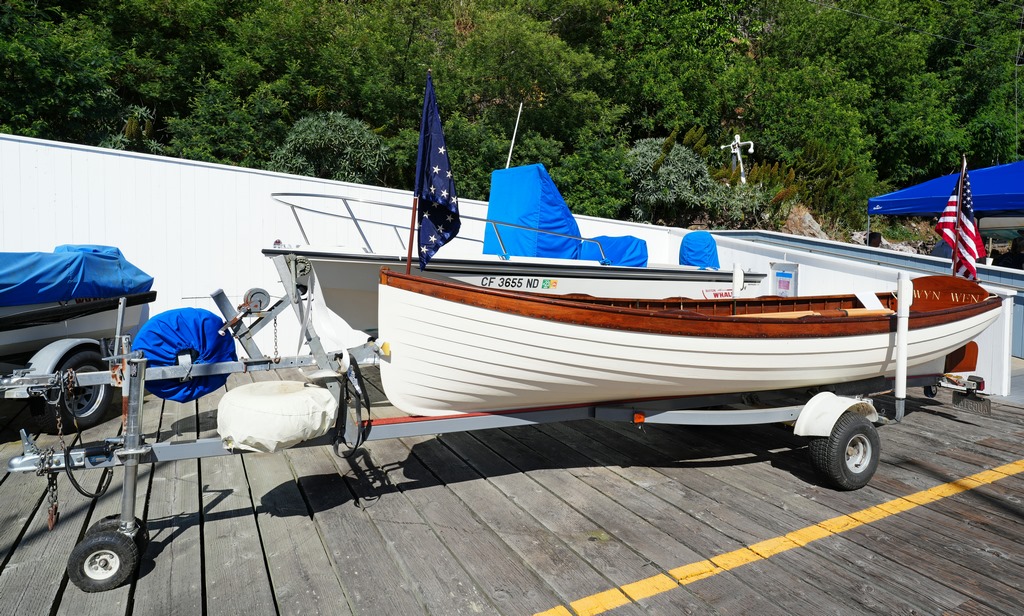
The trailer was rebuilt for easy beach launching, and a canvas cover in the original style was added for storage protection.
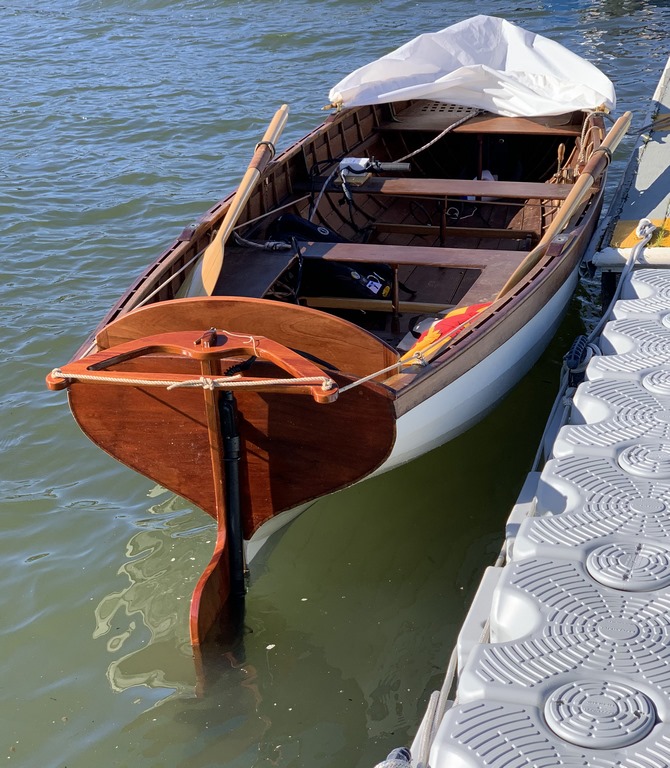
In 2023, wanting to add some power to this vessel for geriatric use, additions were made without altering the vessel in any way. A second rudder was built that is deeper and has the shaft and lower unit of an electric outboard. Cabling was extended for mounting the control head at the forward center thwart using a wooden structure lined with leather that slips over the thwart. A lithium iron (LiFePO4 — LFP) battery is tied down under the foredeck, to offset the passanger weight on the aft seat. A larger rudder steering yoke was added with POSH 3-strand steering lines running through round brass thimbles and period correct W-C blocks lashed to the rails and seat stringers. The steering lines run to a period correct Perko spoke wheel secured to a leathered board and lashed behind the starboard seat stringer. As expected, the turning radius is wide but the system works very well.
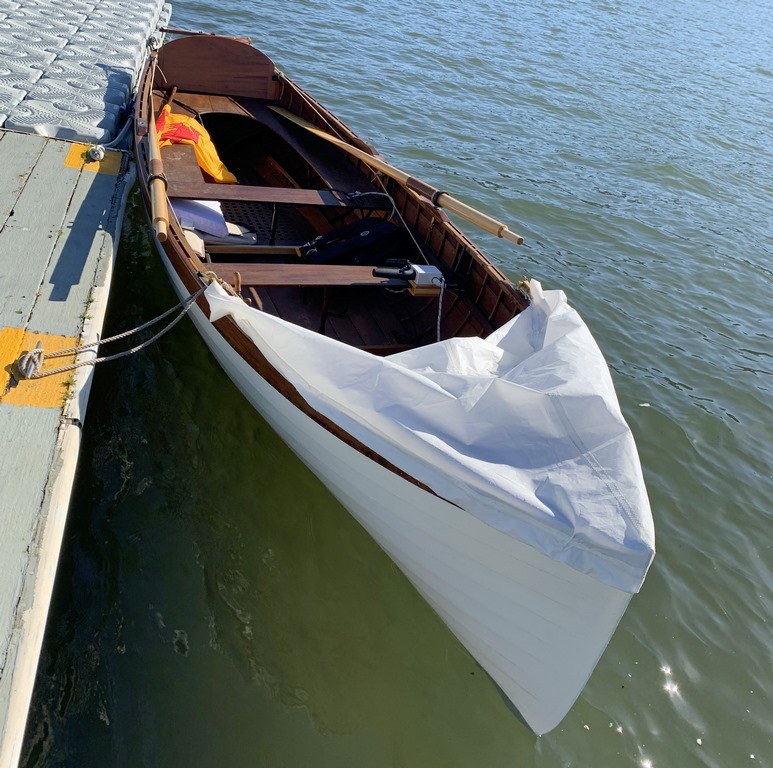
A sailcloth dodger was added using wooden dowels that fit in the forward rowing locks. A wooden bow sewn into the aft edge of the dodger is fitted with brass levers attached to a shockcord sewn into the bottom of the dodger that snaps around the stem. The dodger stays up with shockcord tension on the levers, but is easily pushed down forward when not needed.
Antique cotton fenders and bow pudding were added just in case.Photos
Map
No Records Found
Sorry, no records were found. Please adjust your search criteria and try again.
Google Map Not Loaded
Sorry, unable to load Google Maps API.
Comments
Owner’s Description
Photos
Map
Comments