Owner’s Description
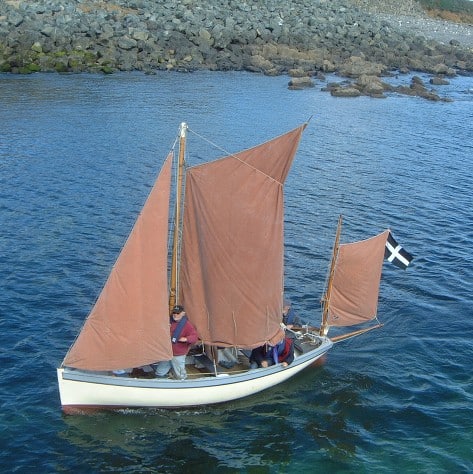
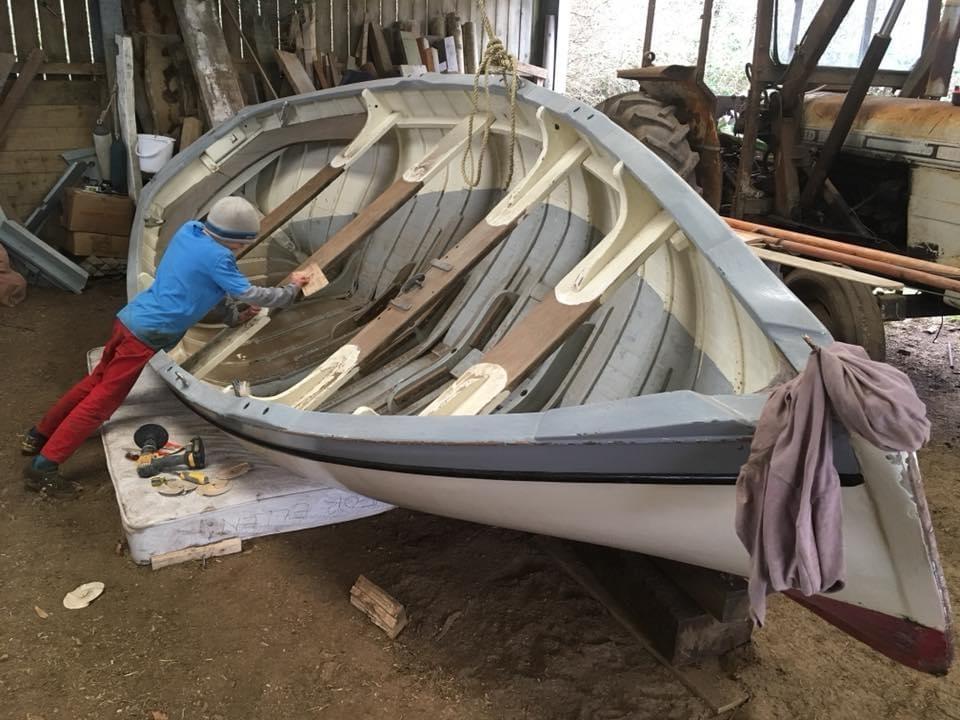
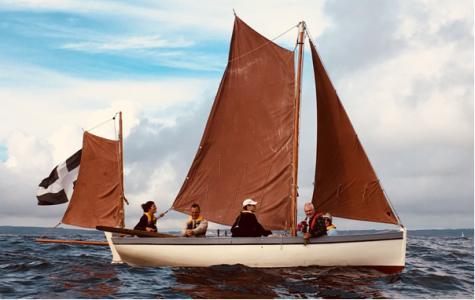
Ellen, 1882 Gorran Haven Crabber
Owned by the Cornish Maritime Trust, charity no 1037745
The aim of the Cornish Maritime Trust is to help preserve a fraction of Cornwall’s maritime heritage, by maintaining and sailing three working vessels from the days of sail: Barnabas 1882 St Ives Lugger, Soft Wing 1900 Truro River Oyster Dredger and the Ellen. We work to educate and train people in the skills associated with sailing, boat restoration and maintenance, and to share our enjoyment of sailing these incredible boats with the community. Our vessels sail from Falmouth, Newlyn and Mousehole.
LOA 17’, beam 6’, draft 2’6”.
Ellen, a Gorran Haven crabber, was built in 1882 by Dick Pill for the Willmott Family and is reputed to be the fastest Gorran Haven Crabber ever built. Her lines and spritsail rig are specific to Gorran Haven. By 1900 she was being fished by the Billings brothers, Dick and Andrew, who moved her to Flushing as there were too many crabbers in Gorran Haven! We believe she’s the last of her kind still sailing. Based from Mousehole, she’s a joy to sail and a real head turner, especially sailing through ‘the gaps’ or sculling her off or back onto her moorings. She’s engineless.
When working, the sprit rigged mainsail was ‘brailed’ (by pulling on one line). This drew the mainsail neatly up against the main mast. The foresail was lowered, and with the mizzen sail set, she would then lie head to wind with the sinker line paid out over the bow. Slowly drifting astern, each of the pots could be passed out over the side. Then keeping tension on the lanyard, the string would be set.
When working the string of pots, the sinker nicknamed the ‘Menace’ (a corruption of the Cornish word for a stone ‘maen’) was lowered on the riser which was supported at the surface by a bladder float and the pots linked by lanyards were spaced along the bottom. At the end of the string, a second ‘menace’ and riser marked the downwind or downtide end of the string.
When all the pots were laid, the centre thwart was refitted so that she could be rowed. When checking the pots a similar system was used, removing the centre thwart to provide a working space, brailing the mainsail, lowering the foresail, the riser would be brought in over the bow and when the lanyard knot was reached, this would flick the lanyard off to the side so that the pot could be recovered and the next lanyard put in the fairlead, so keeping her head to wind. When not ‘crabbing’, these boats would fish using hand lines, long lines, or drift nets. The sprit rig, which gave a simple quick system for removing the mainsail, allowed her to lie to an anchor or net, with the mizzen as the steadying sail.
Photos
Map
No Records Found
Sorry, no records were found. Please adjust your search criteria and try again.
Google Map Not Loaded
Sorry, unable to load Google Maps API.
Comments
Owner’s Description
Photos
Map
Comments