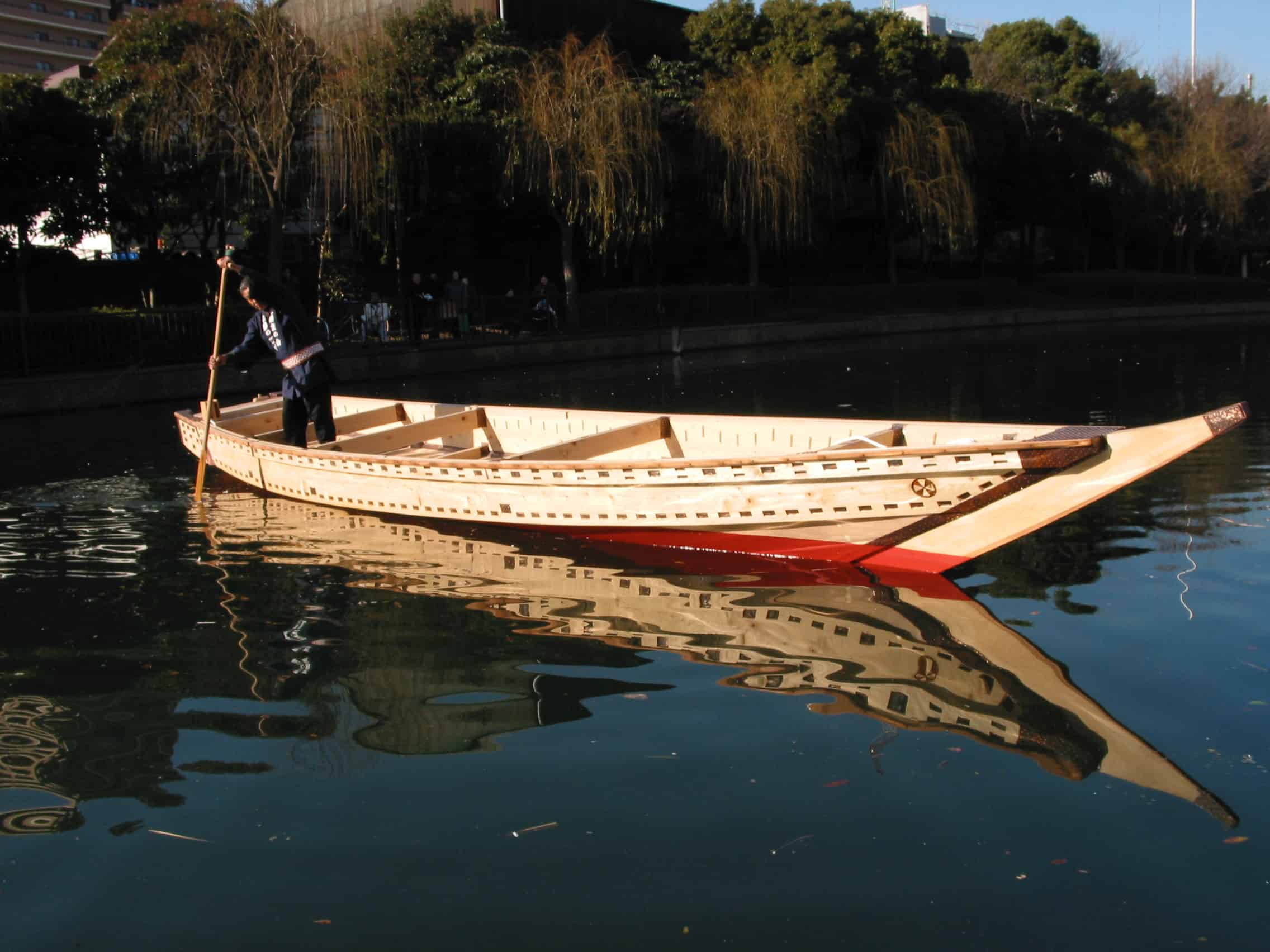
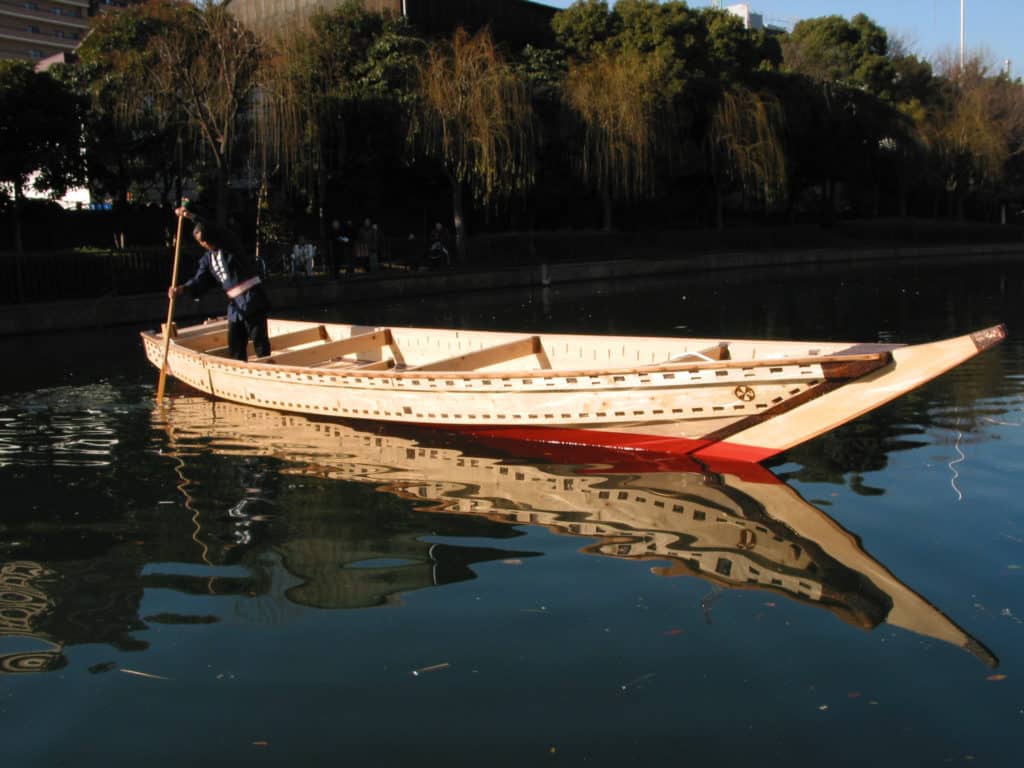
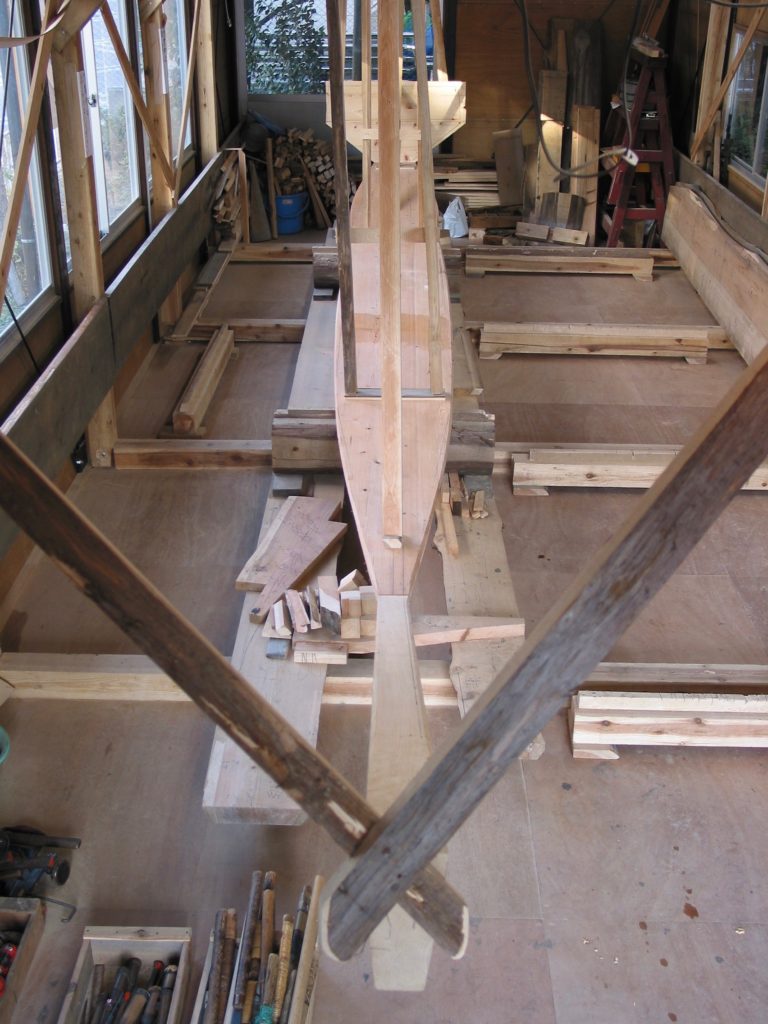
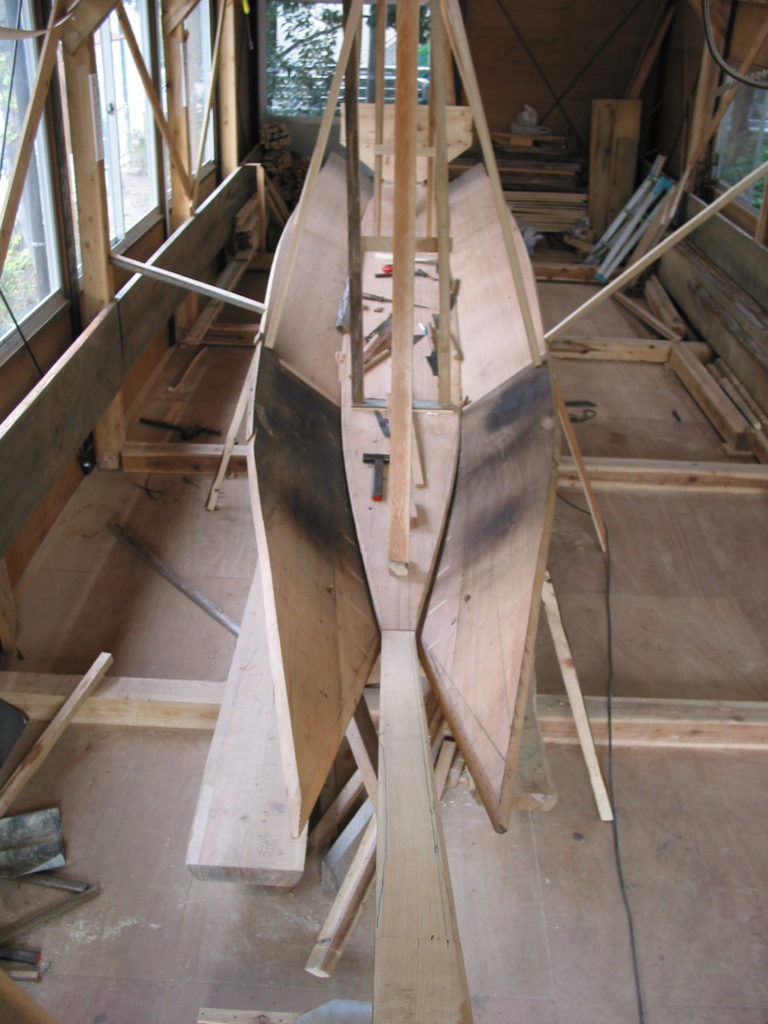
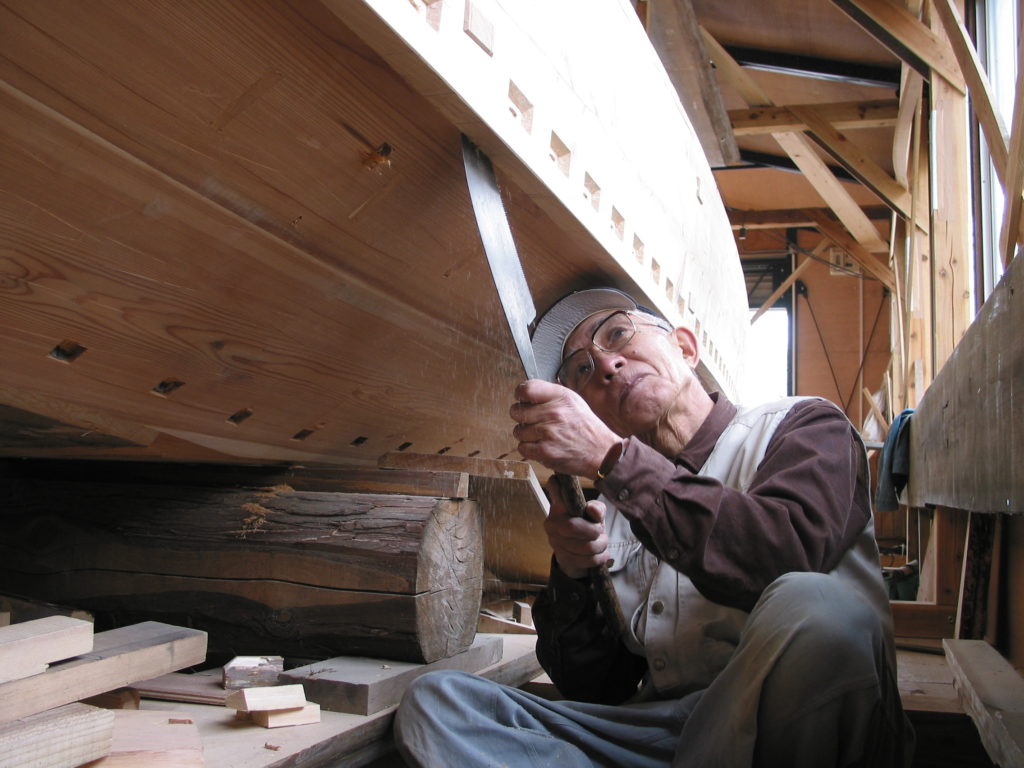
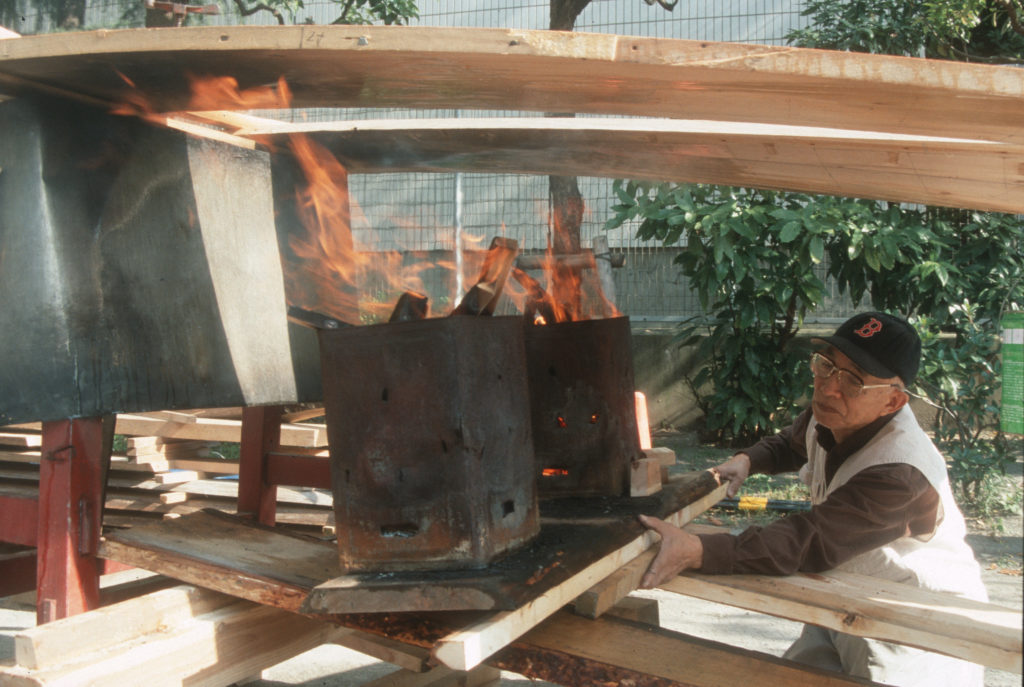
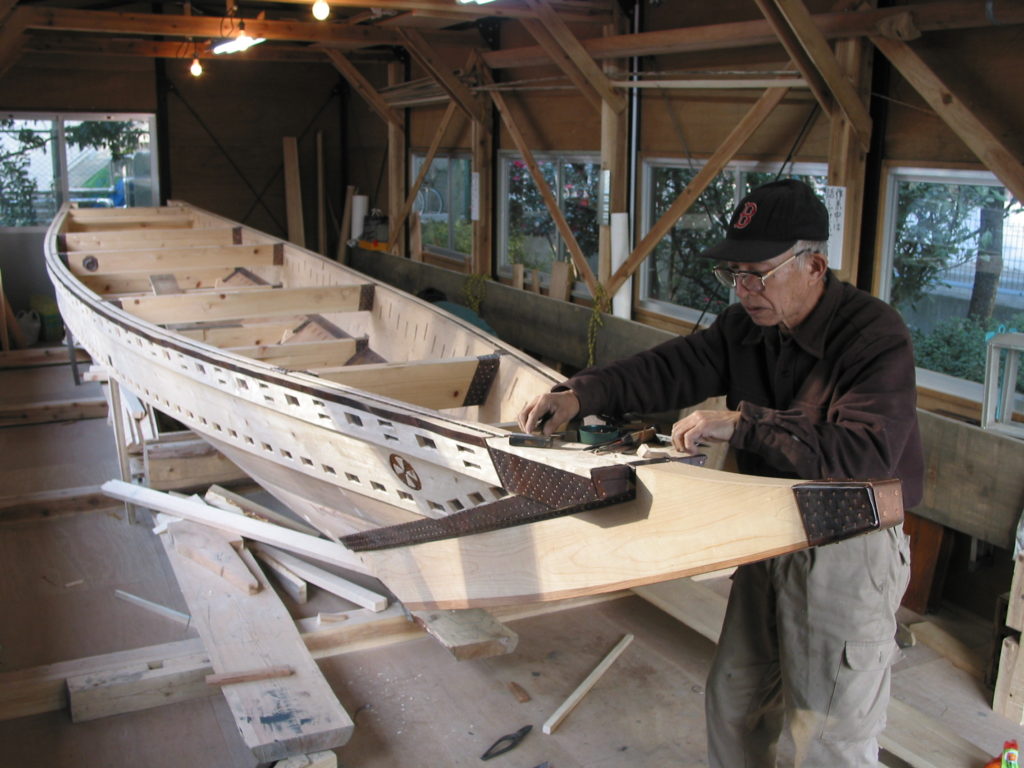
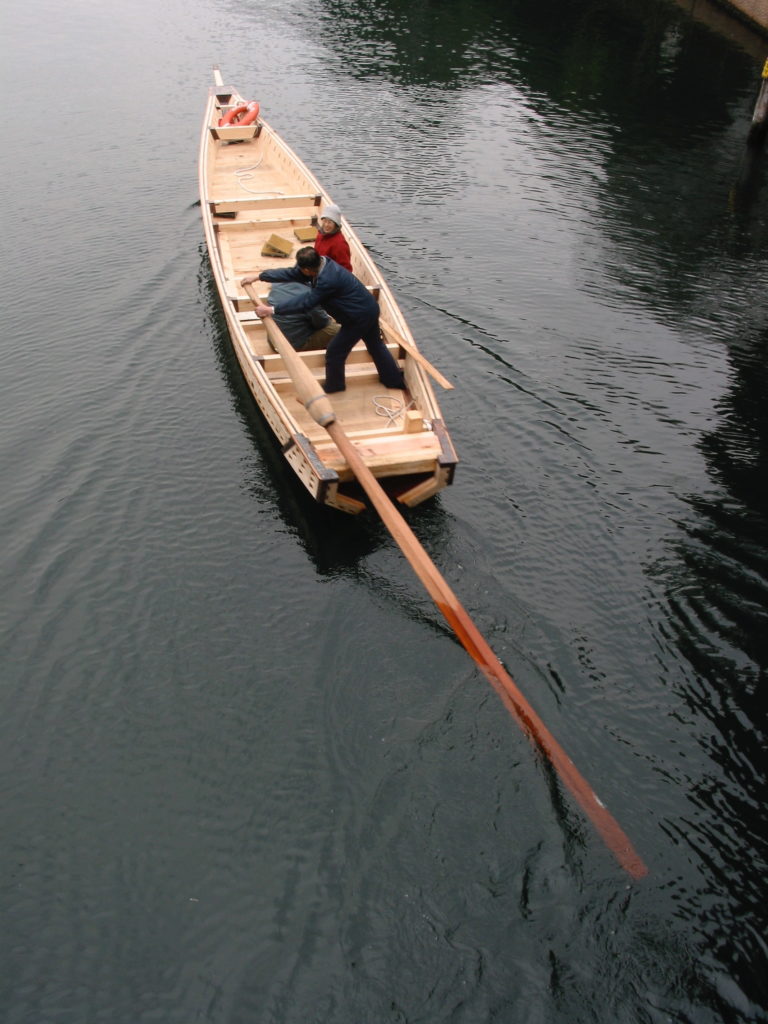
In 2002-2003 I apprenticed with Mr. Kazuyoshi Fujiwara, a fourth generation boatbuilder from Tokyo. He and I built a chokkibune, or an Edo-era water taxi. This was part of a research project in which I documented all of Fujiwara’s design secrets and techniques (see my book Japanese Wooden Boatbuilding available at my website). The boat was built of cedar and cypress, fastened with blacksmith-made nails. Nail heads and seams were covered in copper. Planking was bent over an open fire in the Japanese tradition. The foundation that funded the research donated the boat to Wasen Tomo No Kai (Friends of Traditional Japanese Boats), a Tokyo non-profit that teaches traditional sculling techniques.
Photos
Map
No Records Found
Sorry, no records were found. Please adjust your search criteria and try again.
That long Ro looks like it could put out a lot of horsepower. I had one on my earlier Sam Devlin 16 ft “Eider” and it worked quite easily, and with a tether to the cockpit floor attached to a small peg it was nearly self feathering and easy to use with one hand while I steered with the other. Way better than oars in a marina; not banging into other boats or the dock when entering a slip!
I’ve wanted to try making one for my current boat, just a bit bigger and heavier, “Koan”, a Flicka 20, about 6000 lbs, fully loaded for cruising. Any guess on size recommendations to handle that? And have you seen any that can be take apart to be stowable below when not in use?
I should perhaps say “Hi” again, and remind you, I’m the fella in Port Townsend with the shakuhachi, who’s wife and family are from Aomorishi, Hirosaki, Tokyo and Fukushima.
Glad to see you again here, in the show! I’m also showing my sweet little 26 yr old glued lap Melonseed Skiff. She was built by Marc Barto himself at O’Connell’s Wooden Boat shop in Chestertown, Maryland. She’s really saved my heart during this pandemic. Best way I know to properly social distance, even mid winter around here, in PT. Hope you and yours are all safe and well, as are we!
If you email me directly at douglasbrooksboatbuilding@gmail.com I can send you a copy of my WoodenBoat article on the Japanese sculling oar. In order to design one you need to consider several things, such as height of the lock off the water and the position of the operator. The ro I built myself is bolted together so it can be taken apart.

That long Ro looks like it could put out a lot of horsepower. I had one on my earlier Sam Devlin 16 ft “Eider” and it worked quite easily, and with a tether to the cockpit floor attached to a small peg it was nearly self feathering and easy to use with one hand while I steered with the other. Way better than oars in a marina; not banging into other boats or the dock when entering a slip!
I’ve wanted to try making one for my current boat, just a bit bigger and heavier, “Koan”, a Flicka 20, about 6000 lbs, fully loaded for cruising. Any guess on size recommendations to handle that? And have you seen any that can be take apart to be stowable below when not in use?
I should perhaps say “Hi” again, and remind you, I’m the fella in Port Townsend with the shakuhachi, who’s wife and family are from Aomorishi, Hirosaki, Tokyo and Fukushima.
Glad to see you again here, in the show! I’m also showing my sweet little 26 yr old glued lap Melonseed Skiff. She was built by Marc Barto himself at O’Connell’s Wooden Boat shop in Chestertown, Maryland. She’s really saved my heart during this pandemic. Best way I know to properly social distance, even mid winter around here, in PT. Hope you and yours are all safe and well, as are we!
Kirk Gresham
Dear Kirk,
If you email me directly at douglasbrooksboatbuilding@gmail.com I can send you a copy of my WoodenBoat article on the Japanese sculling oar. In order to design one you need to consider several things, such as height of the lock off the water and the position of the operator. The ro I built myself is bolted together so it can be taken apart.
Sincerely,
Douglas